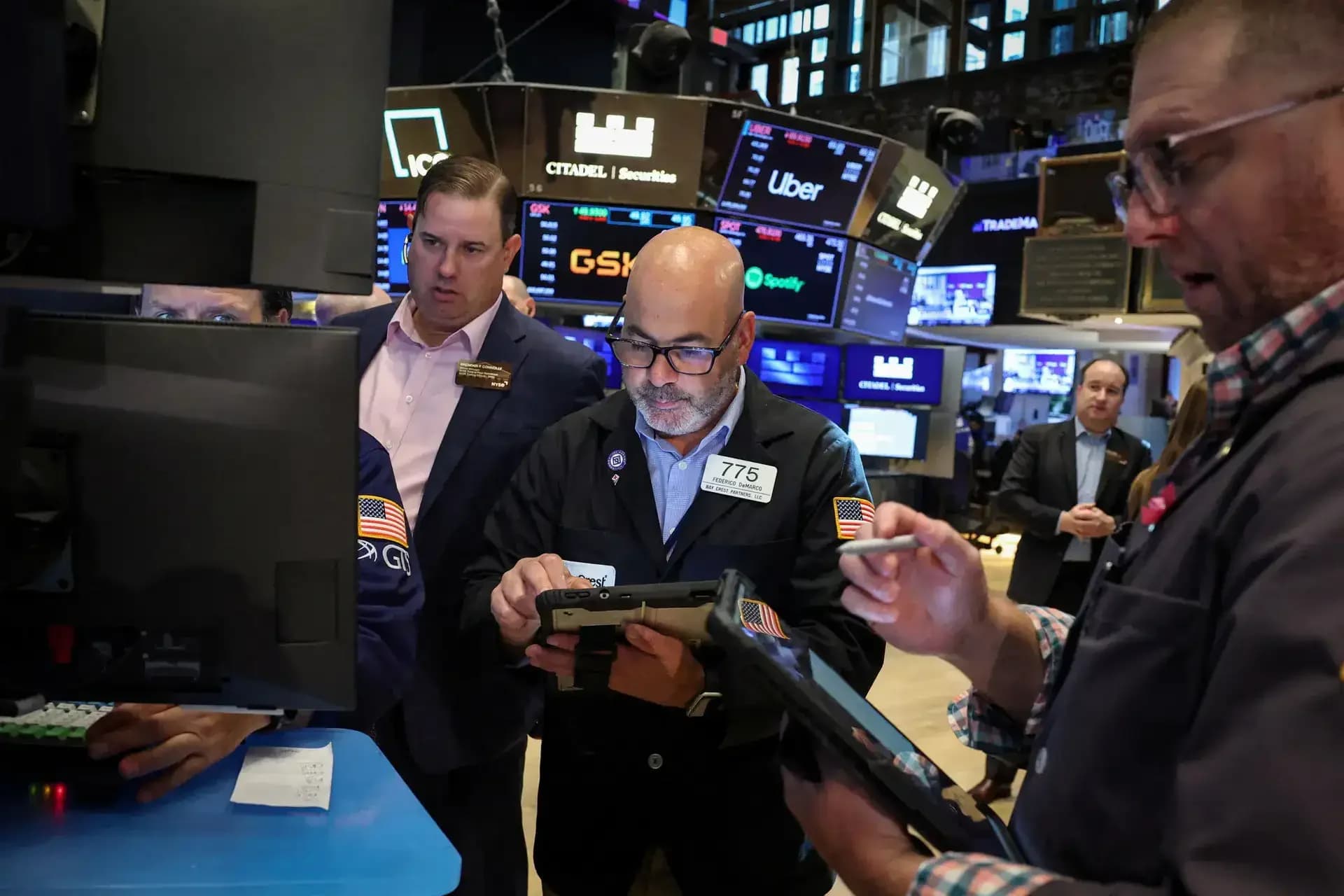
U.S. stocks experienced their most significant decline in over a month on Tuesday, with the S&P 500 falling 0.3% and the Nasdaq Composite dropping 1% after reaching intraday lows of 2.7% and 3.5% respectively. As reported by Yahoo Finance, this represents a sharp reversal from earlier gains, with the Dow Jones Industrial Average rising 0.6% to 50,497.17. The Philadelphia SE Semiconductor Index plummeted almost 7% after rising as much as 3% in early trading, while the S&P 500 tech index shed 4.4% following a short-lived bounce on Monday. Latest data shows S&P 500 futures fell 0.26%, Nasdaq 100 futures traded 0.36% lower, and Dow futures declined 0.29% as of 9:11 p.m. ET, indicating continued overnight weakness.
Technology stocks resumed Friday's selloff with renewed intensity, with shares of chipmakers Nvidia, Broadcom and Micron Technology dropping between 3.5% and 7%. According to Reuters, the Philadelphia SE Semiconductor Index fell almost 7% after rising as much as 3% in early trading, while the S&P 500 tech index shed 4.4% following a short-lived bounce on Monday. Jordan Rizzuto, CIO at GammaRoad Capital Partners, explained that "Tech stocks - that's where a lot of the growth and momentum has been during this recent leg of the rally. They are typically the most rate sensitive. And so it's no surprise that with increased uncertainty around rate expectations... tech, particularly, is seeing some profit taking." On Monday, chip and technology stocks had recovered helping lift the broader market after a sharp selloff last week, with Broadcom Inc. (AVGO) closing up nearly 3% and Nvidia Corp. (NVDA) edging up 1.7%. The technology and AI-linked stocks sold off sharply on Friday after Broadcom's disappointing forecast fueled concerns about high valuations in the sector.
The fragile ceasefire between the U.S. and Iran was threatened after President Trump announced that Iran shot down one of the U.S.'s highly sophisticated Apache helicopters while patrolling over the Strait of Hormuz. According to Yahoo Finance, Trump wrote on social media that "the United States must, of necessity, respond to this attack." Israeli Prime Minister Benjamin Netanyahu said the country is holding fire against Iran for now, but will respond should Tehran attack again. Iranian media conveyed similar sentiment, with Iranian parliamentary speaker saying "We prefer the language of diplomacy, but we speak other languages far more fluently. Break your commitments, and we'll switch to what we speak best. You ride the horse you saddled!" Adding to tensions, Iran's chief negotiator Mohammad Bagher Ghalibaf reportedly said that the U.S. was "neither seeking a ceasefire nor seeking dialogue," even as Trump has said that talks between the two countries are progressing. Oil prices tumbled more than 4% after Iran and Israel said they had halted attacks on each other following an appeal from U.S. President Donald Trump, with Brent crude futures falling 2% to $92 a barrel and West Texas Intermediate dropping 2.6% to $88 a barrel.
Investors are growing increasingly concerned about Federal Reserve interest rate policy following a stronger-than-expected jobs report on Friday. As reported by Reuters, traders are pricing in a 43% chance of a 25 basis point rate hike in December as per CME Group's FedWatch tool. The technology sector's sensitivity to rate expectations is driving the current selloff, with tech stocks being "typically the most rate sensitive" according to market strategists. The reset upwards only intensified last week after the latest read on job growth topped all forecasts, reinforcing a growing conviction that rates need to rise in order to rein in inflation pressures and temper the risk of an AI-induced boom overheating the economy. Yields on policy-sensitive US two-year notes have surged to their highest level in more than a year, with two-year yields trading at around 4.15%, well above the Fed's current policy band of 3.5% to 3.75%.
Market breadth showed mixed signals with advancing issues outnumbering decliners by a 1.08-to-1 ratio on the NYSE, while declining issues outnumbered advancers by a 1.25-to-1 ratio on the Nasdaq. The S&P 500 posted 26 new 52-week highs and six new lows, while the Nasdaq Composite recorded 135 new highs and 102 new lows. Among individual movers, packaged food maker J.M. Smucker rose 12% after forecasting annual profit above Wall Street expectations. Cancer drug developer Nuvalent surged 35% after GSK agreed to buy the company for $10.6 billion, valuing Nuvalent at about $124 per share, a 40% premium to the stock's last closing price. Investors are now awaiting consumer price data for May, which could offer fresh clues on how the rise in energy prices, driven by the war in Iran, is impacting inflation. Existing home sales in May jumped 3.2% from a year ago to a seasonally adjusted annual rate of 4.17 million, according to National Association of Realtors data, showing one of the best showings for home sales in the last three years despite higher mortgage rates.