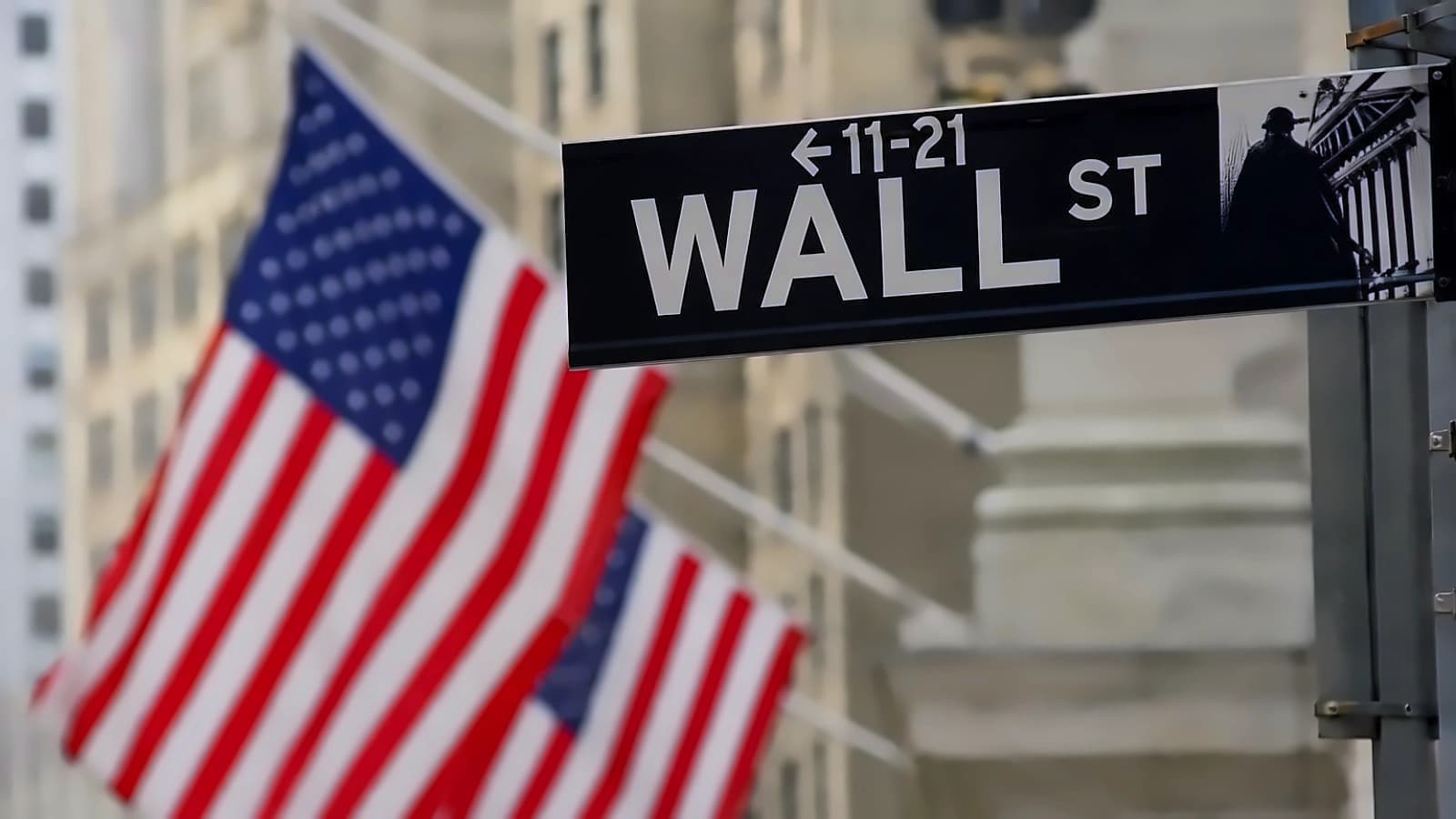
Wall Street's major indices closed at record highs on Tuesday, with the Dow Jones gaining 1.71% to settle at 54,085.88, the S&P 500 rising 1.79% to 7,736.52, and the Nasdaq Composite jumping 2.59% to 26,584.99. According to Business Standard, the blue-chip Dow jumped 907.47 points, or 1.71%, to close at a fresh record of 54,085.88. It was the first time in history that the Dow Jones settled above the mark of 54,000 and the S&P 500 closed above the mark of 7,700. The rally was driven by upbeat earnings from AI-linked companies, easing concerns over artificial intelligence spending. The Dow Jones extended its two-day advance this week to 1,600 points and gains across the last four sessions past 2,500 points, while the S&P 500 gained 1.8% and the Nasdaq Composite rose 2.6%. The rally came after President Trump discussed efforts to de-escalate US-Iran tensions with Qatar's Emir Sheikh Tamim Bin Hamad Al-Thani, with both American and Iranian officials sounding hopeful about an agreement to reopen the Strait of Hormuz. The prospect of an interim deal focused on the Strait of Hormuz appeared to be gaining traction, with Qatar saying a proposal had been drafted and Tehran considering allowing European nations to remove mines from Hormuz.

Crude oil prices came under heavy selling pressure after US Treasury Secretary Scott Bessent told CNBC that a deal to fully reopen commercial transit could be reached today or tomorrow. According to Business Standard, US benchmark West Texas Intermediate crude futures tanked 6.4% at $75.20 per barrel. The drop pushed September rate-hike odds down to 56.9% from 67.2% and sent two-year Treasury yields to a two-week low. The easing of geopolitical tensions has provided relief from the inflationary pressures that had been building due to supply disruption fears. The US Dollar index also continues to trade below the mark of 100. However, yields remained considerably higher than the 3.97% level seen before the Iran conflict began, with the sharp rise in bond yields since then raising concerns for financial markets. "Markets are reacting to the possibility that a reopening of the Strait of Hormuz could help normalize global oil supplies and reduce near-term energy price pressures," noted Tony Miano at Wells Fargo Investment. "Lower oil prices can ease inflation concerns," he added, though warned that inflation is unlikely to normalize overnight.
Strong earnings from AI companies like Palantir and Caterpillar have reassured investors about their investments in artificial intelligence technology. According to Business Standard, Palantir Technologies surged 29.4% after it reported strong second-quarter results, with the company reporting a revenue of $1.94 billion for the second quarter, up 93% from a year earlier. Palantir also raised its forecast annual revenue to between $8.15 billion and $8.158 billion, up from $7.65 billion to $7.662 billion earlier. Palantir's CEO Alex Karp said "This quarter was otherworldly: our U.S. commercial revenue grew 149% year-over-year, our overall revenue grew 93% year-over-year. The sovereign AI revolution makes us very optimistic about the future." Caterpillar also rose 5.4% after reporting quarterly results above market expectations and raising its revenue growth outlook. The company cited strong demand for equipment used in the expansion of artificial intelligence data centers, with its full-year tariff costs likely to come in at the lower end of its previous forecast. Of the 304 S&P 500 companies that had reported second-quarter results, 85.2% beat estimates, versus a long-term average of 67.5%, according to Reuters. Investors have been closely examining results from AI-linked companies for signs that the industry's massive spending will generate sufficient returns.
Semiconductor stocks were among the biggest gainers on Wall Street, with the Philadelphia Semiconductor Index (SOX) climbing 6.6% and extending its rebound after tumbling 20.6% in July. According to Reuters, the chip stocks-heavy Nasdaq 100 index surged 2.59%, marking its best four-day rally since 2020, with the index also up 2,500 points during this period. Broadcom rose 6.1%, Nvidia added 1.9%, and Micron Technology advanced 8%, providing additional support to the broader market. The S&P 500 technology sector climbed 4.5%, leading all 11 major sectors, with semiconductor stocks viewed as major beneficiaries of AI spending. The Nasdaq 100 surged more than 3%, while semiconductor shares completed their strongest four-day rally since 2020, as reported by Investing.com India. The results followed strong quarterly performances from Microsoft and Amazon last week, which reassured investors that massive investments in artificial intelligence are translating into stronger business growth. Corporate earnings have broadly exceeded market expectations this quarter, with 304 companies in the S&P 500 having reported second-quarter earnings as of last week, with 85.2% surpassing analysts' estimates, well above the long-term average of 67.5%.
Major technology stocks witnessed a strong rally with SpaceX skyrocketing 9.4% after reporting better-than-expected second-quarter revenue in its first earnings release as a public company. According to Goodreturns, Advanced Micro Devices Inc stock price rallied 7% after modest earnings as well. The star performers were Palantir, which skyrocketed nearly 30%, while Caterpillar surged 6% and McDonald's stock rose over 1% after their quarterly earnings. Other giants like Nvidia climbed 3%, Apple surged 2%, Microsoft and Google stock also rallied 1% each. Chipmakers also surged significantly, with Samsung soaring 4%, Micron Technology advancing 8%, Broadcom rallying 7%, and Sandisk climbing nearly 11%. The strong optimism on Wall Street is due to robust earnings and hopes of a peace deal between the US and Iran that will calm the inflationary storm and economic crisis. Investors are now awaiting another round of corporate earnings on Wednesday, including results from Eli Lilly, AppLovin, Walt Disney, Uber, and Sandisk, as per Trading Economics.