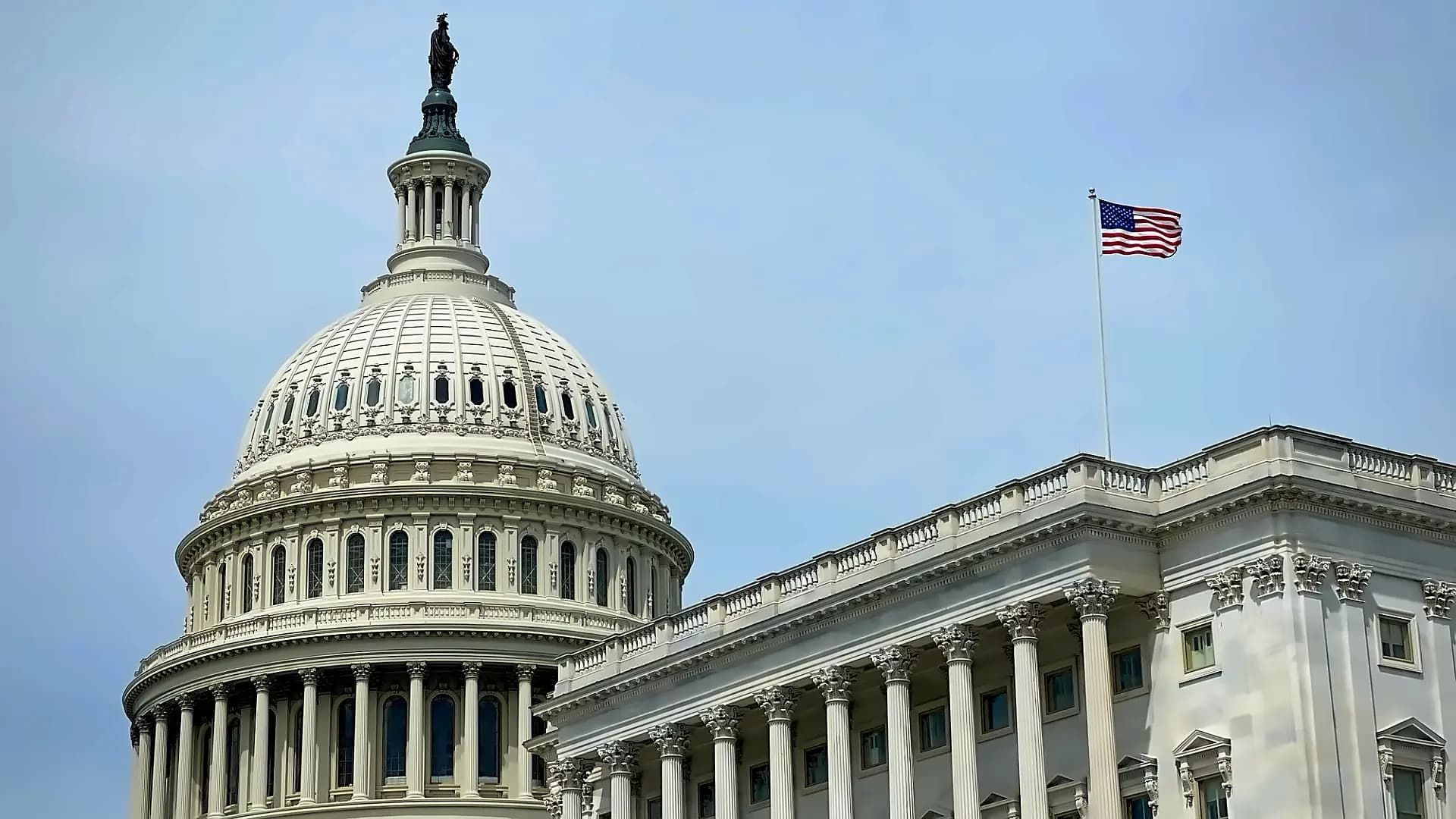
The Trump Administration has established a comprehensive AI regulatory approach through multiple executive orders and policy frameworks. The January 2025 Removing Barriers EO set the foundation for deregulation, followed by the July 2025 AI Action Plan which identifies more than 90 federal policy actions with the aim to secure US AI leadership. In March 2026, the Administration released the National AI Legislative Framework, while the December 2025 AI National Policy Framework actively seeks to challenge and preempt state AI laws. This multi-pronged approach represents the most significant federal AI regulatory effort to date, building on existing legislation including the TAKE IT DOWN Act which prohibits AI-generated deepfakes.
Senators Tim Scott and Bill Hagerty have introduced legislation aimed at protecting U.S. artificial intelligence technology from foreign adversaries. According to reports from The Economic Times, the two Republicans, who previously collaborated on the crypto GENIUS Act, are now focusing on AI security as this congressional session approaches the summer break and midterm elections. The bill would provide the U.S. Commerce Department with enhanced authorities to shield domestic AI technology from supply chains controlled by foreign adversaries.
The proposed legislation would grant the Commerce Department the ability to block transactions involving technology designed, developed, manufactured, or supplied by persons owned, controlled, or directed by foreign adversary countries. As reported by The Economic Times, this authority would specifically target nations determined to be actively working against U.S. national security, currently including Russia, China, Iran and North Korea. The bill would codify a position at the Commerce Department to oversee this authority, specifically the assistant secretary of commerce for information and communications technology supply chains.
International AI regulations are emerging with varying approaches across different regions. Canada currently has no comprehensive AI law in force, with its main legislative attempt, the Artificial Intelligence and Data Act, failing to pass before Parliament's session ended. The country currently governs AI through a voluntary code, federal and provincial privacy laws, and rules for government AI use. Latin America is moving quickly with Brazil advancing a comprehensive, EU-style risk-based bill, while Peru has already enacted a promotional AI law. The region's existing data-protection laws currently govern automated decisions, with Brazil defining prohibited applications as "excessive risk" and "high-risk" systems requiring stricter controls including preliminary assessments and algorithmic impact assessments.
Several leading AI companies have voluntarily committed to "help move toward safe, secure, and transparent development of AI technology." Companies including Adobe, Amazon, Anthropic, Cohere, Google, IBM, Inflection, Meta, Microsoft, Nvidia, OpenAI, Palantir, Salesforce, Scale AI, and Stability AI have committed to internal/external security testing of AI systems before release, sharing information on managing AI risks and investing in safeguards. The White House Blueprint for an AI Bill of Rights, issued under Biden, provides five principles including safe and effective systems, algorithmic discrimination protection, data privacy, notice and explanation, and human alternatives. While the Removing Barriers EO did not specifically revoke the AI Bill of Rights, the Trump Administration may be less likely to pursue these principles to the extent they are perceived as inconsistent with enhancing America's global AI dominance.