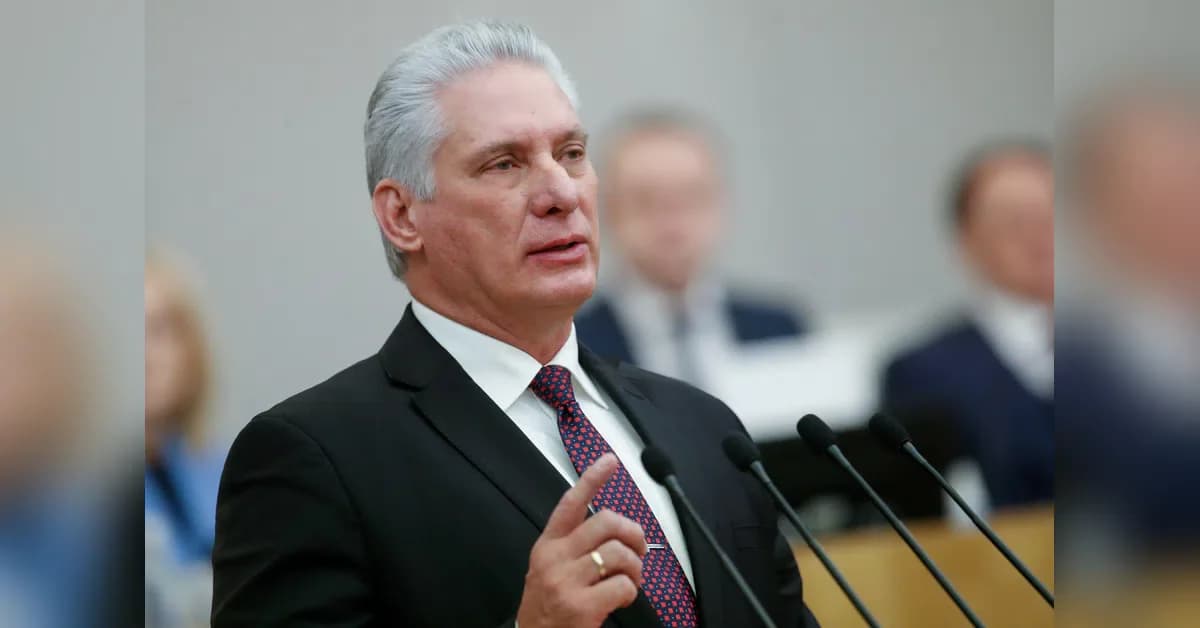
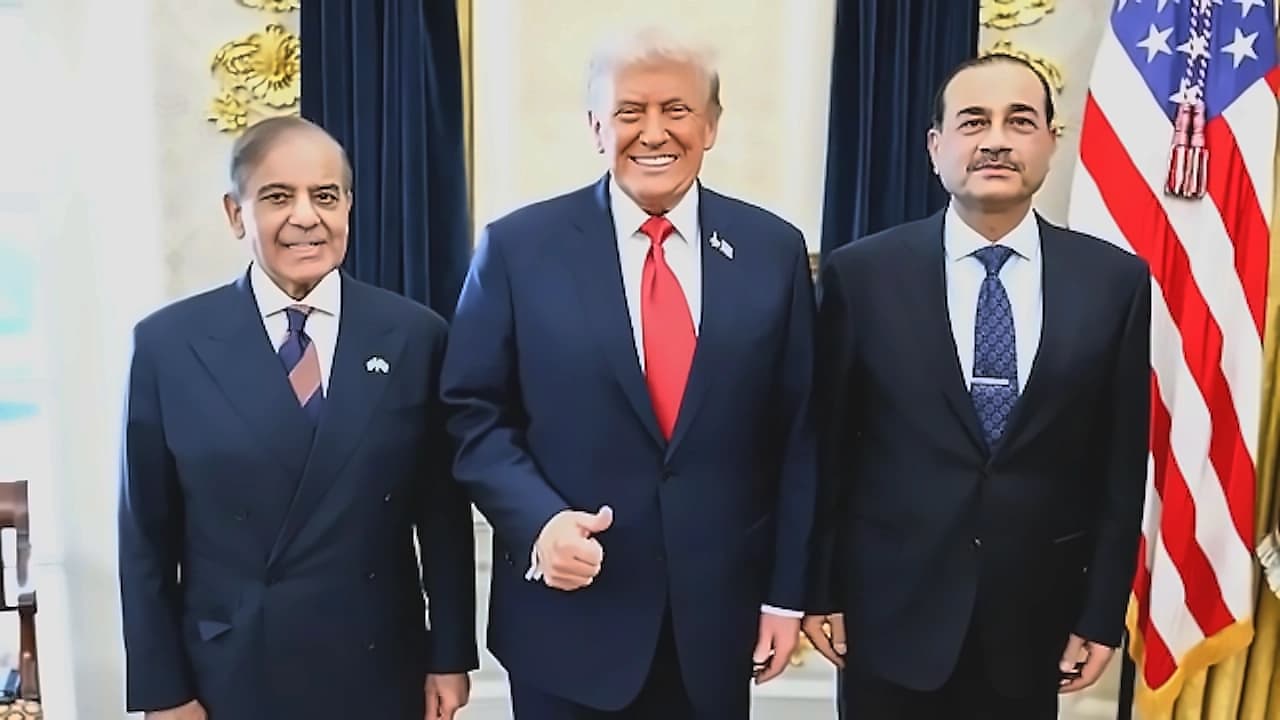
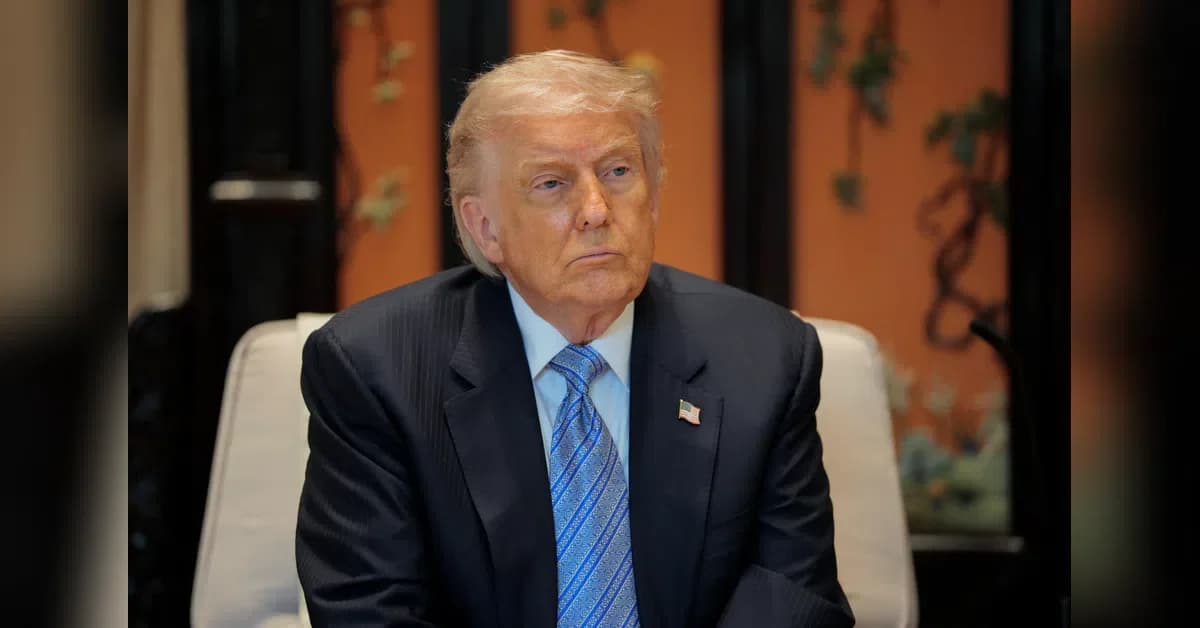
The United States has imposed sanctions on Cuban President Miguel Diaz-Canel along with four other individuals, according to a filing from the US Treasury Department. The sanctions freeze individuals' property and bank accounts in the US, though it's unclear how intertwined their finances are with the US financial system. As reported by Associated Press, the sanctions come after US President Donald Trump signed an executive order expanding sanctions against the island and has been threatening military action since ousting Venezuelan leader Nicolas Maduro in January. According to Associated Press, the sanctions come after Trump signed an executive order expanding sanctions against the island and has been threatening military action since ousting Venezuelan leader Nicolas Maduro in January. Richard Feinberg, former US national security adviser on Latin America and professor emeritus at the University of California, San Diego, noted that "it's pretty unlikely" Cuba's president and others have assets in the US, given the limited financial integration between the two countries. The new penalties come as Trump has been threatening military action in Cuba since ousting Venezuelan leader Nicolas Maduro in January and then ordering an energy blockade that choked off fuel shipments to Cuba, leading to severe blackouts, food shortages and economic collapse across the island.
Included in the sanctions are Alejandro Castro Espin, the sole son of former President Raul Castro and Vilma Espin. Castro Espin served as an adviser to Cuba's Defense and National Security Commission and was present when Raul Castro greeted then-US President Barack Obama in Havana during a historic March 2016 meeting. According to Associated Press, his son Raul Alejandro Castro Calis was also listed among the sanctioned individuals. Diaz-Canel's wife Lis Cuesta Peraza and stepson Miguel Anido Cuesta also face sanctions, with Cuesta acting as first lady in practice despite the title being abolished during the revolution. As reported by Associated Press, Cuesta wrote on X late Thursday that "it is almost an honor to be on this 'list.' They never tire of ridicule and political stupidity." Bruno Rodriguez, Cuba's minister of foreign affairs, responded by calling the sanctions "the vile inclusion" of Diaz-Canel and others, including Cuban institutions and civil society organizations, "the latest example of the U.S. interventionist plan to portray Cuba as a threat to U.S. national security." Rodriguez wrote on X that "Every U.S. action aimed at creating a scenario of conflict between the two countries is destined to fail" and "Every threat against Cuba's independence and sovereignty will be met with even greater unity and determination from our people."
The sanctions have contributed to Cuba's worst economic and energy crisis in recent history, worsened by heightened Trump administration measures. As reported by Associated Press, the threats took on new weight after the US announced criminal charges against Raul Castro last month. Trump has ratcheted up talk of regime change in Cuba after pledging to conduct a "friendly takeover" of the country if its leadership did not open its economy to American investment and kick out US adversaries. According to Associated Press, the US has been threatening military action in Cuba since ousting Venezuelan leader Nicolas Maduro in January and then ordering an embargo that choked off fuel shipments to Cuba, leading to severe blackouts, food shortages and economic collapse across the island. Secretary of State Marco Rubio has defended the sanctions, stating that those designated today direct or fund the regime and its efforts to mobilize its radical revolutionary movements globally. Asked Thursday if his sanctions were meant to accelerate Cuba's collapse, Trump told reporters that "We just want them to be a nicely run country." Asked whether Cuba is close to collapsing, he said, "It's sort of collapsed" and added that "we're going to handle that as soon as we've finished" military operations in Iran. "I like to do one thing at a time," Trump said.
Diaz-Canel was handpicked in 2018 to succeed Raul Castro, becoming the first person in decades to lead Cuba without bearing the Castro name. According to Associated Press, he served as Minister of Higher Education and as the first secretary of the Communist Party of Cuba before becoming president. Under his leadership, the island has plunged into economic and energy crises, despite his promises to modernize Cuba's social and economic model. As reported by Associated Press, Diaz-Canel accused Trump of making "new threatening statements against Cuba" and said "these measures are aimed at reinforcing the blockade and escalating the conflict between Cuba and the United States." He wrote on X that "This political blindness adds to the coercive measures applied in recent weeks against our country, designed to harm the Cuban people." He said the sanctions "could be seen as preliminary to an intervention or increasing pressure on the regime to cut a deal," adding that the rhetoric of Trump and US Secretary of State Marco Rubio "could take you in either direction."
The sanctions extend beyond individual targets to include Cuba's defense ministry, its Institute for the Friendship with the Peoples, Amistur Cuba, and the Committees for the Defense of the Revolution. According to Associated Press, the new sanctions also apply to non-American entities that might do business with the targeted individuals. Rubio has defended the Trump administration's decision to slap escalating sanctions on Havana, with the largest sanctions against Grupo de Administración Empresarial S.A., a business conglomerate operated by the Cuban Revolutionary Armed Forces. As reported by Associated Press, the sanctions freeze any assets that those targeted may have in US jurisdictions or any that come into US jurisdictions, with the scope extending to include Cuban institutions and civil society organizations. The US has previously imposed similar sanctions on former heads of state, including former Sudanese President Omar Bashir and former Zimbabwean President Robert Mugabe in the early 2000s, and more recently targeted Maduro and his wife with sanctions. The sanctions are far from the first time the US has imposed sanctions against heads of state or government and their relatives, with the US previously targeting former Sudanese President Omar Bashir and former Zimbabwean President Robert Mugabe in the early 2000s.