U.S. home purchase loans have plunged to their lowest level in 12 years, with roughly 581,000 home purchase loans originated in the first quarter of 2026, down 19% from the previous quarter, according to the Q1 2026 U.S. Residential Property Mortgage Origination Report from ATTOM. This marks the lowest quarterly total since the beginning of 2014, a period when severe winter weather and economic contraction triggered sharp declines. The total residential mortgage originations, including purchases, refinances, and home equity lines of credit, shrank 13% quarter over quarter to 1.57 million with a total volume of $577.7 billion. As ATTOM CEO Rob Barber notes, "Purchase activity stood out with home-buying loans falling to a 12-year low, as elevated home prices and higher mortgage rates continued to strain affordability for many buyers."
According to Freddie Mac, the average 30-year fixed-rate mortgage increased to 6.53% on Thursday, up from 6.51% the previous week, marking the highest level since August 2025. However, by the first days of April, the rate surged 30 basis points to 6.46%, piling additional pressure onto an already strained housing market. This represents a significant increase from 6.89 per cent a year ago, indicating a notable upward trajectory in borrowing costs. The 15-year fixed mortgage rate also increased to 5.87 per cent from 5.85 per cent last week, as reported by Freddie Mac. This latest data confirms the upward trajectory in mortgage rates that began with the Iran conflict disruption in late February. The rate increase came as Kevin Warsh took over as the Federal Reserve's new chair, succeeding Jerome Powell, with Trump expressing expectations for rate reductions, though financial markets are now pricing in the possibility of a Fed rate hike by year's end.
The housing market slowdown is nearly marketwide, with residential lending declining quarter over quarter in 96.5% of the 200 metros analyzed by ATTOM, while purchase activity fell in 99% of them. According to Realtor.com senior economist Hannah Jones, "The first-quarter slump is not 'a regional soft patch but a nearly marketwide freeze.'" The steepest quarterly drops in purchase activity among large metros were in St. Louis (-43.5% quarter over quarter), Rochester, NY (-38.6%), Pittsburgh (-28.7%), Boston (-19.3%), and Honolulu (-16.1%). Notably, St. Louis, Rochester, and Pittsburgh also saw the biggest pullback in total residential lending. The only metros where purchase activity did not fall were Yuma, AZ (up 28.6%) and Tucson, AZ (up 5.9%). As Jones explains, "In the most severely supply-constrained metros, there is simply nothing to buy and therefore nothing to finance."
According to Reuters, mortgage applications dropped 8.5% from a week earlier, driven largely by a decline in refinancing activity, with overall application volumes the lowest since last summer. The current rate environment is further weakening affordability for potential buyers. As reported by Oxford Economics, lack of housing supply is a key driver behind the lacklustre pace of home sales, with the so-called rate lock-in phenomenon continuing to keep homes off the market. Nearly two-thirds of outstanding mortgages still sported an interest rate below 5% as of the end of 2025, according to Federal Housing Finance Agency data, a rate that has not been available in more than four years. The limited inflow of new supply is compounded by historically low homeowner turnover rates, with the turnover of existing owner-occupied stock averaging 4.7% over the last four quarters, below the turnover rate seen during the global financial crisis.
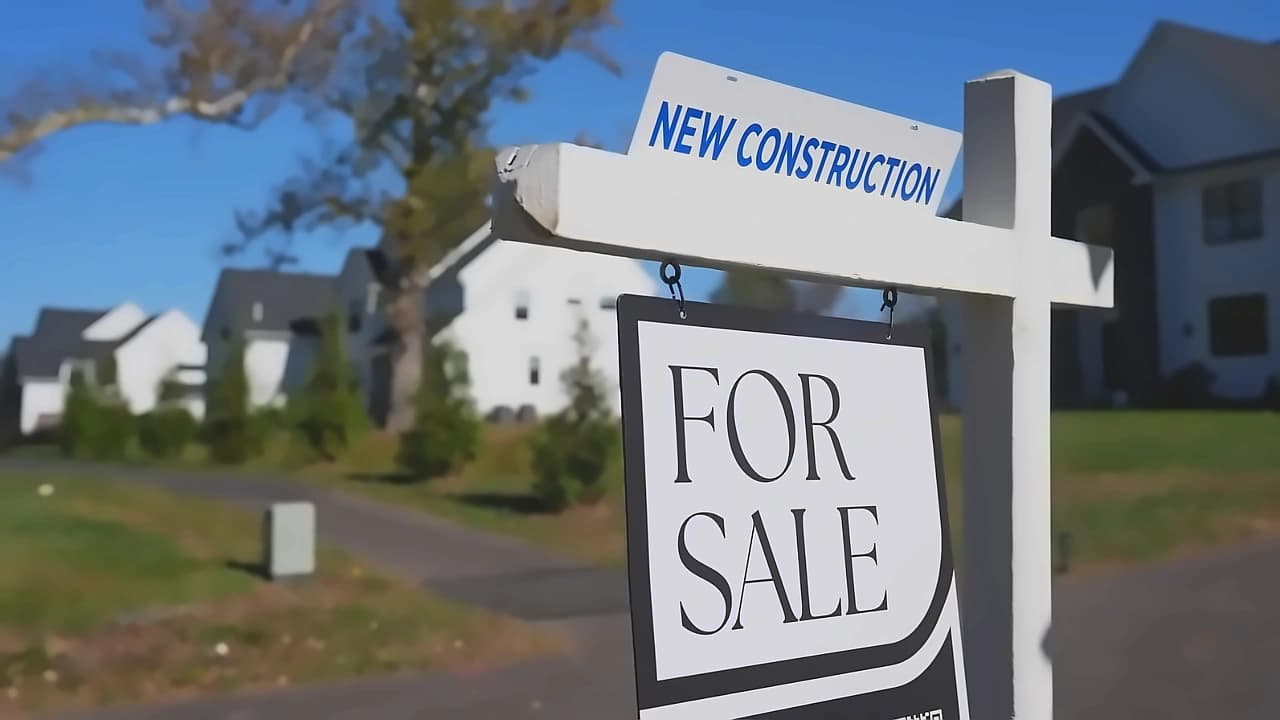
The elevated mortgage rates are creating significant challenges for the spring homebuying season, which was expected to be a rebound period. New-home sales in April declined 6.2% to a seasonally adjusted annual rate of 622,000, according to data from the U.S. Census Bureau and the U.S. Department of Housing and Urban Development. As reported by Nationwide, many builders want to unload existing inventory, driving an increase in price cuts and other sales incentives, but buyers aren't responding due to affordability concerns. Purchase lending totaled nearly $237 billion in the first quarter, down 18% from the fourth quarter of 2025 and down 8% year over year, according to ATTOM data. "Rates have moderated from their peaks, but when you layer persistent lock-in, still-scarce inventory, prices that remain near record highs, and geopolitical uncertainty, you get a market where most buyers are hesitant to make the leap," says Jones. The combination of elevated mortgage rates and rising energy costs is creating a perfect storm for the housing market.