The US Federal Reserve raised interest rates by 25 basis points to 3.75%-4.00% in its latest decision, marking the first rate hike in three years aimed at tamping down above-target inflation. According to The Economic Times, CME FedWatch data shows a 92.3% probability that the Fed will hike rates from the current 3.50% to 3.75% levels, with traders increasingly confident about a 25 basis points hike. The decision was widely expected but represents a significant policy shift under new Fed Chair Kevin Warsh, who had previously advocated for patience in the face of energy supply shocks. As per Reuters, the decision was also seen as a credibility test for new Fed leadership, with the press conference handled well and a unanimous vote allaying fears of an acrimonious path under new leadership. The Fed's actions mark the first of one, maybe two rate hikes to reverse last year's cuts, rather than the start of a new tightening cycle that would slow down the US economy. Financial markets are currently pricing in a 55.4% probability of another Fed rate hike at the central bank's October meeting, up from 42.5% last Friday and 7.2% a month ago, according to CME's FedWatch tool.
As reported by The Economic Times, stocks have been influenced by rising Treasury yields and surging oil prices amid Middle East conflict escalation. Market strategist Art Hogan from B. Riley Wealth identified 5% on the benchmark 10-year Treasury yield and $100 a barrel for oil as psychological thresholds that create market headwinds. According to Reuters, the fact that bond markets, and in particular shorter-term bond yields, have seen increased volatility has been largely driven by the sharp increase in oil prices. These levels pose "psychological lines in the sand" - below them "lets market participants breathe a brief sigh of relief and get more involved," while above them "the market just finds those headwinds to be insurmountable." On Friday, benchmark US Treasury yields topped 5%, while crude prices reversed earlier gains but remained above $100 per barrel, keeping inflation worries front and center. The backdrop is more unsettling given soaring oil prices have sent diesel prices to record levels, which is likely to translate into broader inflationary pressures affecting farming and shipping costs.
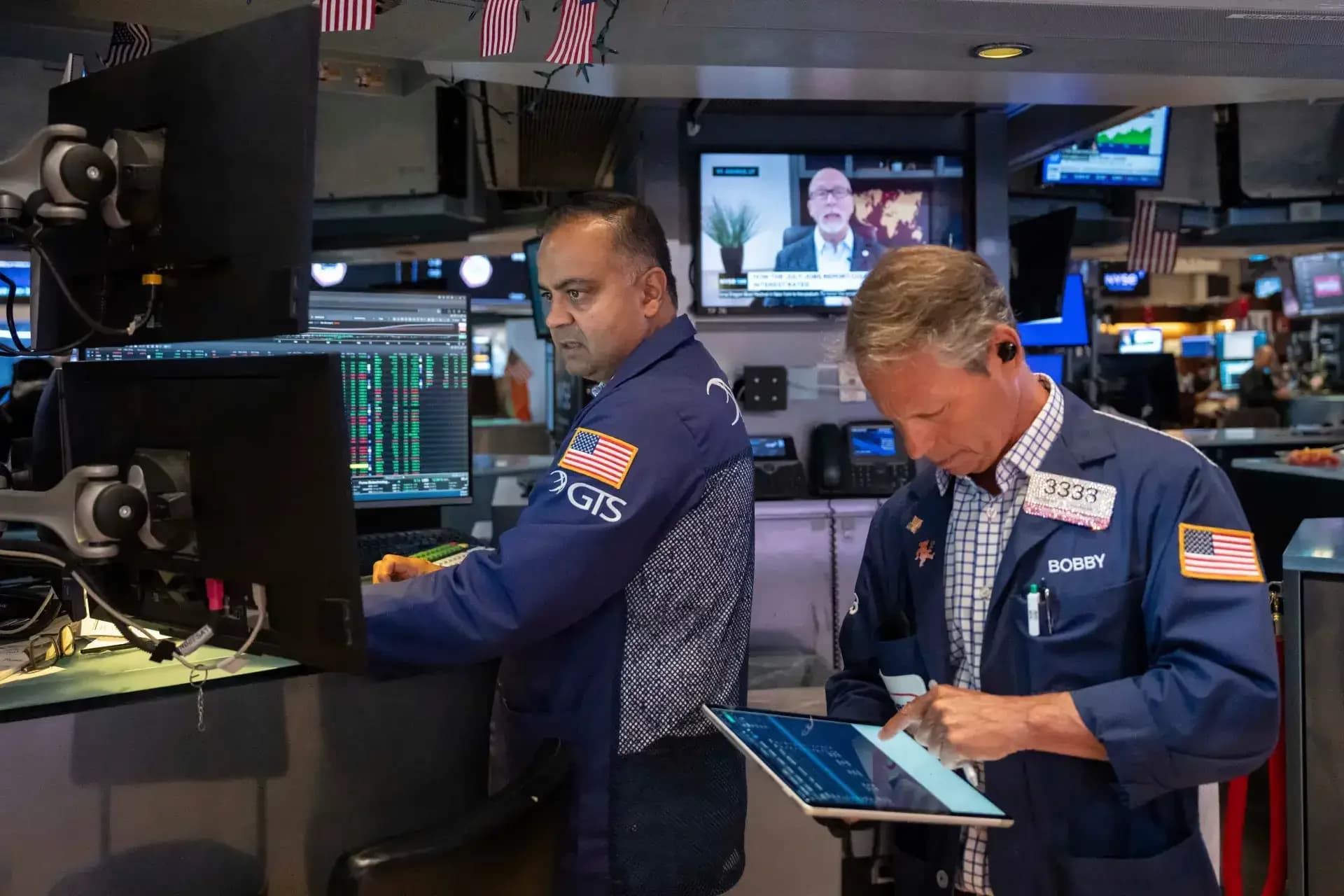
Wall Street closed a volatile week on Friday with mixed performance across major indices. According to Reuters, the S&P 500 gained 12.74 points, or 0.17%, to 7,650.50 and the Nasdaq Composite gained 104.25 points, or 0.40%, to 26,522.55, while the Dow Jones Industrial Average fell 95.40 points, or 0.18%, to 51,682.64. Among the 11 major sectors in the S&P 500, technology stocks gained the most, while utilities ended with the steepest percentage loss. The session capped a week that was essentially split in two: first, restless anticipation in the days before the US Federal Reserve's widely expected interest rate hike, followed by the aftermath of that decision. "It's almost as if everybody got to the end of the week and got exhausted from all the activity this week and decided to just play it close to the vest here," said Chuck Carlson, chief executive officer of Horizon Investment Services. "A lot of investors are trying to figure out not just the short-term implications, but longer-term implications of what the Fed may be embarking on and how that's going to impact equities and fixed-income investments."
As reported by The Economic Times, investors are monitoring an anticipated visit by Chinese President Xi Jinping to the US, including a Thursday meeting with Trump. Among key issues between the two countries, investors are concerned about AI development race and semiconductor restrictions that could impact technology shares, which account for 38% of the S&P 500. According to Reuters, the tech sector has gained over 20% in 2026 but has lost ground since the start of June. "Tech needs to get back in that pole position for us to see those new all-time highs," Mazzola said. Despite tech gaining over 20% in 2026, it has lost ground since June, with investors noting that tech needs to regain pole position for new all-time highs. The semiconductor rally boosted the Nasdaq and the S&P 500, but broader weakness pulled the Dow to a lower close, with the blue-chip Dow suffering its biggest weekly percentage decline since March.
According to The Economic Times, AI is in focus after industry leaders called for a slowdown in development following dire warnings about emerging technology dangers. As per Reuters, AI is also in focus after industry leaders called for a slowdown in development following dire warnings about the dangers of the emerging technology. Slowdown worries modestly weighed on shares of semiconductor companies at the center of the AI boom. Investors were looking for more concrete signs before declaring trouble for the AI spending theme that has boosted equities this year, including potential moves to more heavily regulate the industry. Market commentator The Kobeissi Letter noted that nine days ago, Trump had threatened to "stop trading" with all countries that the U.S. has a trade deficit with if the Fed does not cut rates. "Currently, markets believe the Fed will HIKE rates on Wednesday. In other words, the market now expects Fed Chair Warsh to make the exact opposite policy decision that President Trump wants, just 3 months after he was appointed," the market commentator said. Market strategist Jeff Schulze from Franklin Templeton Institute suggested that any stock weakness from AI regulation could present buying opportunities, noting that regulation may not significantly curtail investment pace.