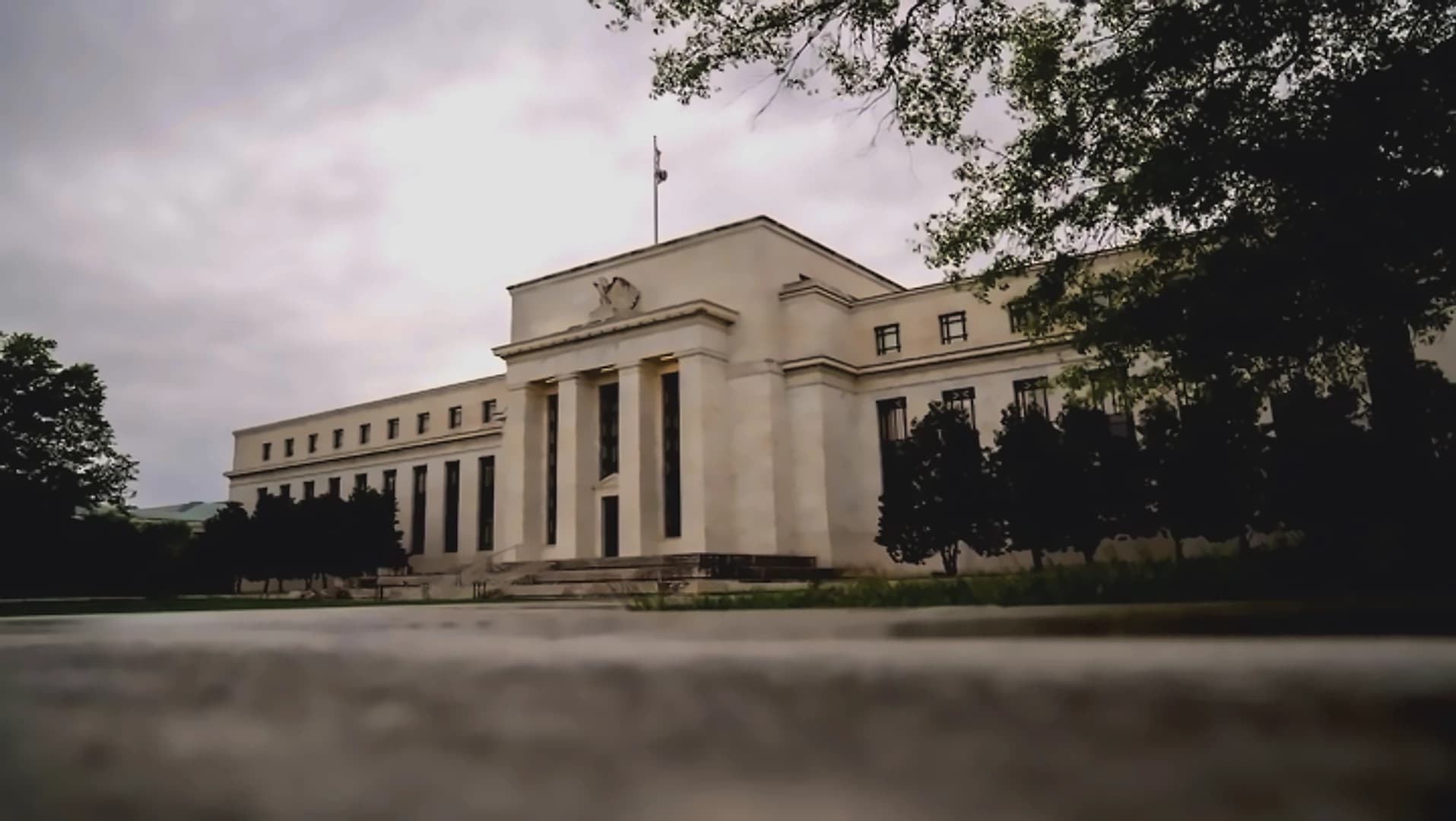
The 30-year U.S. Treasury yield climbed to 5.28% on August 2nd, marking its highest level since July 2007 despite the Federal Reserve's decision to hold interest rates between 3.5% and 3.75% on July 29th. This surge surprised investors, as bond yields would typically ease when the Fed pauses rate hikes. The average yield on the Bloomberg Global Treasury Index has risen to around 3.7%, the highest since 2008 and consistent with one of the steepest monthly declines in bond prices since the pandemic era. The latest Fed meeting reinforced inflation concerns, with three policymakers—Beth Hammack, Neel Kashkari and Lorie Logan—favouring another 25-basis-point hike, highlighting that inflation remains a persistent concern for the committee.
Inflation remains the biggest concern driving the bond market surge, with headline PCE inflation at 3.7% in June and core PCE at 3.3%, both well above the Fed's 2% target. Higher energy prices linked to geopolitical tensions have added to uncertainty, raising concerns that inflation could stay elevated for longer. Fed Chair Kevin Warsh signalled a shift in communication, urging markets to focus on incoming economic data rather than trying to anticipate policy moves, leaving investors relying more on their own inflation and growth expectations. The US GDP grew at 1.5% in Q2 2026, below 2.1% in Q1 and the 2.1% market forecast, while the US core PCE index declined 1.1% MoM in June, providing some relief but not enough to counter inflation worries.
Government borrowing is adding significant pressure to long-term yields, with the Congressional Budget Office estimating the federal deficit reached about $1.4 trillion in the first nine months of fiscal 2026. The Treasury expects to borrow another $671 billion during the July-September quarter, creating substantial supply pressure in the bond market. As debt issuance rises, investors often demand higher yields to absorb the additional supply, particularly when inflation risks remain elevated. The benchmark 10-year Treasury yield has also climbed, increasing borrowing costs across the economy including mortgages and corporate loans, with higher Treasury yields feeding into mortgage rates and making home loans more expensive.
The rising bond yields have significantly impacted cryptocurrency markets, with Bitcoin already shedding over $675 billion in market value since its January high. According to AMBCrypto, U.S. investors have adjusted their positions as yields climbed and inflation remained above the 2% target, with netflows across listed U.S. crypto products posting a sharp drop. SoSoValue tracked a combined inflow of $24.7 million across six asset classes, including Bitcoin, Ethereum, Hyperliquid, and Solana, marking the lowest buy-side netflow since July 8th. Crypto analyst Benjamin Cowen expects the U.S. 10-year Treasury yield to keep gaining strength and sees a high chance of it reclaiming the 5% mark in the near term, noting that lowering rates does not automatically translate into lower yields. On Friday, U.S.-listed products recorded a sharp spike in outflows, with $265.37 million pulled from Bitcoin and $1.83 million from Hyperliquid, while other funds saw thinner flows of $9.03 million and $7.69 million respectively.

Higher Treasury yields are already feeding into mortgage rates, making home loans more expensive and reducing affordability, while US households are carrying record debt levels with rising credit card delinquencies signalling growing financial stress. Higher borrowing costs could further weigh on consumer spending, creating a broader economic impact beyond just financial markets. However, AI spending continues to surge, with major U.S. technology companies spending heavily on data centres and AI infrastructure, supporting parts of the economy even as many households grapple with higher borrowing costs and weaker finances. Whether AI-led investment can offset the drag from tighter financial conditions remains an open question, as the bond market effectively conducts some of the Fed's tightening without actual rate hikes.