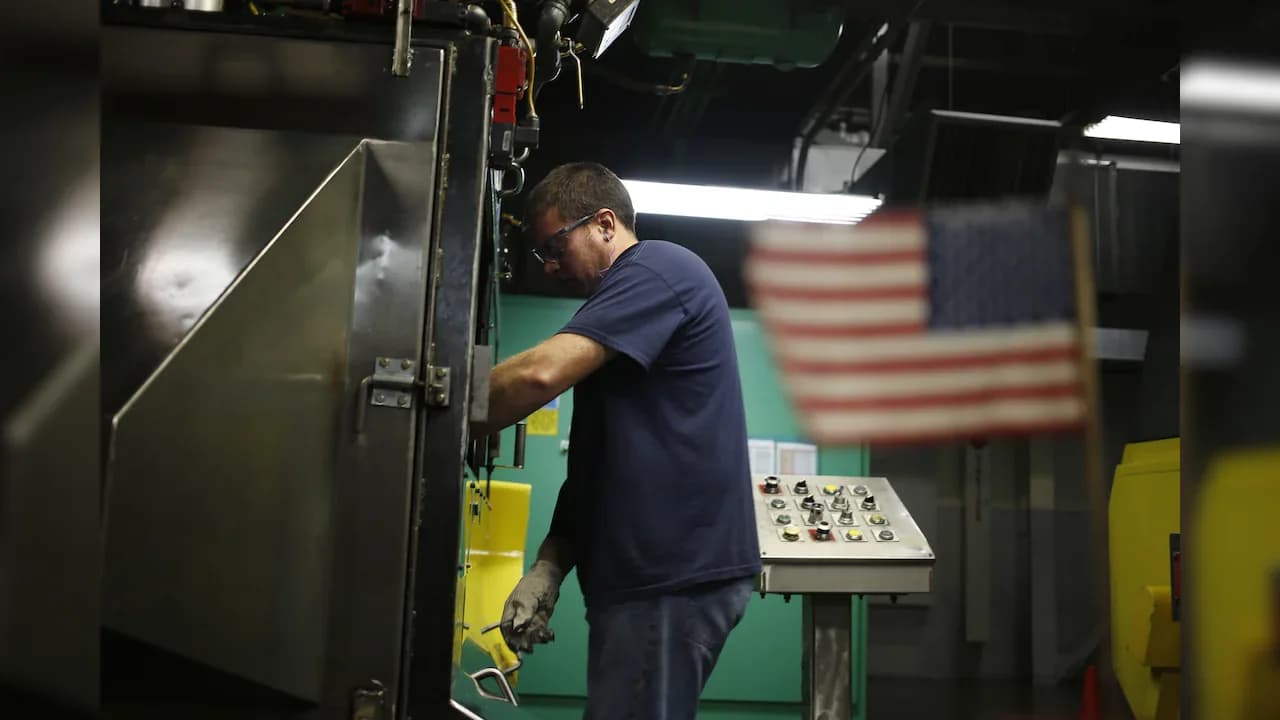
US manufacturing and construction employment has significantly outperformed the broader services economy, with payrolls at goods producers rising 0.6% in the six months through August, according to Bureau of Labor Statistics data. This represents the most growth for any comparable period since 2023 and exceeded the 0.4% pickup within services. The manufacturing employment increase over the last three months alone reached 43,000 jobs, marking the strongest growth since the end of 2022. As reported by NDTV, this surge helped drive the August jobs report that exceeded expectations with payrolls rising the most in five months and the jobless rate holding at 4.1%. The latest data shows US nonfarm payrolls surged by 162,000 in August, nearly tripling market expectations and fueling bets that the Federal Reserve could raise interest rates at its upcoming September meeting.
The employment surge in manufacturing and construction is primarily attributed to the massive artificial intelligence buildout and data center construction, according to Citigroup Inc. economist Veronica Clark. The recent improvement is underpinned by tax provisions in the One Big Beautiful Bill Act passed last year that spurred investment in equipment and facilities. According to NDTV, EY-Parthenon chief economist Gregory Daco noted that the recent pickup in manufacturing employment follows steady job losses over the prior three years. The White House highlighted that employment for people building factories has increased by 90,000 since President Trump took office. The artificial intelligence race is driving one of the largest investment cycles in technology history, with major hyperscalers including Microsoft, Amazon, Alphabet, Meta and Oracle expected to spend about $818 billion in 2026 and $1.12 trillion in 2027 on data centres, chips, networking equipment and other AI infrastructure, according to Jefferies. The massive expansion of AI infrastructure is fuelling a surge in industrial construction as technology companies build more data centres and chip plants, with US construction spending projected to rise from $2.22 trillion in 2026 to $2.85 trillion by 2031, according to Merlo America and BiltData.ai reports cited by Fox News.
The strong August employment data has significantly boosted expectations for Federal Reserve policy action, with short-term rate-hike odds rising to 65% for the mid-September meeting, up from 55% before the report. As reported by Dow Jones, the shift drove short-term two-year yields to 4.37% after touching their highest point since January 2025. The robust job gains, led by rebounds in leisure, hospitality, manufacturing, and construction sectors, have lent solid support to hawkish policymakers. However, analysts expect upcoming consumer price data to serve as the main catalyst in determining whether the central bank actually raises rates, with cooling annual wage growth potentially giving dovish central bankers room to advocate for steady rates if inflation readings show price pressures easing. The US dollar initially rallied on Friday following the jobs report before surrendering most of its advance as investors shifted focus toward next week's consumer price data.
A measure of hiring breadth across 72 manufacturing industries rose in August to the highest level in nearly four years, as reported by the Bureau of Labor Statistics. Job growth was solid across producers of machinery, primary and fabricated metals, computers and electronic products, and electrical equipment and appliances. The August hiring was broad-based in both manufacturing and construction sectors, with the White House noting this represents significant policy success underlying the employment gains. The market size of industrial construction, including factories and data centres, is anticipated to reach $684 billion by 2031, accounting for about 24% of total US construction spending, according to Merlo America and BiltData.ai reports cited by Fox News. Building a large data centre requires heavy-equipment operators and logistics workers during site preparation, followed by concrete workers, electricians, plumbers and other specialised tradespeople. As data centres require substantial power infrastructure, electrical workers' demand is rising significantly across the US, with the employment opportunity extending well beyond the initial construction phase as data centres need workers to install equipment, monitor operations, carry out maintenance and support future expansion.
Wall Street's main indexes were muted at the open on Friday after the stronger-than-expected jobs reading prompted investors to amplify bets the Federal Reserve could hike interest rates this month. As reported by Dow Jones, the Dow fell 0.33%, the S&P 500 dropped 0.16% and the Nasdaq lost 0.04% at 9:44 a.m. ET. The shift in rate expectations has also impacted commodity markets, with gold prices dropping over 1% on Friday, putting bullion on track for a weekly decline after the jobs report. Market participants are now turning their attention to next week's consumer and producer inflation readings, which are expected to serve as the ultimate determining factor for the central bank's mid-September policy decision. The robust economic data has shifted market focus heavily toward these inflation metrics to see if central bankers will move forward with monetary tightening, despite moderate wage growth suggesting the labor market itself is not stoking inflation.