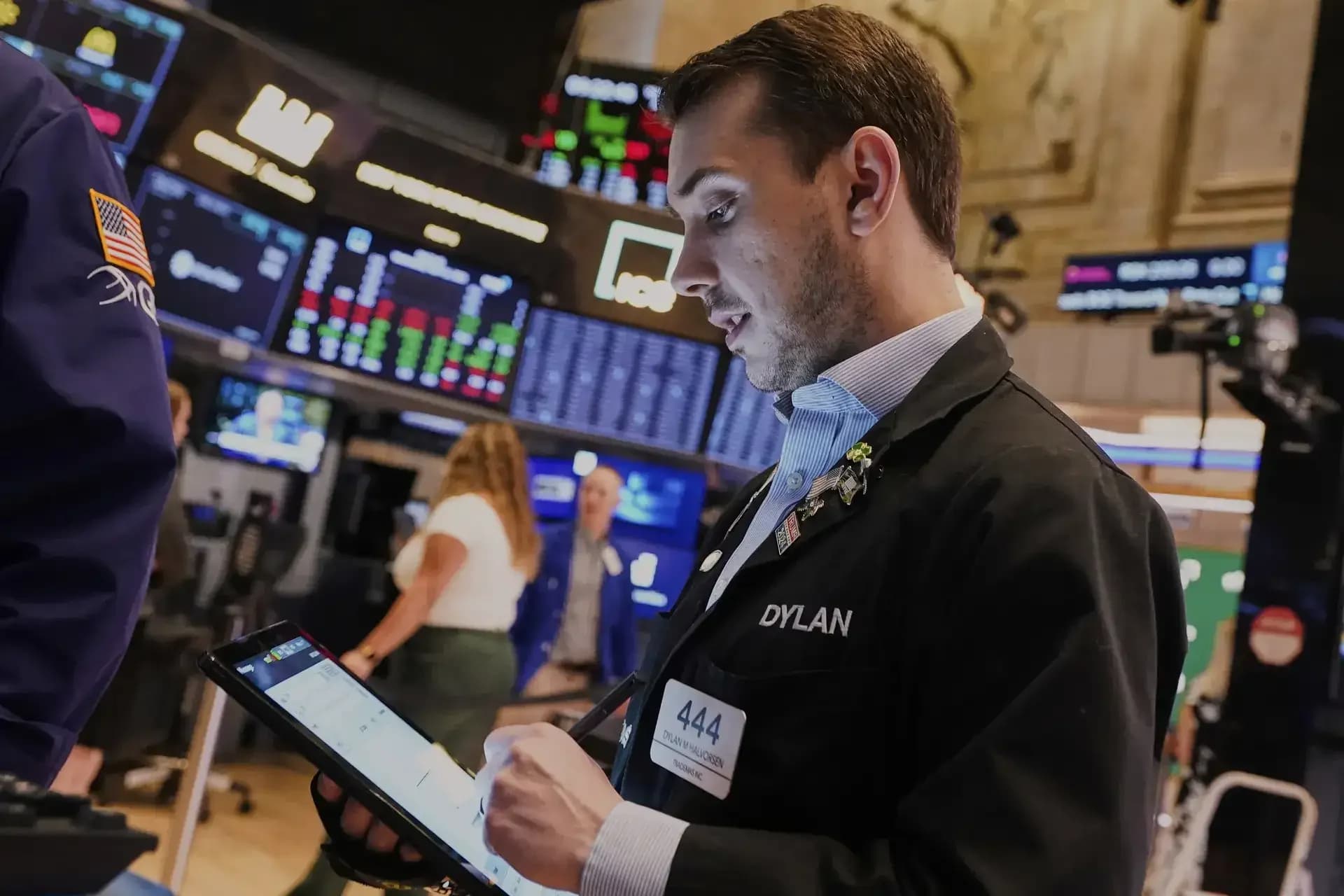
U.S. Treasury yields jumped on Friday following a surprisingly strong employment report that exceeded market expectations by a significant margin. According to Reuters, the U.S. created 162,000 jobs in August, approximately three times the 56,000 that economists forecasted in Reuters polls. The Bureau of Labor Statistics also revised July's previously reported drop of 23,000 jobs to an upwardly revised gain of 21,000 jobs. The robust employment data caught markets already looking ahead to next week's inflation reports, particularly the core consumer price index (CPI) that may influence Federal Reserve policy decisions. Treasury yields had been dropping before the data and sharply reversed course to trade higher on the day, with the 10-year yield last up 1.21 basis points at 4.774% after reaching 4.812% just after the report. As Bret Kenwell, U.S. investment analyst at eToro, noted, "In the Fed's eyes, the labor market is holding up, which means inflation remains the bigger problem."
The employment data has dramatically increased investor expectations for tighter Federal Reserve policy, with money market expectations of a rate hike this month jumping to nearly 60% as a result, from 55% prior to the release, according to the CME FedWatch Tool. According to Kyle Rodda, senior financial market analyst at Capital.com, "A much stronger than expected headline number opens the door for the Fed to hike rates this month." The initial bond selling wave propelled yields to multiyear highs, with two-year yields, which are particularly sensitive to monetary policy changes, hitting their highest since January 2025. Short-term interest-rate futures prices initially implied about a 65% chance of an increase in the U.S. policy rate at the Fed's meeting this month, though they later retreated to 57%. The yield on benchmark 10-year notes was last up 1.21 basis points at 4.774%. Financial markets are now pricing in a 58.4% likelihood of a 25-basis-point rate hike at the conclusion of the Fed's September meeting, up from 49.4% on Thursday, as per CME's FedWatch tool. Two-year yields led the rise, up 4 basis points at 4.37%, with the yield briefly peaking at 4.4246%, its highest since January 2025. However, Fed funds futures now show traders pricing in 59% odds of a rate hike next week, with the 2-year note yield rising 1.46 basis points to 4.394% and the 10-year yield gaining 1.43 basis points to 4.798%.

Traders are now focusing on this week's key inflation reports as the real test for Federal Reserve policy direction. As per Reuters, "The market's waiting on PPI and CPI. I think that's going to dictate next week's Fed decision," said Will Compernolle, macro strategist at FHN Financial. The Labor Department is scheduled to release the Producer Price Index for August on Thursday, followed by the Consumer Price Index for the same month on Friday. These reports are seen as crucial evidence that inflation pressures are continuing to cool, which policymakers are looking for before making rate decisions. The 10-year yield is trading near its highest level since October 2023 as investors position for possibly higher interest rates, a "higher-for-longer" inflation backdrop and a still-resilient economy. Compernolle noted that "The rising yields we've seen so far are pretty close to fundamentals," adding that "this could just be a sign of the new normal. It's not necessarily symptomatic of something going wrong."
Despite the climb in yields, the Treasury saw strong demand for its latest auction, indicating continued investor appetite for U.S. government debt. The Treasury saw good demand for a $58 billion auction of three-year notes on Tuesday, with the debt selling at a high yield of 4.474%, slightly below where it traded ahead of the auction. Demand was 2.72 times the amount of debt on offer, the highest since November, according to Reuters. The Treasury will also sell $39 billion in 10-year notes on Wednesday and $22 billion in 30-year bonds on Thursday. The climb has also pushed 30-year yields to their highest levels since 2007, though this has stoked concerns about demand for U.S. debt as the government's fiscal trajectory continues to deteriorate.
Oil prices rose to a six-week high after Iran-backed Houthis in Yemen attacked Saudi energy facilities, setting oil installations ablaze and threatening a major expansion of the six-month-old Middle East war. Brent crude futures settled at $92.68 a barrel, up 76 cents (0.8%), while West Texas Intermediate crude futures finished at $91.48 a barrel, up 18 cents (0.20%). For the week, Brent crude rose 7.6% while U.S. crude gained nearly 10%, as supply routes in the Middle East remain impaired due to the war. The price increases reflect concerns about potential supply disruptions and higher transportation costs in the region. Iran said it targeted three oil tankers in the Strait of Hormuz, as well as a number of US-linked ships, in retaliation for American attacks on vessels over the weekend, as reported by Bloomberg. These developments add to market uncertainty as investors assess the impact of geopolitical tensions on energy markets.