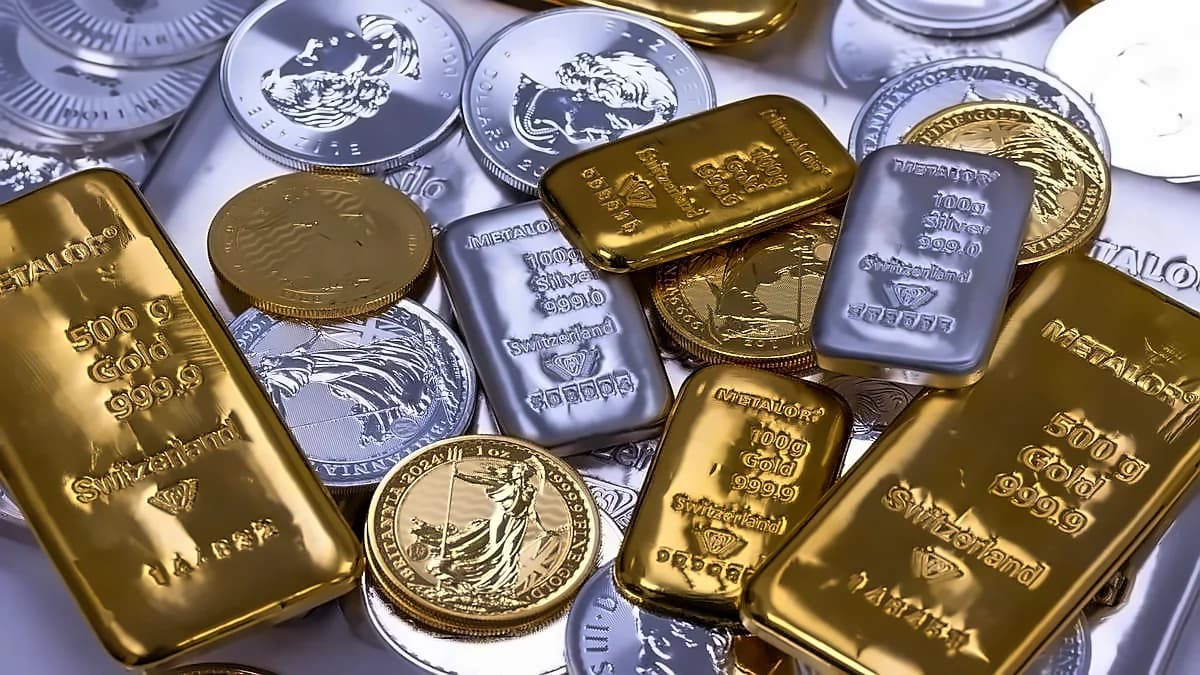
Gold prices have retraced sharply from their late August peak near $4,700 to lows around $4,250 earlier this week, representing a pullback of roughly 10% in less than three weeks as a run of inflation data came in above expectations, lifting Fed hike odds close to 90%. According to Kotak Securities, the speed and scale of that correction reflects how sensitive bullion has become to the rate narrative, but it also raises a more important question for investors watching tonight's FOMC decision, whether the bulk of the repricing is already behind us. Gold is currently trading around $4,288.48 per ounce as of 0143 GMT, with US gold futures for December delivery also down 0.1% at $4,328.10. As per The Economic Times, gold prices were subdued on Wednesday as market participants hunkered down ahead of the U.S. Federal Reserve's policy decision, where a rate hike is widely expected.
With hike expectations now heavily priced into markets, the more consequential question for gold is not whether the Fed acts tonight but what the updated dot plot and economic projections signal about the path beyond September. According to Kotak Securities, three or more additional hikes embedded in the dot plot through 2027 would constitute a genuine hawkish surprise and could open the door for gold to test the $4,250 to $4,200 zone and potentially press toward $4,000 in the coming sessions if real yields push decisively higher. Conversely, a dot plot that clusters around a single further increase would likely be interpreted as a softer outcome than current yields imply, helping gold sustain above $4,300 and creating scope for a relief move back toward $4,400 to $4,500. This is also a projections meeting, which means three distinct pieces of information arrive in close succession: the rate decision, the dot plot and Chair Warsh's press conference, with each carrying different weight and the dot plot and press conference being the variables that the market has not yet fully priced.
Two factors outside the FOMC's direct control are worth keeping in focus alongside tonight's decision. According to Kotak Securities, the first is the US Treasury's long-end buyback programme, which in August more than doubled its bond repurchase operations from $2 billion to at least $4 billion per operation, targeting the 10-to-30-year sector where yields had reached levels not seen in nearly two decades. The second factor is the Bank of Japan, which announces its own policy decision in the days following the Fed, with markets positioning for a possible BoJ rate increase and the yen already strengthening in anticipation. That yen appreciation has already applied some downward pressure on the dollar, which reduces the additional headwind gold would typically face from a firmer dollar following a Fed hike. If the BoJ does raise rates, further yen strength could add to that dollar softness, providing gold with a degree of currency support that runs independently of whatever the Fed delivers tonight.
Gold October futures are currently consolidating after witnessing a sharp rally, with prices trading around ₹1,51,750 and facing immediate resistance near ₹1,53,250, which coincides with the short-term moving average. As per Kotak Securities, a sustained close above this level could trigger a recovery towards ₹1,57,130 and ₹1,60,345, while the broader chart remains cautious as gold is still below a declining trendline, with momentum remaining neutral with the RSI near 47. On the downside, ₹1,48,470 is the first important support, followed by ₹1,45,980–₹1,44,867, with a break below this zone potentially weakening the medium-term structure further. Gold is likely to remain range-bound with a cautious bias until it decisively breaks either ₹1,53,250 on the upside or ₹1,48,470 on the downside. Despite near-term headwinds, gold has most traded around $4,290 an ounce since bouncing from a floor near $4,000 an ounce in early August, as traders repeatedly recalibrate the outlook for Fed policy.
The weakness in the Indian rupee provided additional support for domestic precious metals, with USD/INR rising sharply during the week as the Indian rupee weakened by around 1.1% to close at 95.54 per dollar, marking its steepest weekly decline in four months. According to CNBC TV18, the elevated crude prices, rising global bond yields and continued dollar demand weighed on the Indian currency, while RBI intervention through dollar-rupee swaps helped limit the pace of depreciation. The weaker rupee raises the landed cost of imported bullion, providing some support to MCX gold and silver rates even when international prices remain under pressure. Gold demand in India was subdued this week as volatile prices discouraged buyers, while investment demand remained strong in top consumer China. The precious metals market continues to reflect the ongoing tension between inflationary pressures and Federal Reserve policy expectations, with gold finding support despite short-term volatility as investors position for potential monetary policy changes.