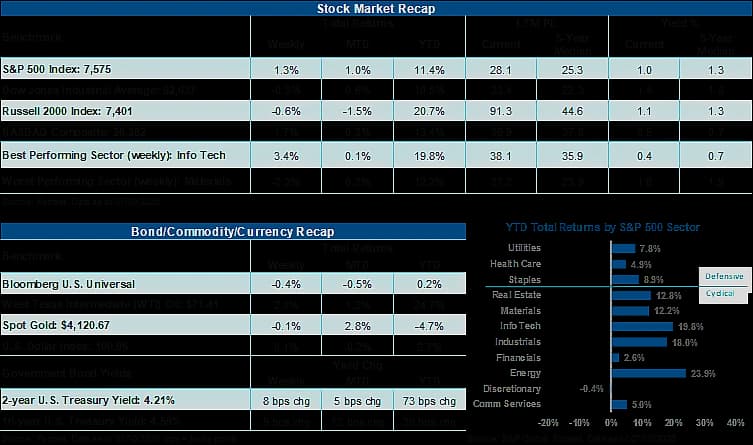
Major Wall Street indexes opened higher on Friday, August 21, recovering from a technology-driven slump in the previous session, with the Dow Jones Industrial Average rising 520.93 points, or 0.99%, to 53,280.14, the S&P 500 gaining 32.94 points, or 0.43%, to 7,674.10 points, and the Nasdaq Composite adding 112.20 points, or 0.43%, to 26,179.37, according to The Economic Times. The gains halted a week-long slide by tech shares, which have stumbled as long-dated Treasury yields climbed to their highest level since 2007. Wall Street is coming off a weak session in which rising Treasury yields renewed pressure on equities, particularly capital-intensive technology and artificial intelligence stocks. On Thursday, the S&P 500 fell 0.9%, while the Nasdaq Composite declined 1%, with the Dow Jones Industrial Average also ending lower. The recovery comes after three consecutive days of modest losses since setting all-time highs on Thursday, with the Nasdaq 100, which comprises particularly of chipmaking companies, shed over 500 points or 1.7% on Tuesday. Among the S&P 500's 11 major sectors, the information technology sector created the biggest index-point drag and was the benchmark's biggest percentage loser, with information technology stocks on the S&P 500 dipping during the session with chip stocks leading losses. Goldman Sachs Group shares rose 2.32%, JPMorgan Chase & Co. was up 1.23%, Nike and Johnson & Johnson were up nearly 1%, while Apple Inc. fell 1.26% and Walmart Inc. was down 0.77%.
Bitcoin rallied for a fifth straight day, with the currency soaring as much as 9.4%, the biggest intraday move since February, to more than $79,000, according to Moneycontrol. Strategy Inc. shares gained 6.1% with other cryptocurrency-linked stocks following suit. The strong trigger in Bitcoin was driven by Treasury's move to buy back bonds at the longer end of the yield curve, as Bernstein analysts noted in their report. "We are not macro experts, but we do know Bitcoin historically has had a positive reaction to liquidity expansion," Bernstein analysts wrote. Friday's gains weren't enough to keep the S&P 500 from posting its first losing week in a month as the US 10-year yield moved slightly higher to 4.73% and crude oil touched nearly $95 per barrel, the highest level in four weeks. The Treasury's buyback action, meant to rein in long-term yields, was a catalyst for moves across markets, though the gains soon fizzled with markets ending lower on Thursday even after Treasury Secretary Scott Bessent said he might further expand the efforts.
Stronger-than-expected US services sector data helped ease investor concerns about economic momentum, with the services sector showing the strongest growth in nearly two years, powering a sharp acceleration in overall business activity in August, according to The Economic Times. This offset a slowing of growth in the manufacturing sector that is being restrained by reduced stock building and supply disruptions from the Iran war. S&P Global gauges showed US business activity grew at its fastest pace in more than four years, providing crucial support for the equity market recovery. UBS Global Wealth Management raised its year-end target for the S&P 500 to 8,100, citing a stronger earnings outlook and robust corporate profit growth. Chris Zaccarelli, chief investment officer at Northlight Asset Management, noted that "Markets are taking a bit of a breather. It's a pretty calm day", as reported by The Economic Times. Equity investors have been taking their cues from the direction of U.S. government bond yields in recent sessions as the prospect of higher borrowing costs dampened risk appetite. Stocks had closed lower on Thursday as bond yields rose while equities had advanced on Wednesday as bond yields fell, creating a seesaw pattern throughout the week.
The Treasury's expanded bond buyback programme has faced mixed market reception, with analysts questioning its effectiveness in controlling long-term yields, according to Moneycontrol. "The reversal suggests investors remain focused on the fundamentals behind elevated yields rather than the mechanics of Treasury buybacks," Mark Malek, chief investment officer of Muriel Siebert & Co., wrote in a note. "Inflation uncertainty, large deficits, debt supply, and term premium remain difficult for policymakers to overcome through market operations alone." If the department's plan doesn't tame yields, that would pressure the dollar and spur short bets against riskier assets in the leadup to the November midterm elections, according to Bank of America Corp. strategist Michael Hartnett. That could mean increased bearish wagers against AI hyperscalers in the coming weeks. Patrick Armstrong, chief investment officer of Plurimi Wealth, commented on Bloomberg Television that "I think it's probably backfired, it's probably pushed him to do more to follow through." Anytime you try to control 30-year yields, it's always going to be the market that wins, unless you're the Fed that has the unlimited balance sheet. You can't do that as the Treasury secretary."
Ross Stores was among the stocks leading the gains, rallying after the retailer boosted its annual profit forecasts and reported better-than-expected quarterly results, according to The Economic Times. CEO Jim Conroy said the company had attracted more new customers while also seeing stronger engagement from existing shoppers. The off-price retailer also benefited from refunds related to tariffs. In single-stock moves, Ross Stores Inc. gained 4.4% after the discount retailer boosted its earnings forecast for the full year. The company said comparable-store sales growth was supported by "both an increase in new customers and higher engagement from existing customers," marking a shift from Walmart Inc.'s earnings on Thursday, which saw the lowest comparable sales growth in years. Most US companies have delivered stronger-than-expected spring earnings, helping fuel the stock market's recent advance to record levels, with over longer periods, stock prices generally tend to track the direction of corporate profits. Among top gainers, Samsung shares jumped 10.10%, Apple and Amazon gained by 2.2% and 2.5% respectively, while Tesla zoomed by 4.23%, Eli Lilly climbed 4.5%, Netflix shares advanced 3.2%, and Tencent soared 2.4%. However, chipmakers and AI-related tech stocks faced significant selling pressure, with Broadcom down 4.6%, SpaceX plunging 2.6%, AMD and Intel declining by 3.7% and 4% respectively, and Nvidia also slipping 1%.
In the week ahead, investor attention will turn to quarterly results from AI chip leader Nvidia and software companies such as Intuit, Salesforce and CrowdStreet, according to The Economic Times. Nvidia Corp. is set to report earnings after the market closes on Wednesday, with the AI trade getting a stress test next week. Nvidia is leading an effort by financial firms to raise $500 billion to finance the AI build-out as it hopes to assure its investors that there are plenty of deep-pocketed firms ready to finance its clients, particularly startups such as Anthropic and OpenAI. Traders will watch for insights into demand for Nvidia's chips and the company's financing plans. Bessent will provide more details on the Treasury Department's plans during a press conference on Monday, which could give traders clarity on where yields might go. Toward the end of next week, the market could gain even more clues on the direction for rates with Federal Reserve Chairman Kevin Warsh set to speak at Jackson Hole Economic Policy Symposium on Friday. Among the S&P 500's 11 major industry sectors, most advanced on Friday, with materials outperforming, while utilities lagged the most during the session.