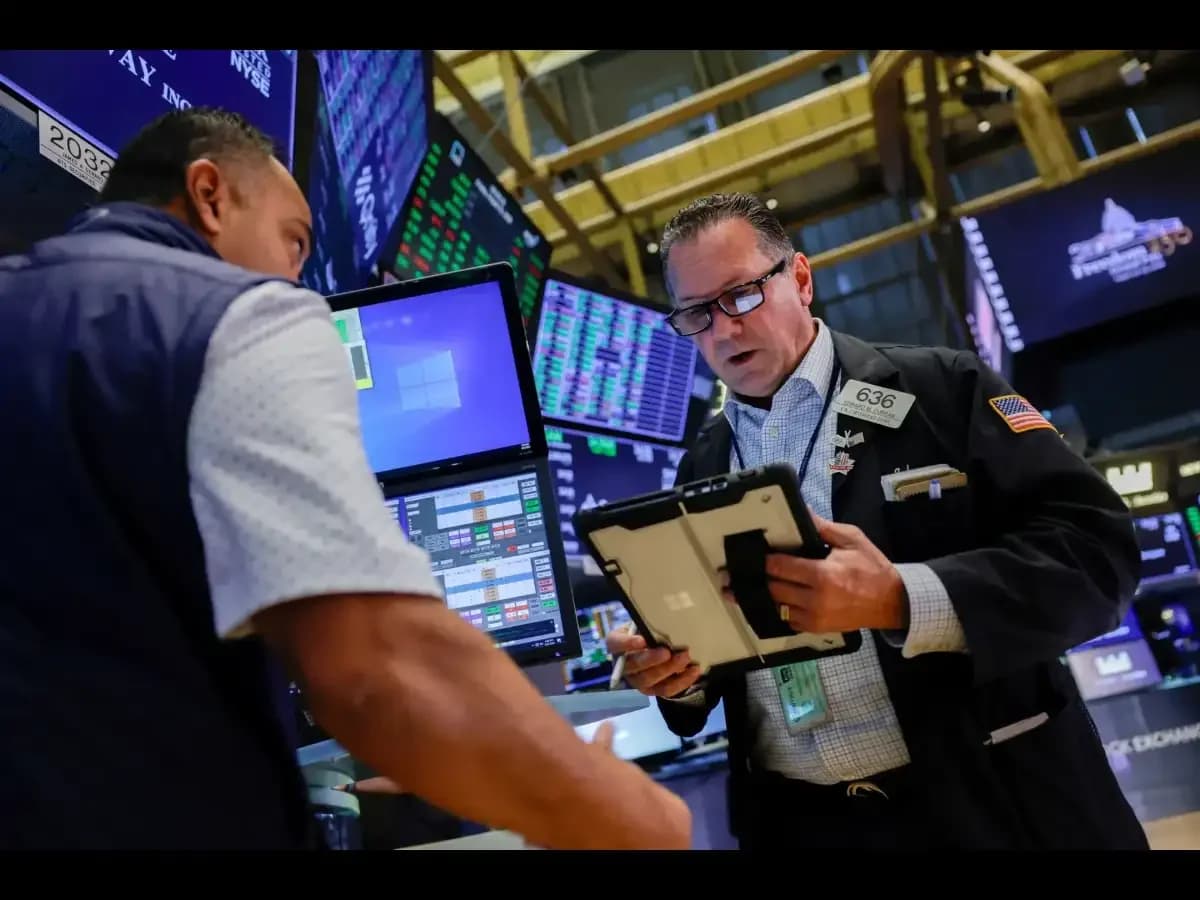
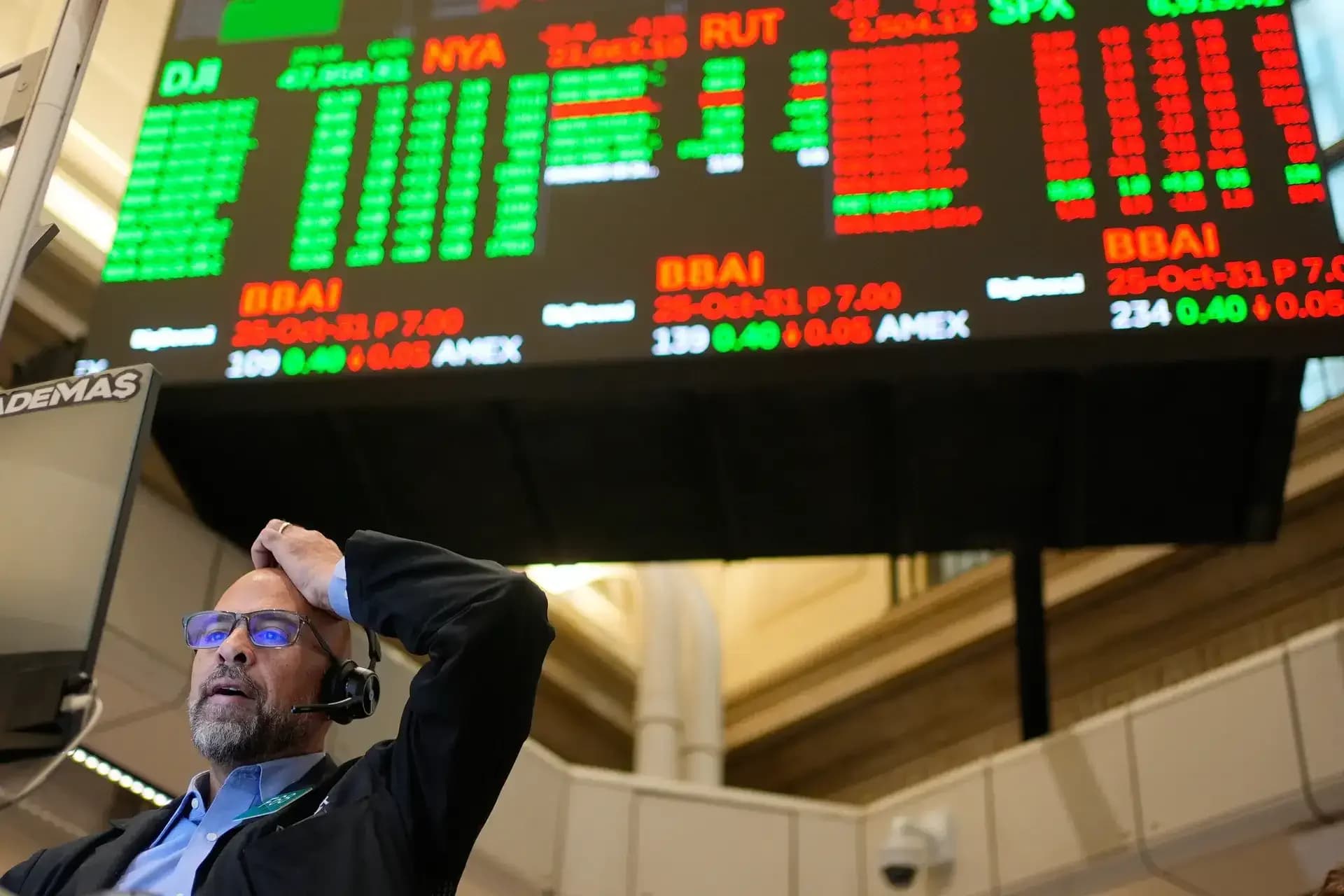
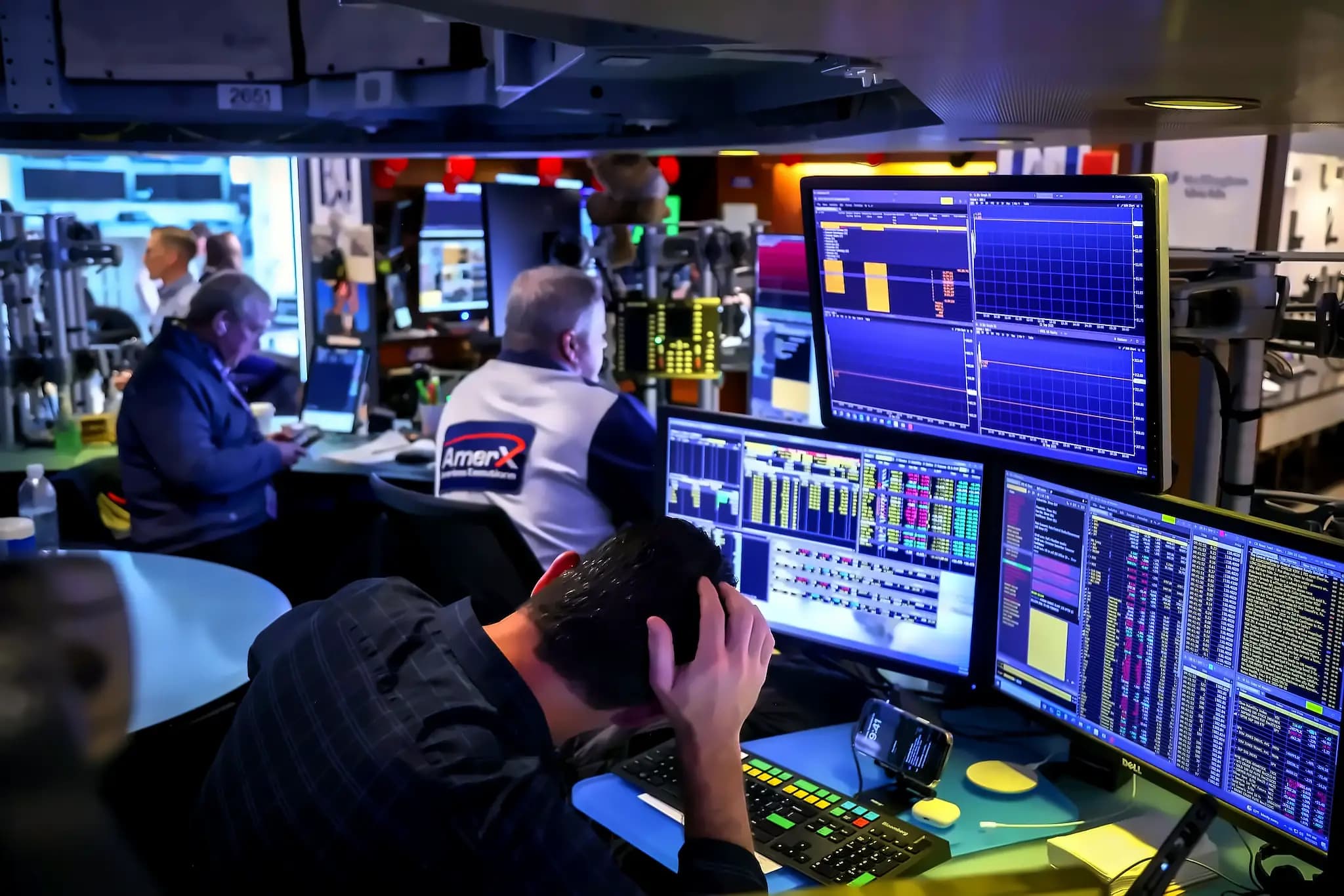
The Dow Jones Industrial Average plunged 1,153 points, or 2.19%, marking its worst single-day drop since April 2025 - the period of President Trump's first tariff tantrum. The Federal Reserve held interest rates steady at the 3.50%-3.75% range as widely expected by economists, though the decision drew dissents from three of the 12 Federal Open Market Committee members who preferred a quarter-point hike. The S&P 500 fell 1.5% after swinging sharply between gains and losses in the last hour of trading, while the Nasdaq composite slumped 1.7% to fall 9.8% below its record set last month. The Philadelphia Semiconductor Index dropped 5.3%, its fifth straight session of declines, as reported by NDTV. The Federal Open Market Committee voted 9-3 to hold the benchmark federal funds rate, with Dallas Fed President Lorie Logan, Cleveland's Beth Hammack and Minneapolis Fed chief Neel Kashkari dissenting in favor of raising rates by a quarter percentage point. According to Charles Schwab, the Dow Jones was poised to fall as investors digested a wave of earnings reports ahead of the Federal Reserve's interest rate decision.
Oil prices experienced dramatic volatility, with Brent crude leaping 7.3% to settle at $88.09 per barrel after fighting resumed in the war with Iran and raised worries about global oil flow. The price of Brent crude had swung as low as $72 early this month and as high as $102 last week on uncertainty about whether the United States and Iran could reach a deal to allow oil tankers to move freely again from the Middle East. West Texas Intermediate was up more than 7% to around $85 a barrel after President Donald Trump reiterated that the US would hit Iran hard. The spike followed President Trump's statement that the US would hit Iran "very hard," followed by a statement from US Central Command (CENTCOM) confirming that Iran's Islamic Revolutionary Guard Corps launched multiple ballistic missiles targeting US forces in the region, though the missiles were successfully intercepted. Traffic through the Strait of Hormuz remained limited, while Houthi militants continued to threaten vessels near the Bab el-Mandeb Strait, with only five commodity ships passing through on Wednesday, down from 39 on Tuesday.
Technology stocks faced severe pressure as Nvidia was the heaviest weight on the S&P 500 after the chip company fell 3.6%, while KLA Corp lost 10.8% even though it reported stronger-than-forecast profit and revenue for the latest quarter. SK Hynix's stock in Seoul dropped 9.6% reporting record amounts of revenue and profit for a quarter thanks to strong demand because of AI but its 257% growth in revenue still wasnt enough to meet analysts expectations. The skepticism has hit South Korea's stock market in particular because it's dominated by two tech giants, Samsung Electronics and SK Hynix. Seoul's Kospi index tumbled 6% Wednesday, a day after it plunged 10.8%, and trimmed its gain for the year so far to 34.4%. Hims & Hers Health tumbled 14.7% after the Federal Trade Commission, Utah and California alleged it shared consumers sensitive health information about medical conditions with third-party advertising platforms despite claiming its services maintain consumers privacy.
Treasury yields swiveled up and down following the Fed's decision and Warsh's insistence on not guiding the market. The yield on the two-year Treasury, which closely tracks expectations for Fed action, fell to 4.24% from 4.26% late Tuesday, while the 10-year Treasury yield jumped to 4.68% from 4.61% late Tuesday. This dramatic surge in yields suggests bond investors think Fed Chair Kevin Warsh is falling behind on inflation control. Interest-rate swaps reflected a roughly 34% probability that officials led by Chairman Kevin Warsh will boost borrowing costs in September after the decision, even as some officials signaled growing conviction that a hike would be needed to control resurgent inflation. Warsh has committed to breaking the market's dependence on forward guidance from Fed officials, leaving traders with less certainty than normal. Warsh said in his press conference that "Market prices will continue to respond in the direction and magnitude they see fit. This is in my view a change for the better, and we're just getting started." However, bond investors stayed unconvinced, with DoubleLine's Jeffrey Gundlach noting that rising long-term yields showed markets pricing in hikes on their own regardless of Wednesday's hold.
The market anticipates potential future interest rate hikes due to ongoing inflation concerns, with the benchmark S&P 500 hitting its lowest level in a month while the tech-heavy Nasdaq was down about 9% from its June record high. Higher rates particularly hurt stocks seen as the most expensive, and scrutiny has already been rising on makers of computer chips and other winners of the frenzy around artificial-intelligence technology. The recent surges for sellers of computer processors and memory are backed by real revenue and profits, but the exceptional growth won't be sustainable if AI does not produce as much profit and productivity as hoped. In stock markets elsewhere around the world, indexes were mixed with Hong Kong's Hang Seng rising 2% and Japan's Nikkei 225 falling 1.5% for two of the bigger moves. With less guidance from the Fed, financial markets may be set for more volatile trading amid the uncertainty.