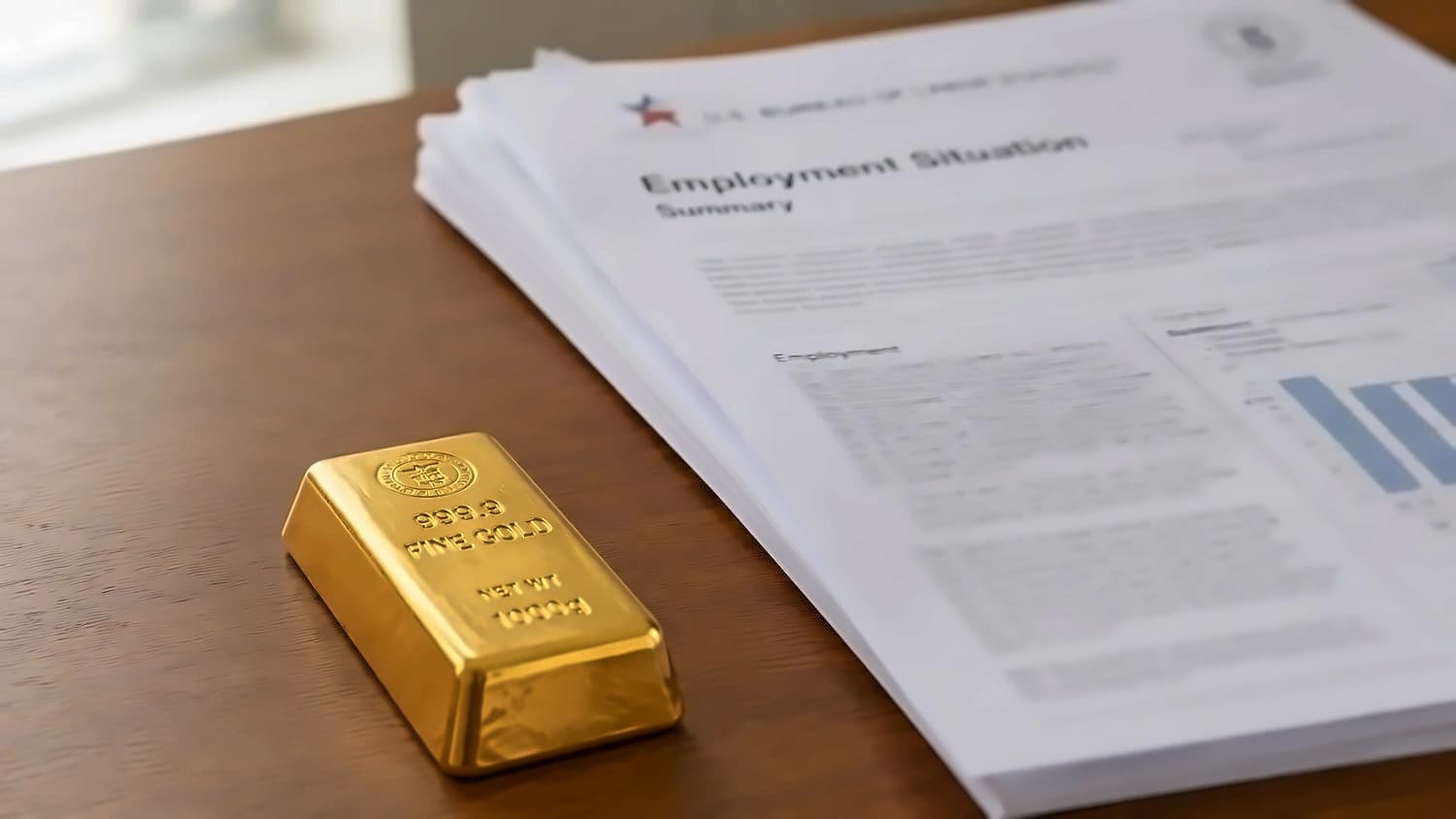
Gold prices extended sharp gains in early U.S. trading on Tuesday as heightened geopolitical tensions following a U.S. attack on Venezuela bolstered bullion's safe-haven demand. According to Investing.com, spot gold edged 0.3% higher to $4,462.91 an ounce by 08:47 ET, while U.S. Gold Futures rose 0.5% to $4,473.00/oz. The yellow metal had surged 2.7% the previous session, its strongest single-day rise in weeks, as investors rushed into the precious metal amid escalating uncertainty in global markets. It had hit a record high of $4,549.71/oz last week, but heavy profit-taking after that weighed on bullion. The rally was driven largely by developments in Venezuela, where U.S. forces launched a surprise operation over the weekend that resulted in the capture of President Nicolás Maduro, sharply raising geopolitical risk and rattling commodity markets. Maduro was transferred to the U.S. to face long-standing narcotics-related charges and pleaded not guilty in a New York court on Monday, according to officials. A Reuters report said U.S. President Donald Trump is planning to meet with executives from major U.S. oil companies to discuss ways to boost Venezuelan oil production, adding to the geopolitical uncertainty.
Markets are currently pricing in two more rate cuts by the Federal Reserve this year, creating a backdrop that tends to favor non-yielding assets such as gold. According to Investing.com, Minneapolis Federal Reserve President Neel Kashkari said inflation in the U.S. was slowly easing, reinforcing hopes that the central bank may have room to loosen policy if price pressures continue to moderate. Interest-rate futures at the time showed markets pricing in as much as a 67% probability that the Federal Reserve would raise rates by at least 25 basis points before year-end, but recent developments suggest a more dovish shift. Whether gold's rebound can continue will depend on the final outcome of US-Iran negotiations, as a formal agreement could ease inflation pressures and weaken gold's safe-haven appeal temporarily.
Other precious and industrial metals also remained upbeat on Tuesday. As reported by Investing.com, silver spot prices jumped 2.7% to $78.69 per ounce, while platinum spot prices rose 2.3% to $2,327.14/oz. U.S. Copper Futures jumped 0.7% to $6.02 a pound as it trades near highest levels on record. According to ING analysts, "Copper's rally continues to be fuelled by mine supply disruptions and distortions to trade flows amid US President Trump's tariffs." The prospect of prolonged geopolitical friction and policy shifts helped underpin gold's appeal as a hedge against volatility, with bullion also supported by expectations that U.S. interest rates will move further lower in 2026.
Gold continues to trade in a broader bullish structure despite the sharp corrective phase seen during April. According to Motilal Oswal Financial Services, the recent rebound from the ₹139,000–140,000 Fibonacci support zone has shifted momentum back in favor of buyers, with prices now stabilizing above the crucial 0.5 retracement level near ₹150,000. Technically, the market is attempting to build a higher base while holding above the Bollinger Band midline, indicating improving trend strength. The Fibonacci retracement structure highlights ₹154,700–156,500 as the immediate resistance cluster near the 0.618 and 0.786 retracement zones. A sustained breakout above ₹161,500 could trigger fresh upside momentum toward ₹164,000 and eventually the ₹170,000 psychological region. On the downside, ₹155,000 remains the key pivot support for the week, followed by ₹150,000 which aligns with the 50% retracement and previous breakout base.

The upcoming week will test whether inflation persistence and growth momentum can sustain current policy expectations across major economies, with US-Iran negotiations adding a new layer of uncertainty to market dynamics. According to reports from Investing.com India, markets will closely monitor Australian inflation data on Wednesday, May 27, the Reserve Bank of New Zealand policy decision, and US Core PCE and GDP releases on Thursday, May 28. The sequence between inflation, monetary policy and growth expectations will define cross-asset positioning through the second half of the week, while gold and silver prices are likely to remain rangebound as traders await clarity on evolving US-Iran negotiations. The week's key dynamic remains the interaction between inflation expectations, real yields, US Dollar direction and commodity-linked currencies, with currencies translating expectations into pricing while commodities adjust through USD direction, real yields and growth expectations.
On Thursday, May 28, markets will reprice inflation and growth expectations through the Federal Reserve's preferred inflation measure, Core PCE Price Index, and updated US Preliminary GDP data. According to Investing.com India, Core PCE remains the key inflation reference for Fed policy expectations and real yield pricing. The December's non-farm payrolls report, due on Friday, is expected to be a key test of the labor market's resilience and could influence rate expectations in the months ahead. In international markets, Comex gold futures slipped 1 per cent to end the week at USD 4,523.2 per ounce, while silver fell nearly 2 per cent to close at USD 76.20 per ounce. The remaining key economic data for this week will include preliminary Q1 GDP data, preliminary PCE inflation data, weekly jobless claims, April durable goods orders, and new home sales data.