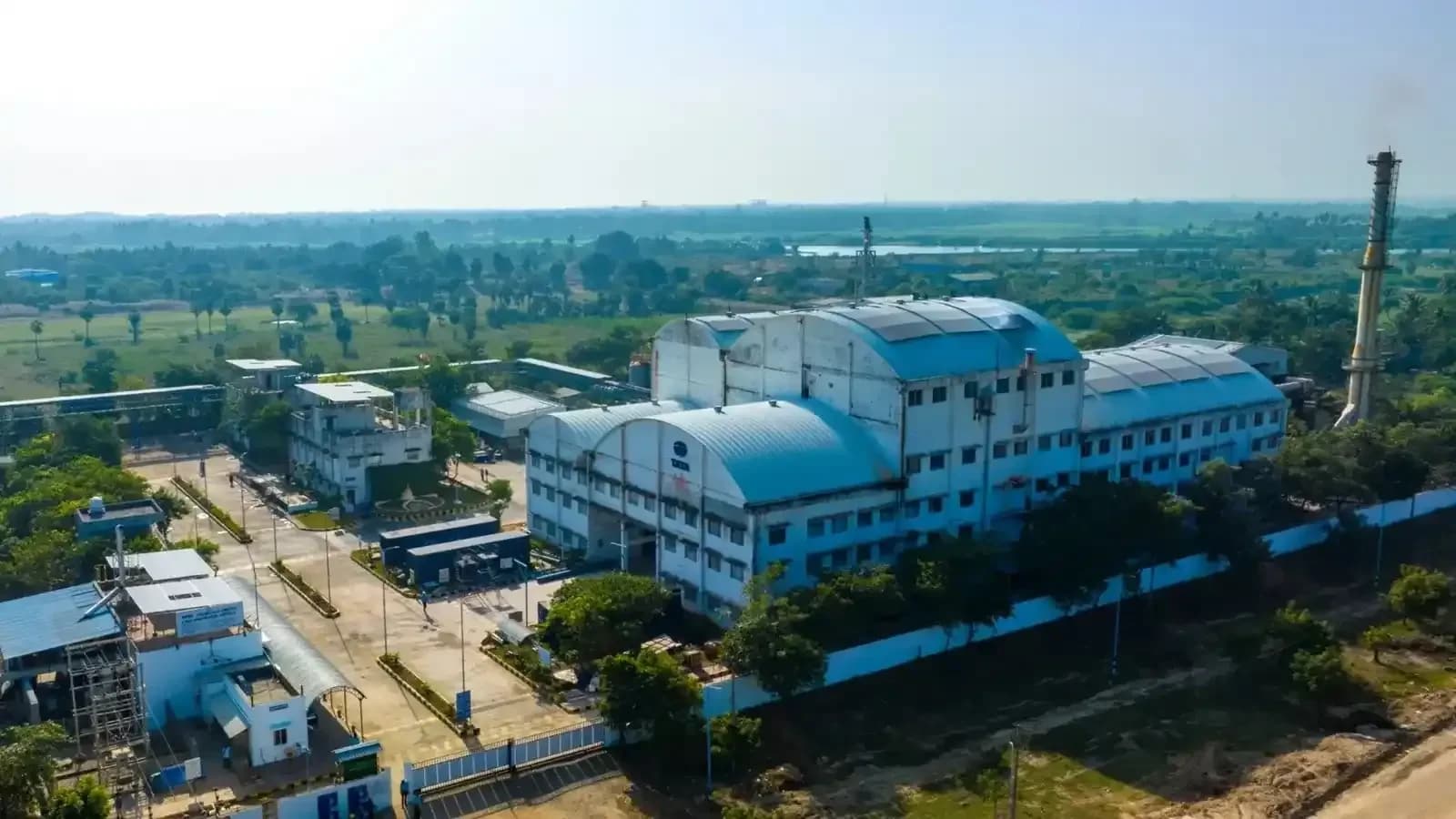
The US Army has awarded provisional contracts to four companies for processing critical minerals at military bases, marking a significant milestone in the Trump administration's strategic initiatives. According to Bloomberg and The Wall Street Journal, the Pentagon has reached agreements with REalloys Inc., Titan Mining Corp., ioneer Ltd. and Energy Exploration Technologies Inc. (Energy X) to build and operate facilities for processing rare earth minerals, graphite, lithium and boron. Titan Mining President and CEO Rita Adiani emphasized that "These awards mark a turning point in ending America's dependence on Chinese-controlled supply chains, and Titan is honored to lead the re-shoring initiative of critical minerals which are essential to our national security." The locations planned include facilities in Alabama, Arkansas, Texas and Utah, with the effort originating from an executive order signed by President Donald Trump in March 2025 aimed at increasing the ability to mine and produce rare earth elements for manufacturing in the United States.
Titan Mining has been selected for a conditional Enhanced Use Lease award under President Trump's Executive Order 14241, marking the first commercial graphite purification facility to be sited on U.S. Army installations. Subject to finalization of Business Terms Agreements with the U.S. Army, Titan will design, finance, build and operate the Kilbourne Graphite Purification Plant at Pine Bluff Arsenal (Site B, ~245 acres) as the primary site, with Anniston Army Depot (Parcel 1, ~97 acres) advancing on a sequenced schedule. The facility will produce Purified Micronized Graphite (PMG) and Coated Spherical Purified Graphite (CSPG) for defense, energy and industrial applications. Titan President and CEO Rita Adiani stated that "Titan's processing facility will be the first of its kind to operate on "U.S. defense soil." Graphite is among the most strategically exposed critical minerals facing the United States today, with the country being 100% reliant on imports for natural flake graphite, and China controls more than 90% of global battery-grade graphite processing capacity. The project represents a significant step toward addressing this strategic gap, establishing a public-private partnership model for deploying critical mineral processing infrastructure on U.S. defense installations.
The initiative represents President Trump's administration's effort to reduce US dependency on imports, especially from China, for critical minerals essential to consumer electronics, automobiles and defense technologies. David Fitzgerald, deputy undersecretary of the Army, explained that "The main objective here really is to make the American and allied supply chain for these critical minerals more robust and more resilient." The minerals are essential to a wide range of applications including consumer electronics, automobiles and defense technologies, though US mines and processing plants have shuttered over the past decades. The plan to build mineral plants on army bases was foreshadowed in March of last year when President Donald Trump signed an executive order invoking emergency powers to boost critical minerals production capabilities. Concerns have been raised throughout the military, the Trump administration and both parties in Congress about U.S. reliance on minerals produced by other countries, including China, making this initiative particularly timely and strategically important.
The market responded positively to the provisional contract announcements, with Titan Mining shares rising as much as 12% in New York trading on Thursday and ioneer's depositary receipts climbing as much as 7.1%. As reported by Bloomberg News, REalloys pared some of its earlier losses following the announcement. The agreements are preliminary and are intended to give the Army direct access to the minerals, with the companies expected to start building the plants as early as 2027 and mineral production beginning by 2028. Formal lease agreements with these companies are currently in negotiation under the Army's Strategic Capital Initiatives program. In lieu of cash payments, the "lessee directly funds and executes infrastructure improvements on the host installation," the Army statement said, with the awards being the first time the Army has sited commercial mineral processing facilities on American military installations.
The partnership comes amid geopolitical tensions over critical minerals, with China's Commerce Department placing export controls on US rare earth companies MP Materials Corp. and USA Rare Earth Inc. Last week, the Group of Seven nations set a target to reduce their reliance on Chinese imports. As reported by Bloomberg News, USA Rare Earth signed an accord in January for $1.6 billion in funding toward plans for new mining, processing and magnet-making capacity. The federal government also unveiled plans in February to build a $12 billion stockpile of critical minerals. The Department of War's Office of Strategic Capital recently extended $725 million conditional loan to Energy Fuels Inc. and $500 million loan to Phoenix Tailings Inc.. To mitigate supply chain risks and prevent undue foreign influence, eligibility for these projects was strictly limited to entities organized under U.S. law, featuring majority domestic ownership and control, and maintaining a U.S. place of business.
Industry leaders have expressed strong support for the partnership, with Rita Adiani, President & CEO of Titan Mining, stating that "America has declared critical mineral independence before — now it's time to build it. We have the resources in the ground, the infrastructure to process it, and now U.S. Army partnership to take it further downstream. This effort aims to establish a fully domestic supply chain, entirely free from foreign control." Teague Egan, Founder & CEO of EnergyX, emphasized that "Bringing battery-grade lithium refining onto Army-controlled land is exactly the kind of public-private partnership America needs right now." Bernard Rowe, Managing Director and CEO of Ioneer, noted that "Boron is foundational to modern military power and force protection -- and producing it on America soil strengthens our industrial base while reducing our over-reliance on foreign sources." David Fitzgerald, Deputy Under Secretary of the Army, highlighted that "We are very excited about the effort, and the engagement and support we've gotten from industry." The partnerships are structured through Enhanced Use Leases (EULs) under 10 U.S.C. § 2667, where the Army acts purely as a landlord while private parties bear all costs and provide infrastructure improvements in return for fair market value rent. REalloys will construct a rare-earth separation facility at the Tooele Army Depot in Utah, with production being stockpiled on-site for military use.