The average 30-year US mortgage rate has climbed to 7.24%, marking its highest level in one year according to Mortgage News Daily, up from 5.99% in February. This represents a 125 basis points increase since late February, when rates briefly dipped to 5.98% - their lowest level since late 2022. The surge has pushed the monthly payment on a $500,000 mortgage above $3,400, compared to approximately $2,995 seven months ago, meaning homebuyers are now paying roughly $405 more each month or about $4,860 a year on their loans. As per NBC New York, the rate on the benchmark 30-year fixed-rate mortgage rose to 6.76% last week, the highest in more than 14 months, with the Federal Reserve increasing its benchmark rate by a quarter-point to a range of 3.75% to 4.00% - the first rate hike since 2023. The Forbes Advisor reports that mortgage rates have been trending upward since the beginning of 2026, with the average rate on a 30-year fixed mortgage sitting in the mid-6% range through the first half of the year.
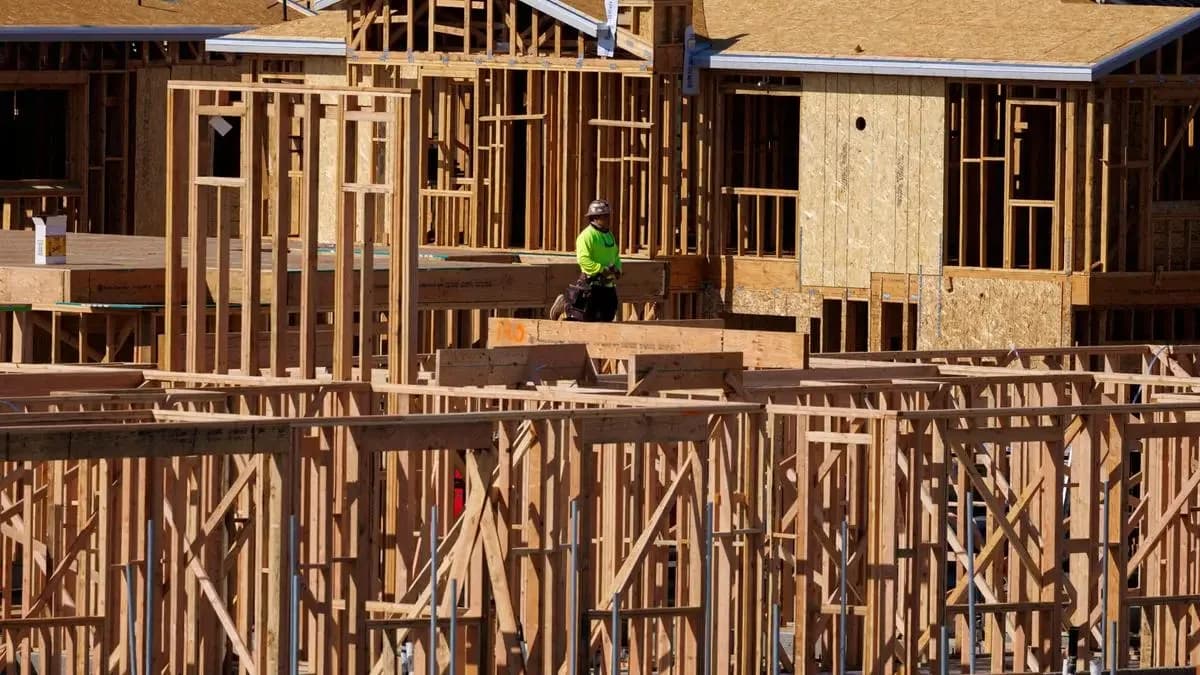
The latest housing data confirms that the housing market continues to face significant challenges despite the Fed's rate hikes. August 2026 New Residential Construction data shows declines across all key metrics, with housing starts at a seasonally adjusted annual rate of 1,275,000, down 2.6% from the revised July estimate of 1,309,000. Building permits were at 1,394,000, down 2.7% from July but up 3.5% from August 2025. Most concerning is the housing completions decline to 1,128,000, down 11.9% from July and 27.1% below the August 2025 rate of 1,548,000. Single-family housing starts were 918,000, up 7.6% from July, while completions were 816,000, down 10.4% from the previous month. As Lisa Sturtevant, chief economist at Bright MLS, noted, "The rate hike all but guarantees that mortgage rates will remain stuck at or above the 7% threshold, which creates a psychological and financial barrier that will sharply squeeze affordability and sideline even more prospective buyers." The Realtors association reported that sales of previously occupied US homes dropped for the third straight month in August, growing at the slowest pace in more than a year, with the high cost of home loans already taking a toll on the housing market.

According to the Mortgage Research Center and Forbes Advisor, the current mortgage landscape shows varying rates across different loan terms. The 15-year fixed mortgage rate has risen to 6.30%, up 0.32 percentage points from the previous week, while the 15-year jumbo mortgage rate stands at 7.19%, up from 6.85% last week. For a $100,000 30-year mortgage at the current 7.24% rate, borrowers will pay approximately $671 per month in principal and interest, totaling around $142,490 in interest over the loan's lifetime. A $100,000 15-year mortgage at 6.30% will cost $860 per month, with total interest payments of $55,555 over the loan term. The current average rate on a 30-year fixed-rate jumbo mortgage requires $678 per month in principal and interest, resulting in $144,705 in total interest over the loan's life. As per Forbes Advisor, borrowers can use mortgage calculators to determine their monthly payments and total interest costs, with the calculator showing specific figures for different loan amounts and terms.
Mortgage rates are being influenced by multiple economic factors, with expectations of higher inflation amid surging oil prices pushing up long-term bond yields that lenders use as pricing guides. The 10-year Treasury yield, which was at 3.97% in late February before the war began, breached 5% on Monday for the first time since 2023 and was at 4.94% at midday trading on Thursday. As per NBC New York, 10-year yields have continued to rise despite intervention from the Treasury after Secretary Scott Bessent ordered the U.S. to buy back government bonds in a bid to push yields down. The Federal Reserve's restrictive monetary policy—including its interest rate hikes, which it's using to restrain inflation—is the primary factor that's pushing long-term mortgage rates higher. The Forbes Advisor notes that so far in 2026, the Federal Open Market Committee (FOMC) has held the federal funds rate unchanged at 3.50% to 3.75%, pausing further cuts as policymakers assess incoming economic data. The Fed's goal is to slow consumer and business spending by raising the cost of borrowing, thereby reducing demand for homes, cars and other goods and services, eventually cooling the economy and reducing upward pressure on prices.
The US housing market has been experiencing significant challenges since 2022, when mortgage rates began climbing from pandemic-era lows. Sales of previously occupied US homes were essentially flat last year, stuck at a 30-year low. The latest monthly tally of pending home sales shows potential for more sluggish home sales in coming months, with pending US home sales inching up 0.3% last month from July but falling 4.7% from August last year according to the National Association of Realtors. Despite the big decline in housing completions, there remains a large number of units under construction - 1,271 units total, with 589 single-family and 682 multi-family units. However, many of these are pre-sold to buyers who may regret their purchases, and the combination of high mortgage rates and appreciated home values continues to present an obstacle for many prospective homebuyers seeking affordable housing. As Forbes Advisor reports, mortgage rates remain elevated, and the low inventory is preventing house prices from dropping, creating ongoing challenges for the housing market.