Billionaire investor Peter Thiel has reportedly moved his family from the US to Argentina's capital Buenos Aires as a refuge from high taxes, political turmoil and potential catastrophes like nuclear war and AI meltdown. According to the New York Times, Thiel met privately with Argentine President Javier Milei, purchased a mansion in one of Buenos Aires' most exclusive neighborhoods, and temporarily relocated his family to the South American nation. The PayPal co-founder and longtime Silicon Valley power player has enrolled his children in a Buenos Aires school and reportedly bought a plot of land in nearby Uruguay, demonstrating his commitment to establishing a comprehensive Plan B jurisdiction.
Taxation has emerged as a powerful accelerant for this migration trend. In California, legislators are examining a ballot proposal that would impose a one-time levy of 5% on the net worth of billionaires resident in the state. New York City has already enacted a pied-à-terre tax targeting high-value secondary properties. For individuals whose wealth runs into the billions, maintaining a single US tax residence is becoming increasingly difficult to justify financially, as foreign jurisdictions with more favorable fiscal arrangements offer both practical incentives and structural arguments for dispersing personal circumstances across multiple geographies. Thiel's private investment firm, Thiel Capital, opened an office in Miami's Wynwood neighborhood on December 31 as Californians weighed the proposed tax — which threatened the investor with a whopping, 10-figure tax bill, according to Bloomberg.
Several destinations have positioned themselves at the center of this global shift. New Zealand recorded a notable surge in applications from US nationals after relaxing investment thresholds attached to its golden visa programme. Costa Rica and Thailand have each registered measurable increases in high-earning arrivals. Buenos Aires is drawing serious attention from the billionaire class, with Thiel spending increasing amounts of time there and purchasing a home in one of the city's affluent neighborhoods while enrolling his children in local schools. The New York Times reports that Thiel has forged close ties with Milei, the libertarian whose crusade against taxes, regulation and government spending closely aligns with Thiel's own worldview. Argentina's government is considering offering Thiel citizenship or permanent residency, though a Milei spokesperson denied that.
Beyond taxation, ultra-wealthy individuals are addressing existential concerns that have moved from the fringes to the center of their long-term contingency planning. According to wealth advisers, anxieties about political realignments, artificial intelligence trajectory, and nuclear escalation are now recurring features of off-record conversations among the very rich. Charlie Garcia, founder of centimillionaire membership club R360, noted that these concerns have moved towards the center of how the billionaire class thinks about long-term contingency planning, with the Southern Cone appearing as a literal and figurative safe distance. As Garcia explained, "It sounds melodramatic until you've sat through the off-the-record dinner conversations. For that crowd, the Southern Cone looks like a literal and figurative safe distance." Thiel has increasingly invoked religious and apocalyptic themes in public appearances, often speaking about the Antichrist and warning that fear of existential threats could be used to justify the creation of a "one-world" government with sweeping powers. At a recent dinner hosted at his mansion, the conversation reportedly turned to the Antichrist, a topic that has become one of the billionaire's favorite subjects.
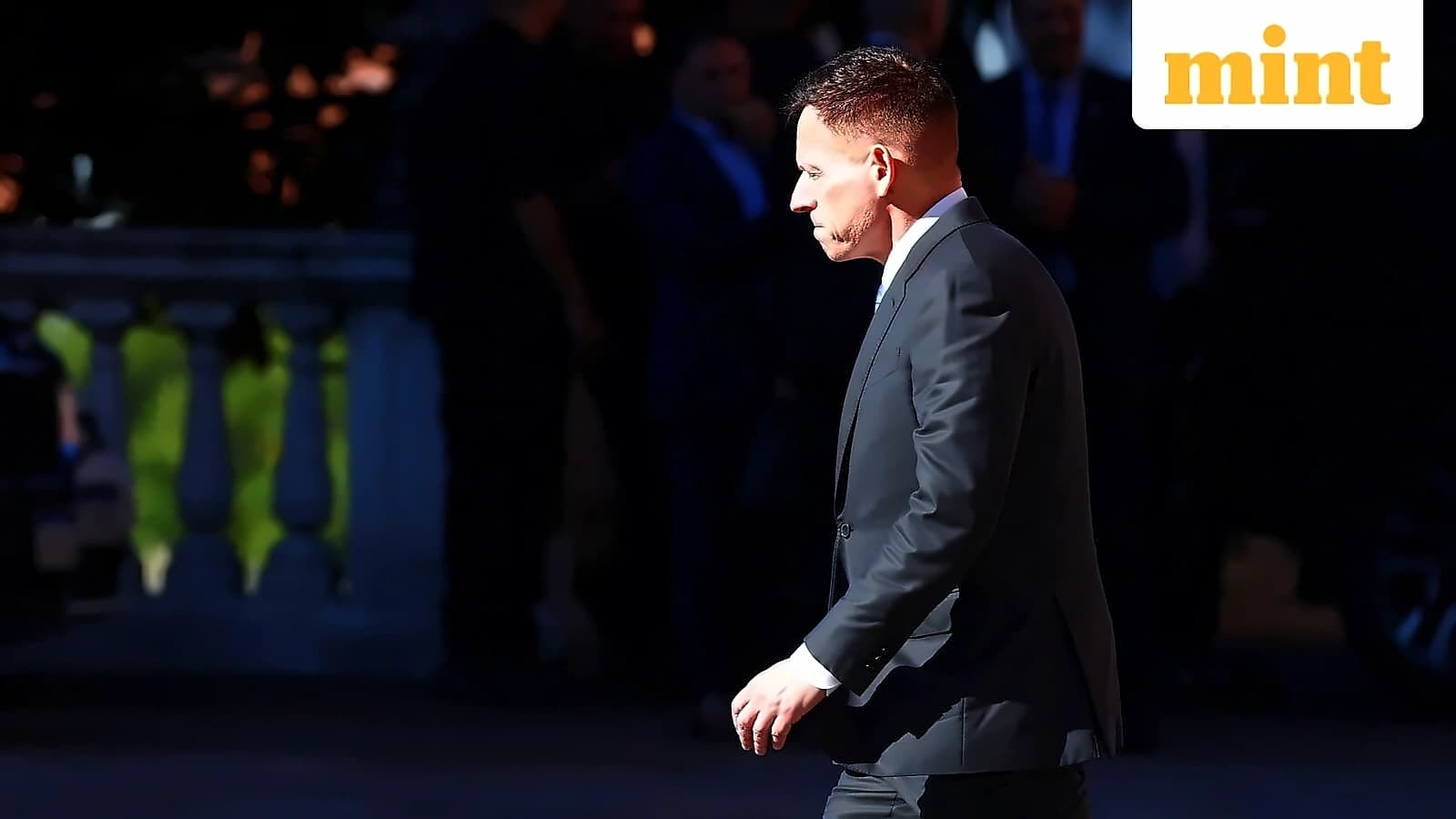
Underpinning individual migration choices is a coherent strategic logic that wealth advisers say has taken firm hold among the centimillionaire and billionaire class. There's a clear trend toward sovereign diversification including multiple passports, multiple tax regimes, and at least one 'Plan B' jurisdiction in the Southern Hemisphere. The ultra-wealthy are approaching their personal circumstances as they would a financial position, maintaining primary exposure to the US while constructing meaningful hedges against political, fiscal, and existential scenarios that they have concluded are no longer remote enough to ignore. For the richest families, the bigger play is optionality, with migration representing only part of the strategic approach. Thiel's life of globe-trotting exemplifies this trend, having been born in Germany, raised in the US and obtained New Zealand citizenship in 2011 under a special provision that allowed the government to grant him a passport despite not meeting the country's usual residency requirements. He later sought citizenship in Malta, fueling criticism that the billionaire was assembling a portfolio of fallback jurisdictions in the event conditions deteriorated elsewhere.