The Bank of England maintained interest rates at 3.75% on Thursday after a split 7-2 vote by its Monetary Policy Committee, as policymakers remain cautious about the economic outlook amid political turmoil. According to Reuters, external MPC member Swati Dhingra emphasized that while there may be some further tightening if price pressures worsen, "I do not see a compelling case to increase Bank Rate pre-emptively without new evidence of more intense first-round shocks." Deputy Governor Clare Lombardelli noted that "were inflation signals to indicate inflation would persist above target, this would require policy to respond more forcefully to inflation pressures." The central bank's decision reflects the challenging balance between current economic conditions and potential future inflation risks, with policymakers maintaining flexibility to respond to evolving circumstances.
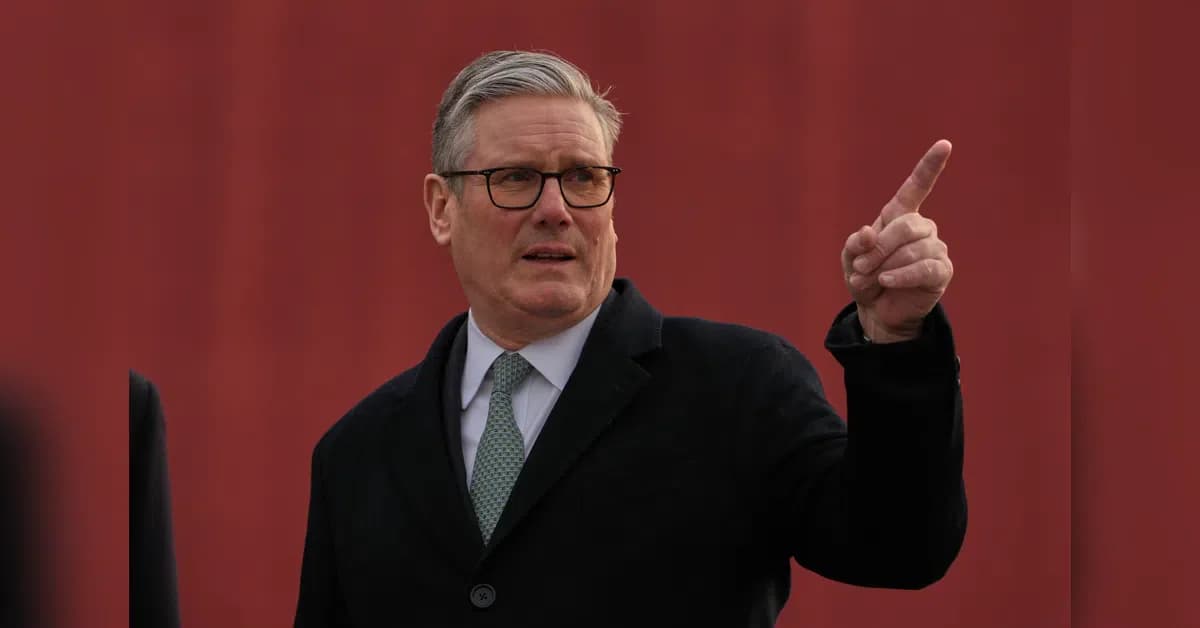
Prime Minister Keir Starmer's resignation has sent ripples through global markets, with sterling easing 0.2% to $1.3210 amid reports of his political future considerations. According to Reuters, the pound's decline reflects broader investor uncertainty about the political transition and potential policy changes under new leadership. The development has prompted more ministers in the governing Labour Party to call for Starmer to go, with U.S. President Donald Trump posting that Starmer was set to resign while also threatening fresh attacks on Iran. This political uncertainty is contributing to a 75% chance of a Fed rate hike as early as September, as reported by Reuters, with futures implying 38 basis points of tightening by year-end.
The latest labour market data reveals vacancies have slumped to their lowest level in over five years, falling by 19,000 quarter-on-quarter to 707,000 in the three months to May, according to the Office for National Statistics (ONS). As reported by The Economic Times, this decline was significant across retail and hospitality sectors and smaller employers, with the largest fall occurring in professional services. The ONS noted that firms are becoming more cautious about taking on new staff due to economic uncertainty and soaring wage costs. Employee-heavy sectors such as retail and hospitality have been particularly hard hit, with vacancies in both sectors reaching their lowest levels for more than five years at 46,000 and 69,000 respectively. The Government's hike in employee National Insurance Contributions in April last year, combined with above-inflation rises in the minimum wage, has created additional pressure on businesses.

Benchmark 10-year UK gilt prices were relatively steady, leaving yields up 1 basis point on the day at 4.85%, unchanged from where they were prior to the announcement. As reported by The Economic Times, this stability suggests investors are not yet panicking about the leadership change, though the modest yield increase indicates some caution in the bond market. However, treasuries remained under pressure following a hawkish turn by the Federal Reserve last week, with yields on 2-year notes rising 4 basis points to the highest since early 2025 at 4.2276%. According to Reuters, "Amid the uncertainty around a potential challenge against the UK PM and what that means for the fiscal outlook, the likelihood is that gilts will remain under selling pressure to start the week," said Skye Masters, head of market research at NAB.
Policymakers acknowledged recent progress in energy negotiations, with external MPC member Swati Dhingra noting "There has been a marked fall in energy prices in recent days, reflecting progress on talks involving U.S. and Iran. But the situation remains unpredictable, and there is clearly a risk that energy prices remain elevated for an extended duration." This development provides some relief from the inflationary pressures that had been building, though external MPC member Catherine Mann argued that "Why wait (to hike rates)? Research shows that a forceful Bank Rate decision can have a quick effect on inflation and inflation expectations." The central bank's cautious approach reflects the ongoing uncertainty about whether energy price relief will be sustained or if further tightening may be required.
British share indexes held steady after the announcement, with the blue chip FTSE 100 index a whisker lower on the day, and mid caps down 0.5%. According to The Economic Times, this limited equity market reaction suggests investors are taking a wait-and-see approach to the leadership transition. However, S&P 500 futures eased 0.5% while Nasdaq futures lost 0.7%, with EUROSTOXX 50 futures falling 0.5% and DAX futures dropping 0.3%, as reported by Reuters. Japan's Nikkei edged up 0.7%, having climbed almost 8% last week to all-time highs, while South Korea's red-hot market fell 0.9% after surging more than 11% last week. The relatively muted response in equity markets compared to currency and bond markets indicates that immediate policy concerns may be contained, though longer-term implications remain uncertain.