Oil prices have experienced a significant decline following the pause in Gulf fighting, with Brent crude falling 7.1% to $89.94 a barrel, down from last week's surge above $100 when the U.S. carried out several consecutive nights of strikes against Iran. According to The Economic Times, the move reverses part of last week's surge that briefly took Brent above $100, a level last seen in late May. WTI fell about 5% to around $85, with the global benchmark still up more than 50% this year. The decline occurred before the United States paused its attacks on Iran, which had been a key factor supporting previous oil price levels. However, NAB analysts note that Yemen's Houthis, who are aligned with Iran, have continued attacking Saudi oil installations on the Red Sea Coast, representing a threat to another vital waterway for global oil trade. The oil price decline has provided relief to bond markets, with two-year gilt yields sinking 6 basis points to 4.362%, performing worse than both German and US bonds.

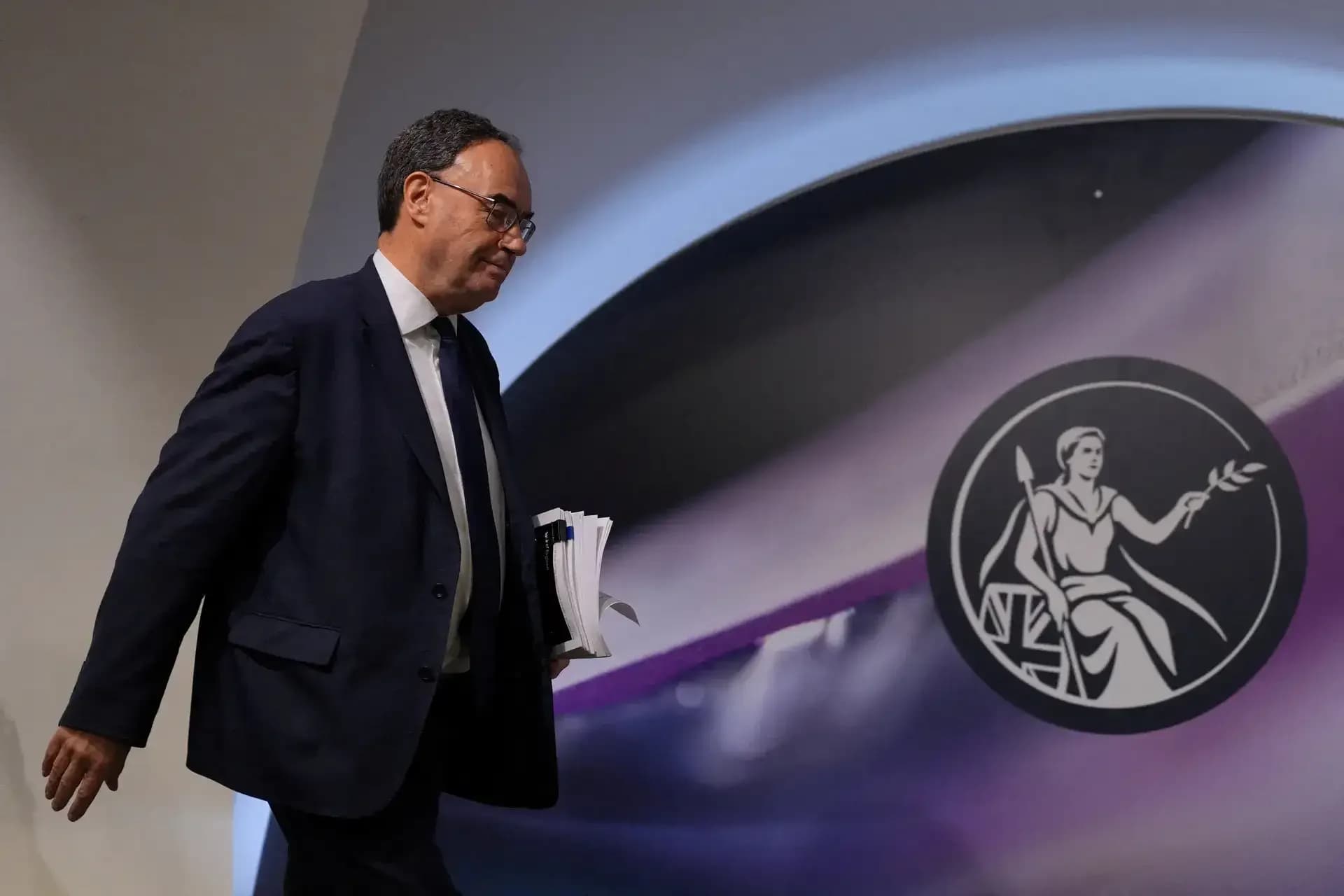
The Bank of England is expected to keep interest rates unchanged at 3.75% on Thursday, despite recent spikes in oil prices above $100 a barrel which may test whether it can avoid raising borrowing costs in response to the U.S.-Iran conflict. According to Reuters, neither economists polled by Reuters nor financial markets see any real chance of a rate rise this week, but there is a sharp split on the longer-term outlook. After last week's rise in oil prices, interest rate futures moved to price in a two-in-three chance of a quarter-point BoE rate rise in September and almost three moves by next June. Even after oil prices fell to $90 a barrel on Monday, markets still fully priced in a rate hike by November. As per NAB group chief economist Sally Auld, "Net, it appears that developments in the Middle East moved in a more positive direction this weekend. This lends some credence to the idea that oil prices above $100 per barrel seem to encourage de-escalation from both sides."
The decline extended across the entire yield curve, with ten-year gilt yields dropping below 5%, falling 5 basis points to 4.986%, reaching their lowest levels since July 20 and moving broadly in line with US and German debt. As reported by The Economic Times, 30-year gilt yields were 3 basis points lower at 5.69%, with Eurozone 10-year yields down by about 3 basis points. According to Wealth Club chief investment strategist Susannah Streeter, "The lower gilt yield eased some of the pressure off Burnham's new government. This will be welcome given focus has switched firmly to the spending challenges facing the new government." The broader market response has been positive, with S&P 500 futures rising 0.8% and Nasdaq futures increasing 1.3% as equities found comfort in the decline in oil prices and yields. In Europe, EUROSTOXX Futures gained 0.8% while DAX Futures rose 0.9%, and FTSE Futures added 0.2%.
Market participants appeared to embrace a risk-on mood as geopolitical tensions eased and energy prices retreated, supporting demand for fixed-income assets. According to Reuters, even when crude oil prices briefly climbed above $100 a barrel last week, economists surveyed did not expect the Bank of England to raise interest rates at its policy meeting on Thursday. Most economists continued to forecast a 7-2 vote split among members of the Monetary Policy Committee in favor of keeping the benchmark rate unchanged at 3.75%. However, financial markets remained somewhat more hawkish than economists, with traders pricing in roughly a 50% probability of a Bank of England rate increase by its September meeting and expecting a second rate hike by March 2027.
British inflation has come in below the BoE's forecasts, dropping to a 15-month low of 2.6% in June, providing some relief for policymakers. As reported by Reuters, a lag in how regulated domestic energy prices respond to higher wholesale costs means Britain now has lower inflation than the United States and the euro zone, where the European Central Bank looks likely to raise rates for a second time this year in September or October. The BoE had forecast inflation would peak at around 3.6%-3.7% at the end of 2026 under two of its three scenarios for oil prices, but in June it revised that down to just over 3.25%. However, British inflation has been above its 2% target for most of the past five years. The decline in oil prices has helped boost bond markets, with 10-year Treasury yields dropping 4 basis points to 4.63% and the euro rising 0.3% to $1.1408.