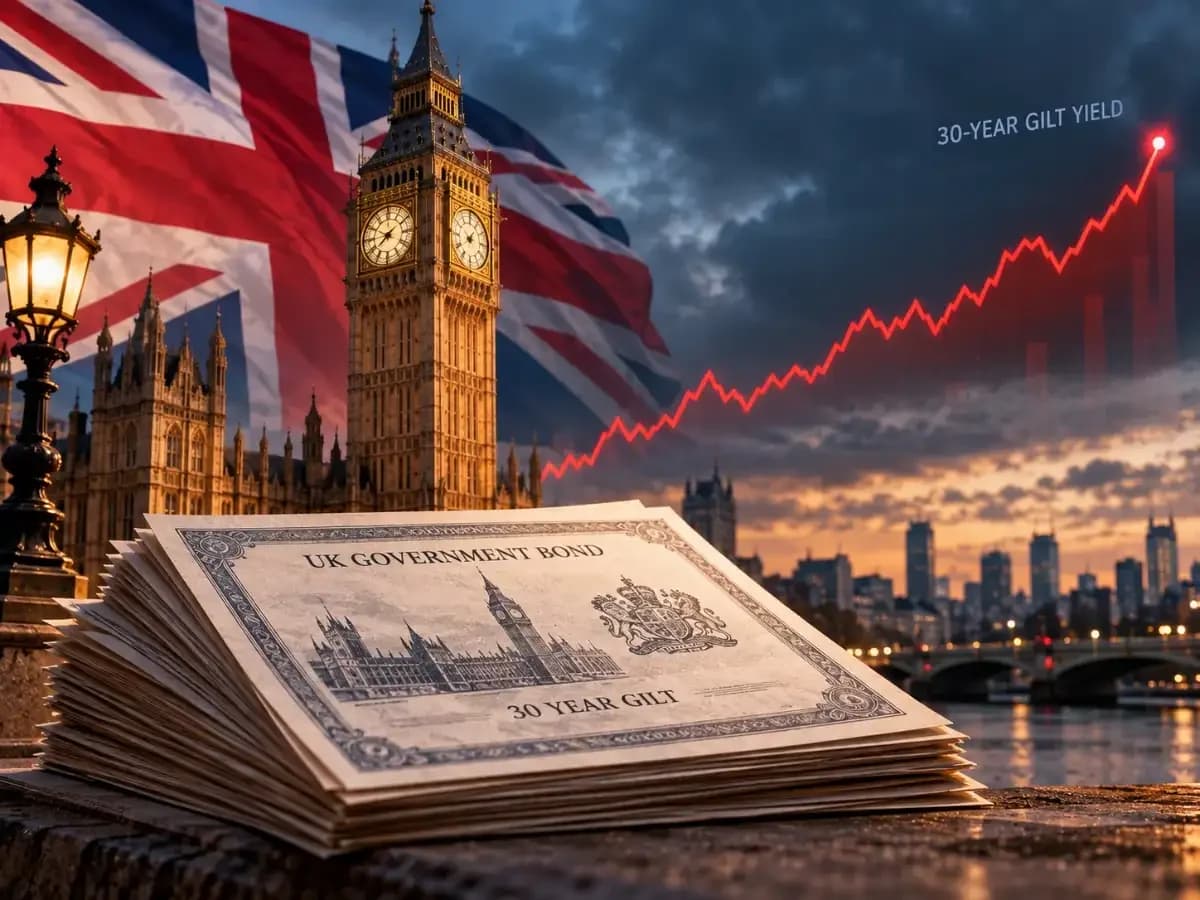
Global government bond yields fell Monday, with the rally extending beyond UK markets as investors anticipate further measures from the U.S. Treasury to address elevated yields. According to The Wall Street Journal, the U.S. Treasury last week doubled the volume of long-end debt buybacks after yields rose to multiyear highs, with the Treasury expected to use its General Account to fund the increased buybacks announced last week. The 10-year U.S. Treasury yields fell to 4.698% from 4.718% on the TGA news, while the 30-year yield, which hit a 19-year high of 5.337% last week, slipped to 5.236% from 5.255%. The 10-year U.K. gilt declined to 5.048% from 5.058%, with the 10-year German Bund yield also falling to 3.248% from 3.257%. As per The Wall Street Journal, the account holds nearly $1 trillion, which would give the department ample fire power to pursue the strategy.
Sterling remained near a six-month high against the dollar on Tuesday, trading at $1.3632, while the euro bought 85.54 pence, as reported by Reuters. The pound's strength is being supported by expectations for interest rate hikes by the Bank of England this year, against the backdrop of concerns around sticky inflation and soaring government debt. The currency has had a strong run over the past four weeks on expectations that better-than-expected economic data through the first half of the year could prompt the Bank of England to raise interest rates by at least 25 basis points this year, according to LSEG-compiled data. However, most analysts and economists see no change in interest rates, raising the risk of a decline in the currency towards the end of the year. The August advance has added roughly four cents from the early-August base, with the currency printing a five-month high short of 1.3700 late last week.
The bond market movement was primarily driven by a $3 daily drop in Brent crude prices, as reported by The Economic Times. According to The Wall Street Journal, the price of Brent oil fell 1.4% to $93.11 a barrel, with a decline in crude futures helping keep yields lower. This substantial decrease in oil prices occurred as investors appeared to shrug off the latest U.S. sanctions campaign against Iran. The correlation between oil price movements and bond yields reflects the interconnected nature of energy markets and monetary policy expectations, with the oil price decline providing relief to global markets. Global currency markets were broadly steady as markets absorbed the latest set of U.S. sanctions on Iran, which excluded China or any of the country's entities, with investors fearing potential retaliation from Beijing.
British government bond yields reached their lowest point since mid-August on Tuesday, with ten-year gilt yields falling by as much as 5 basis points to 5.01%. According to reports from The Economic Times, these yields were heading for their biggest one-day decline since August 4. The latest developments show that the Debt Management Office sold gilts maturing in 2033 at a yield of 4.761% this morning, representing the highest yield for any seven-year bond auction this year, as reported by The Guardian. This is up from 4.519% for a similar auction in July, indicating that the government's borrowing costs have risen significantly. The decline was broadly in line with a drop in U.S. Treasury yields, indicating synchronized global bond market movements driven by oil price dynamics and geopolitical developments.
On Tuesday, Britain set out plans to spend £10 billion ($13.6 billion) on lower-cost housing for renters with a focus on London, as reported by Reuters. Investors will be watching to see if the government plans to fund its fiscal policies through more borrowing or tax hikes, as Andy Burnham has also previously announced policies aimed at reducing costs for households. UK Gilt yields are among the highest among developed economies and the next test for maturities and the pound will be the Andy Burnham government's budget, expected in October. Francesco Pesole, an FX strategist at ING, said because they thought the BoE would tighten less than current market expectations, they anticipated the euro to gain on the pound, adding "We still expect no hikes and a move to £0.870 in the coming months," which could mean an at least 2% drop from Tuesday's trading levels.