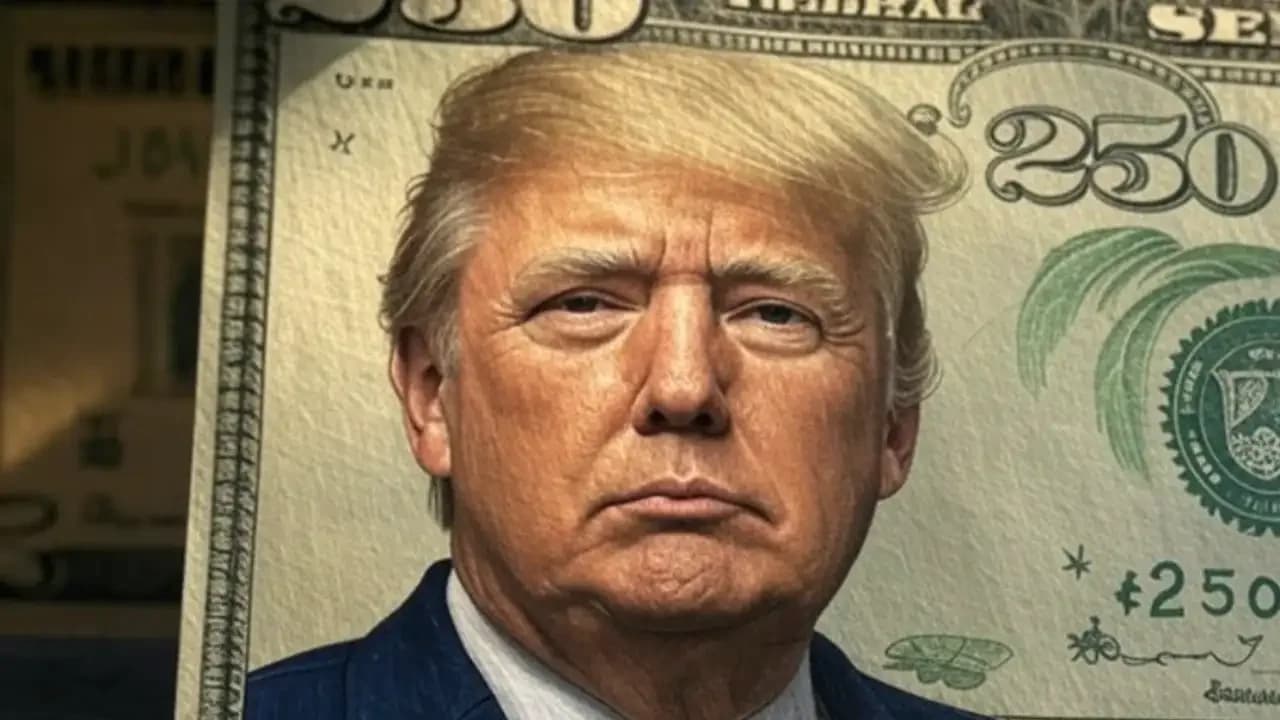
President Trump has introduced a significant condition to his $5,000 check proposal, stating that recipients must spend the money within the United States, as reported by BeInCrypto. Speaking at a rally in Alaska on Tuesday night, Trump emphasized: 'You gotta spend it in the United States of America. I don't want it going to China.' This new requirement adds a geographic restriction to the already controversial proposal, potentially limiting its effectiveness as a stimulus measure while addressing concerns about capital flight to foreign markets.
President Trump has restated his promise of $5,000 checks to every adult US citizen if Republicans maintain control of Congress, as reported by BeInCrypto. The proposal, framed as a binary choice between economic success and depression, would cost between $1 trillion to $1.7 trillion according to various estimates. Trump restated the offer in a video posted to X on October 14, framing the vote as a binary choice: 'If the Democrats win, you will have an economic depression. If the Republicans win, you will each have $5,000 in your pocket and economic success for our country like we have never, ever seen before.' However, no legislation or funding mechanism has been proposed, with the White House's September 10 announcement providing only vague details about payment dates, eligibility rules, or funding sources.
The proposed $5,000 checks would cost approximately $1.3 trillion for roughly 270 million adult citizens, as reported by BeInCrypto. This represents 1.6 times the total amount of the three pandemic stimulus rounds combined, which delivered $814 billion between March 2020 and March 2021. Each adult received $3,200 total during those rounds, with inflation running between 1.3% and 2.7% when the checks were distributed. The current economic environment presents different challenges, with inflation at 3.7% in September and the Federal Reserve delivering its first rate hike in three years. San Francisco Fed researchers estimated that pandemic transfers added up to 3 percentage points to inflation by late 2021, with supply-chain and energy shocks also contributing to inflationary pressures.
Trump has suggested using tariff revenue to fund the checks, but the Supreme Court's February ruling voided his emergency-power duties, as reported by BeInCrypto. A Customs and Border Protection court filing shows approximately $100 billion already refunded by late July. Senator Bernie Moreno (R-Ohio) plans legislation recasting some tariffs as a 'market access fee,' while Senate Majority Leader John Thune has suggested using budget reconciliation to avoid the 60-vote filibuster requirement. However, the funding mechanism remains unclear, with no concrete bill or funding plan existing despite Trump's repeated promises.
In contrast to the proposed $5,000 checks, current government payments are significantly smaller, according to BeInCrypto reports. Over 20 million Medicare enrollees receive $90 each, while approximately 1 million Affordable Care Act enrollees get $500. These actual payments going out this month highlight the scale difference between the proposed universal checks and current targeted assistance programs. An Economist/YouGov survey in September found only 21% of registered voters expect the money to arrive, reflecting skepticism about the proposal's feasibility.
The proposal faces significant political and economic headwinds, with Polymarket pricing Democrats taking the House at 91% as of October 12, as reported by BeInCrypto. The addition of geographic spending restrictions raises additional concerns about the proposal's effectiveness as a stimulus measure. Benjamin Cowen, a crypto analyst, questions the sustainability of such large-scale payments, stating that 'who ultimately pays for those checks? You do! Through future taxes, inflation, or both.' The $1.3 trillion cost would increase the federal deficit by roughly two-thirds, reaching about $2 trillion in fiscal 2026 according to the Congressional Budget Office. The federal deficit already reached approximately $2 trillion in fiscal 2026, with affordability ranking among voters' top worries ahead of the November 3 midterms.