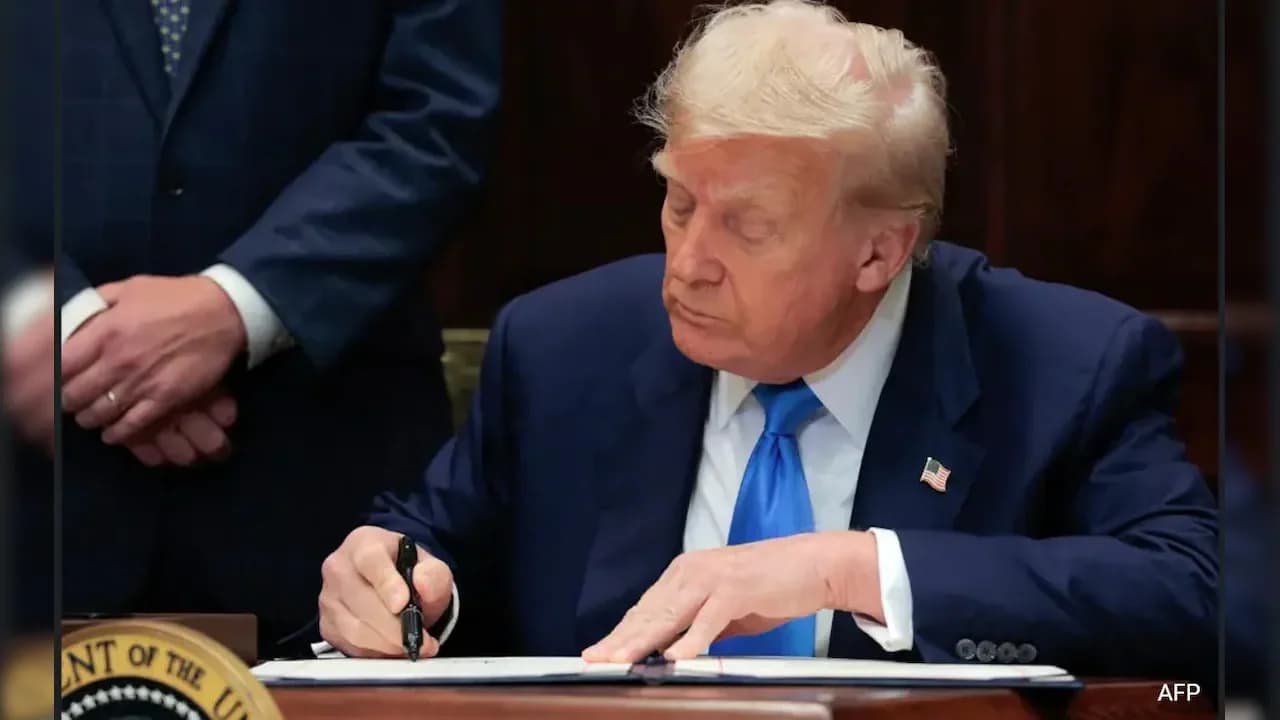
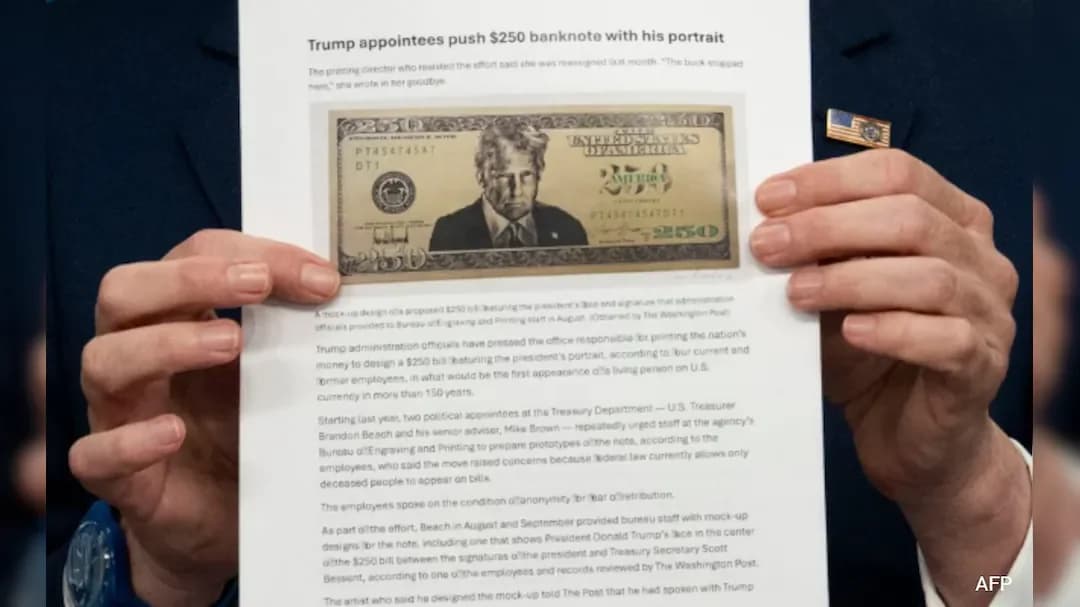
The Bureau of Engraving and Printing has prepared mock-up designs for a new $250 bill featuring President Donald Trump's portrait, marking a significant advancement in the commemorative currency initiative. However, the printing bureau's director, who had resisted the effort, was reassigned last month, according to four current and former employees who spoke to The Washington Post. The director wrote in her farewell email: 'The buck stopped here', signaling her opposition to the controversial currency design. U.S. Treasurer Brandon Beach provided the Bureau of Engraving and Printing with mock-up designs that featured Trump's face in the middle of the note, with the portrait designed by British painter Iain Alexander. The mock-ups, which were printed, alarmed staff at the printing bureau because it typically takes several years to produce new currency due to legal and procedural obstacles.
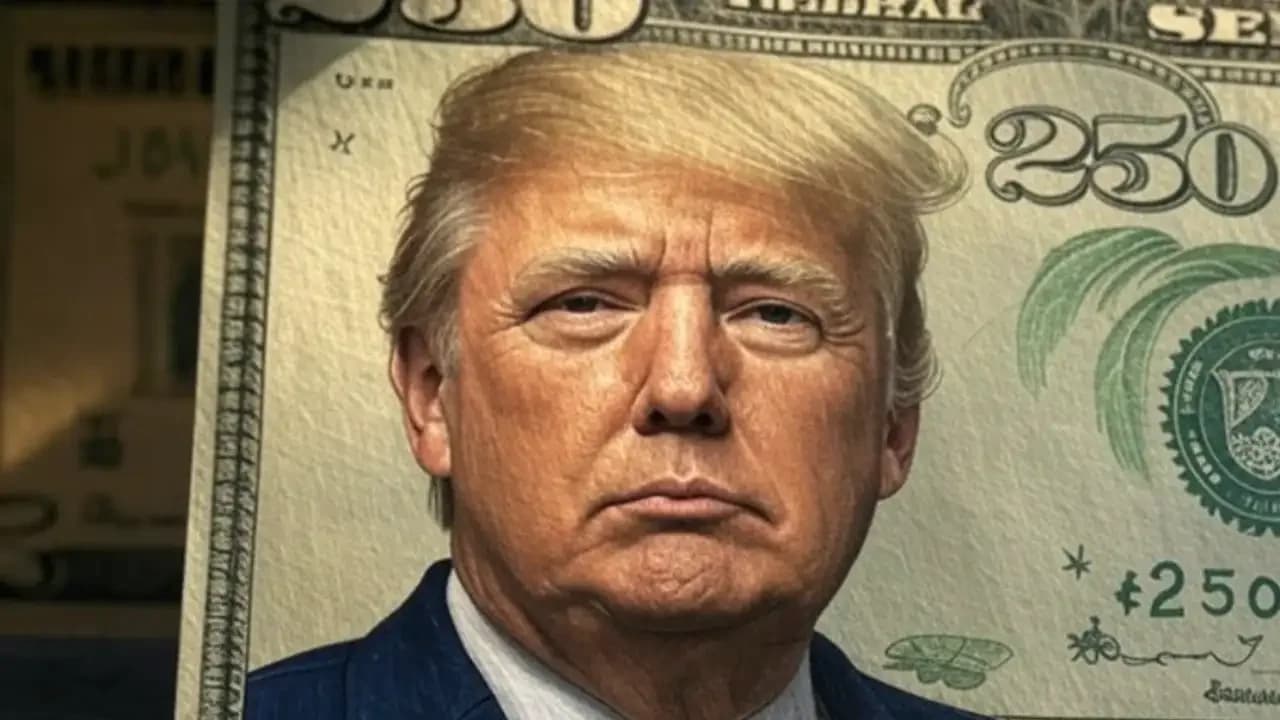
The proposal faces substantial legal obstacles, as federal law states 'only the portrait of a deceased individual' may appear on U.S. currency and securities, with the prohibition of living people appearing on currency going back to 1866 when Congress took action after a Treasury official, Spencer Clark, was able to put himself on notes. Republican Rep. Joe Wilson of South Carolina has introduced legislation that would 'symbolically recognize the President of the United States during the Semiquincentennial anniversary,'' though the legislation has remained stalled in the House Committee on Financial Services for more than a year. The bill would need 60 votes for passage in the Senate to block a Democratic filibuster, making it a longshot to advance. However, Treasury Secretary Scott Bessent confirmed that Trump's signature is on the potential currency, with the spokesperson stating: "Based on the recommendation of U.S. Treasurer Brandon Beach, Secretary Bessent will recognize the historic achievements of our great country and President Trump by adding his signature to the currency."
The $250 bill proposal is part of a broader Trump currency initiative that includes plans to print Trump's face on a $1 circulating coin commemorating the 250th anniversary of the Declaration of Independence and preparations to emblazon the president's image on a small batch of 24k gold commemorative coins. According to The Washington Post, both efforts were unanimously approved by the Commission of Fine Arts, an advisory board whose members were handpicked by Trump. The $1 coin features a side portrait of the president, while the commemorative gold coin design includes a picture taken by the chief White House photographer of Trump leaning over the Resolute Desk. Treasury has argued its authority for the $1 coin comes from a 2020 law allowing the pressing of celebratory 250th anniversary pieces, with the American Numismatic Association noting that one other living president did appear on a coin: Calvin Coolidge, in 1926 for the Sesquicentennial featuring Coolidge and Washington.
Democratic opposition has been swift and critical, as reported by The Economic Times. Senator Mark Warner, a member of the Senate's banking committee, characterized the unprecedented proposal as the White House blatantly 'stoking the president's ego'. Democratic members of Congress have argued the president's efforts to mint his image on dollars and coins violates the 1866 law that limits only portraits of deceased individuals to appear on currency, though commemorative coins are exempt from the prohibition. Wilson's bill to honor Trump on a $250 bill would effectively supersede the 1866 prohibition on using images of living people on currency, though the legislation's prospects remain uncertain. The move represents part of a broader trend by the Trump administration to place his likeness or name on cultural institutions, including recent rebranding of the John F. Kennedy Center for the Performing Arts and the US Institute of Peace to include Trump's name.
The printing bureau doesn't plan to release final artwork for the $250 bill unless Congress approves the legislation, with the bureau's website stating the banknote development process requires 'extensive testing which can take years to successfully complete' and that designs of notes are 'typically made public six to eight months ahead of time for global public education and cash handler education purposes.' This suggests it seems unlikely a $250 bill could be produced this year to mark the nation's founding. The production would be funded through the BEP's self-sustaining operations, with no tax dollars used since the agency doesn't rely on congressional appropriations. In March, the Treasury announced plans to print Trump's signature on all future paper currency, starting with the $100 bill in June, marking the first time a sitting president's signature will appear on American banknotes.