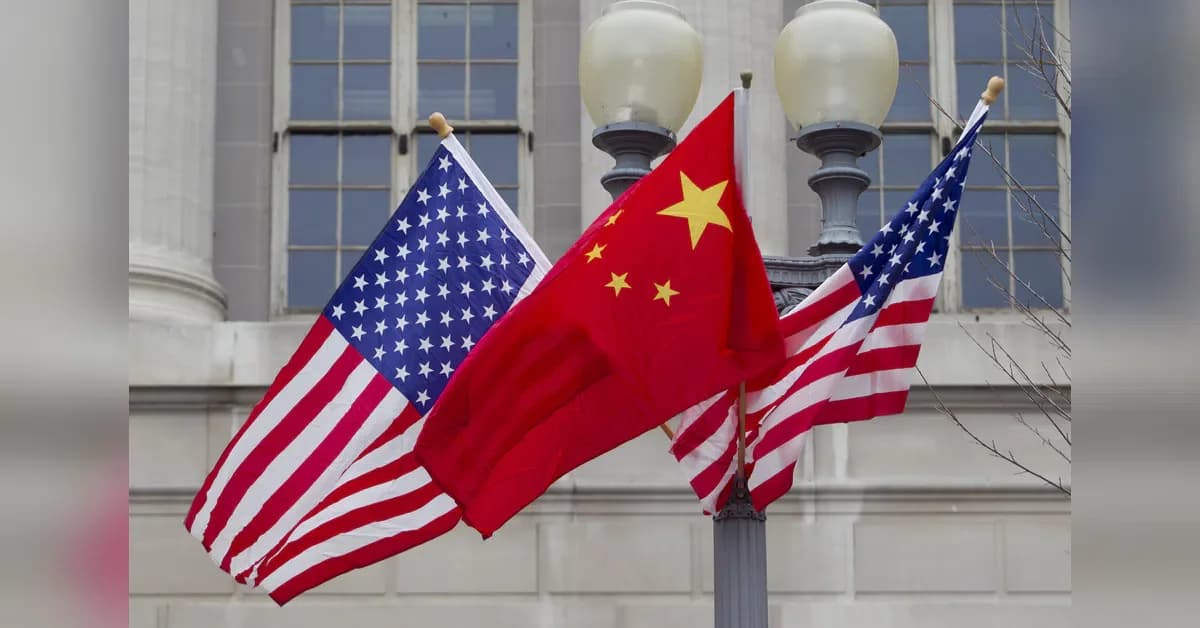
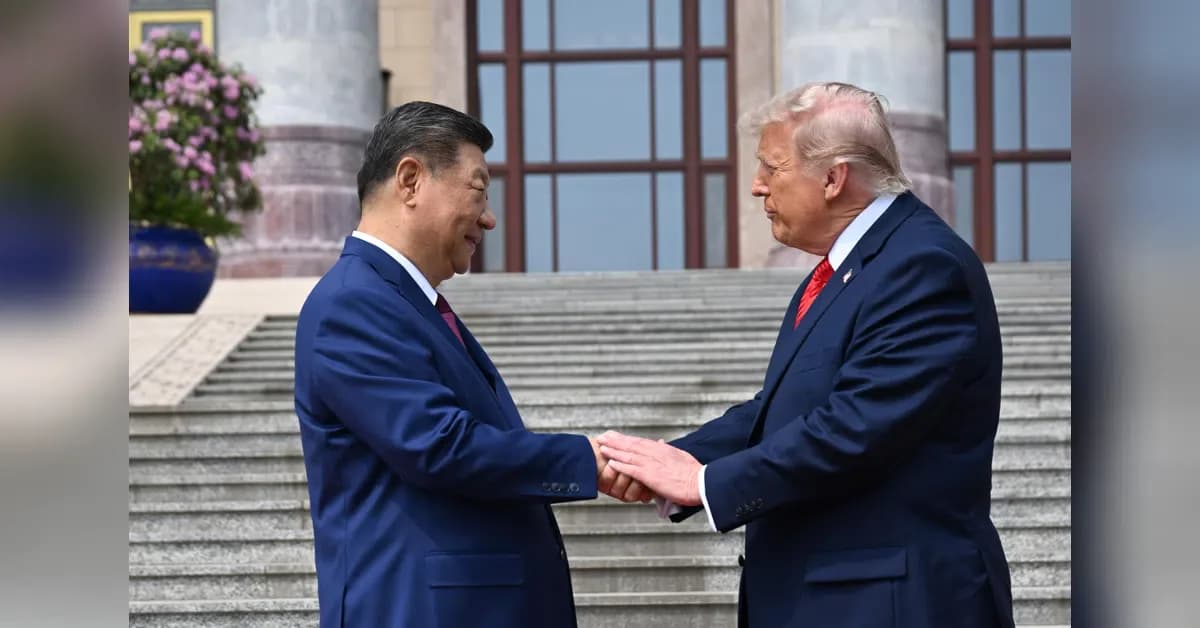
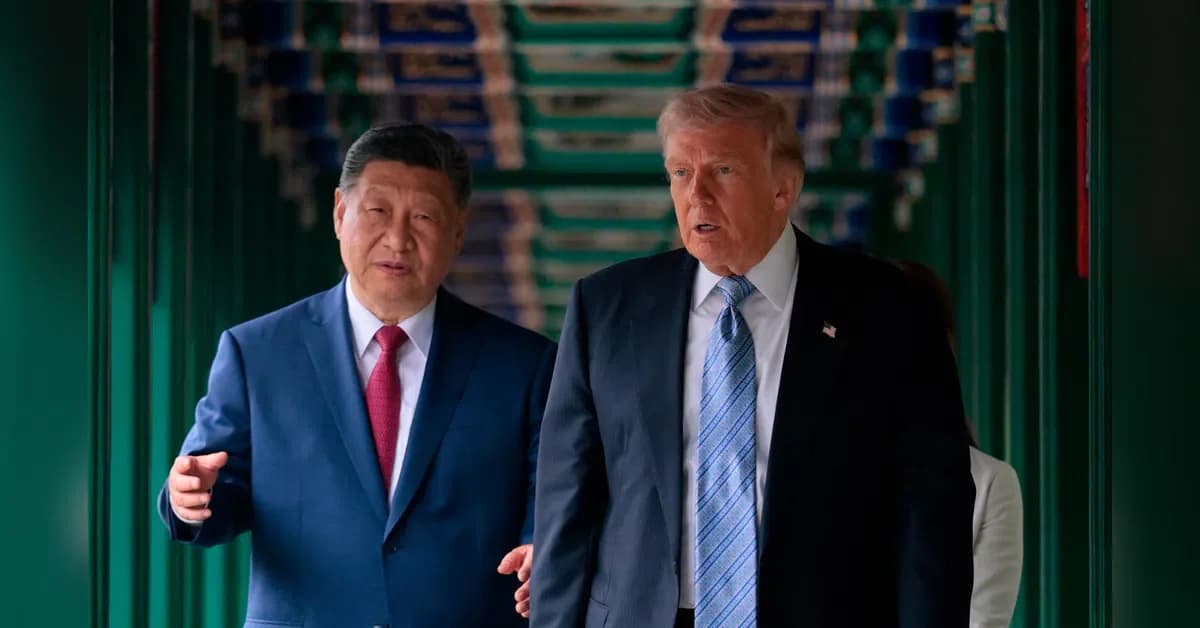
US President Donald Trump arrived in Beijing on Wednesday, May 13, 2026, for a three-day state visit marking the first visit by a US president to China in nearly a decade. According to reports from Business Standard, Trump was received by Chinese Vice President Han Zheng at the airport and is visiting China at the invitation of President Xi Jinping. The leaders of the world's two largest economies will hold their seventh face-to-face talks, with their last meeting taking place in October 2025 in Busan, South Korea. Trump told reporters before departing the White House that he and Xi are 'the two superpowers' and 'the strongest nation on Earth in terms of military', with China considered second. White House Principal Deputy Press Secretary Anna Kelly confirmed that an opening ceremony and formal meeting would take place on Thursday morning, with the trip ending on Friday, and added that the United States plans to welcome the Chinese leader on a return visit later in the year. Trump described the relationship with Xi Jinping as positive, and officials view the Trump visit to China as a chance to stabilise ties while protecting US economic and national security interests. The summit concluded with Chinese President Xi Jinping telling US President Donald Trump that economic ties between China and the United States are mutually beneficial and win-win in nature, according to the Chinese official news agency Xinhua. 'Yesterday, our economic and trade teams produced generally balanced and positive outcomes. This is good news for the people of the two countries and the world,' Xi said. 'Where disagreements and frictions exist, equal-footed consultation is the only right choice,' he added, emphasizing that 'facts have shown time and again there are no winners in trade wars'.
The summit concluded with Chinese President Xi Jinping hailing the results as a 'historic and landmark visit', establishing 'a new bilateral relationship — a constructive strategic stable relationship' that constitutes a 'milestone event'. According to the official Xinhua News Agency readout, the two countries reached an 'important consensus' on maintaining stable economic and trade relations while expanding cooperation in various fields. Trump announced that China agreed to buy 200 Boeing Co. planes, though this fell short of the 500 737 Max and additional widebody aircraft that Chinese airlines were expected to buy at the upper extreme of a landmark deal. The US and China are also discussing a mechanism for fast-tracking some Chinese investment deals, along with a reduction in tariffs on a swath of non-critical goods, as confirmed by Treasury Secretary Scott Bessent in an interview with CNBC Thursday in Beijing. Neither side have released details of their commercial deals, which may be announced in the coming days. Investing.com reports that the trip is essentially a big Chamber of Commerce visit, with China agreeing that Iran cannot have a nuclear weapon and that the Strait of Hormuz must be open.
Trump is accompanied by a powerful delegation of more than a dozen senior business and technology figures representing major American industries, including Elon Musk of Tesla, Tim Cook of Apple, Larry Fink of BlackRock, and leaders from Boeing, Citi, Goldman Sachs, and Qualcomm. As reported by Business Standard, Trump described the delegation as the 'World's Greatest Businessmen/women' and said he would ask Xi as his 'very first request' to further open China's economy to American companies. The last-minute addition of Nvidia's Jensen Huang to Trump's delegation was regarded as significant, as semiconductor chips are central to the US-China technology rivalry. China is bargaining for semiconductor chips for its AI tech development, while the US wants the rare-earth minerals used for manufacturing mobile phones and aircraft jets. Trump's son Eric and his daughter-in-law Lara, as well as Tesla chief Elon Musk, disembarked from Air Force One along with Trump. The inclusion of Qualcomm's leadership is particularly notable given the ongoing semiconductor tensions between the two nations, while Larry Fink's presence as head of BlackRock suggests that investment flows and capital market access will be front and center in the conversations. The delegation covers sectors such as finance, defence, aerospace, manufacturing, agriculture and digital payments, signalling strong commercial interests on both sides during the meetings.
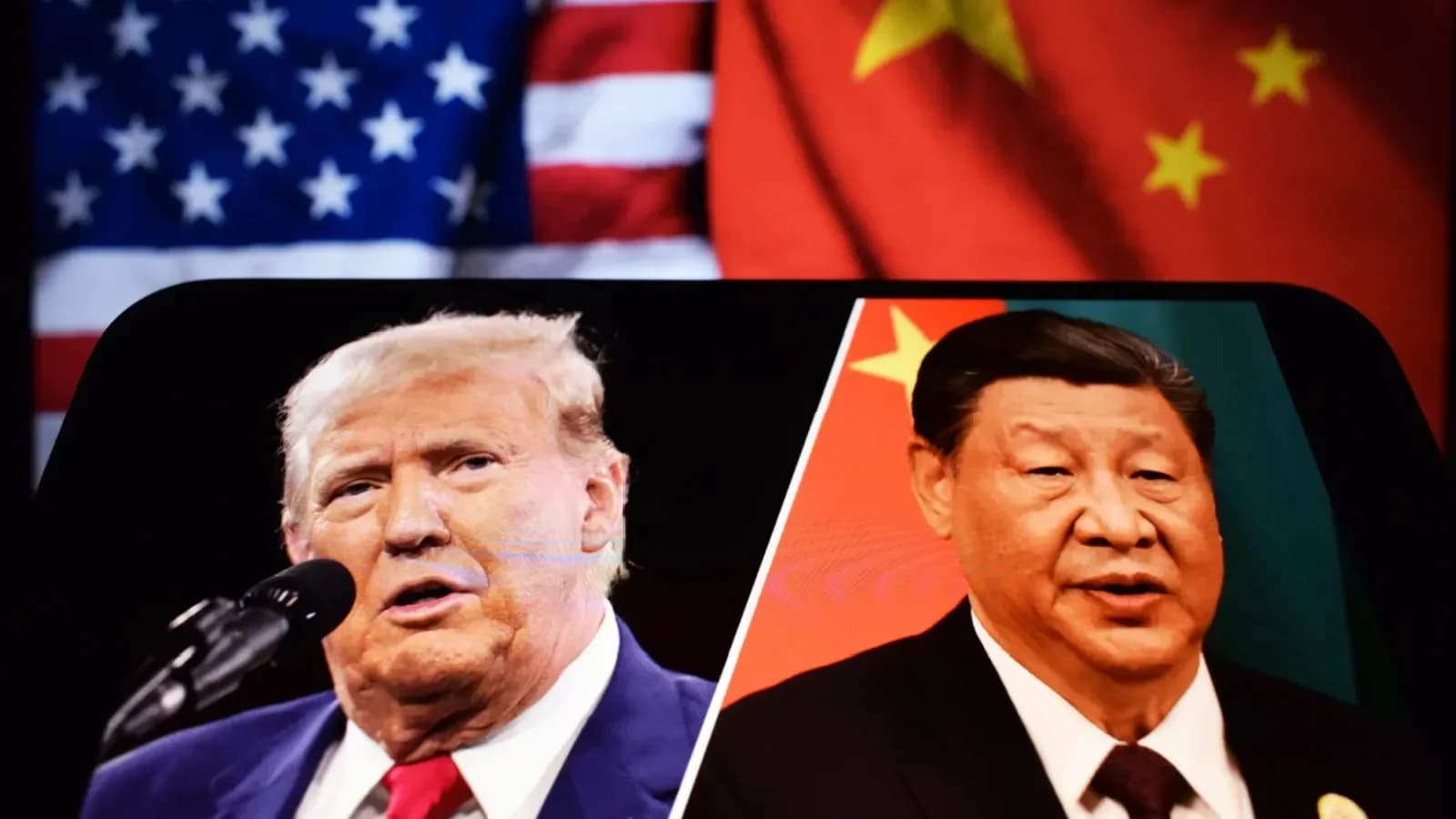
Despite the warm welcome and highly choreographed pageantry, the relationship between the world's two largest economies remains strained by a range of thorny topics. In their first meeting the day before, Xi delivered his starkest warning yet on Taiwan to an American president, saying mishandling of the issue could lead to 'clashes' between the superpowers. Trump told Fox News in an interview that Xi offered to help on Iran — something China has not explicitly confirmed. A White House readout of their meeting said the two sides agreed that the Strait of Hormuz must be open to support the free flow of energy. Beneath the friendliness on display, however, the relationship between the world's two largest economies remains strained by a range of thorny topics. Trump is expected to question Beijing over energy trade with Iran and over dual-use exports that US agencies link to Russia and Iran, reflecting broader concerns about regional security and sanctions compliance.
Despite expectations surrounding the summit, Rein warned that the broader decoupling of US and Chinese supply chains is unlikely to reverse anytime soon. According to The Economic Times, Chinese companies and policymakers no longer trust long-term access to American technology after years of export restrictions and sanctions. 'So, the Chinese will never ever after a decade of being harassed and oppressed by the United States build their AI and their technology sector on the American tech stack anymore. They are going to focus on indigenous innovation,' Rein said. Rein suggested investors should increasingly watch domestic Chinese technology players rather than American firms dependent on China exposure. 'So, investors should be looking at Chinese players like Cambricon, SMIC, Hua Hong. The Chinese players are going to do well because nobody in China can trust that they will be able to rely on the American tech stack,' he said. Rein argued that countries across the Global South have become wary of relying too heavily on US-controlled technologies and financial systems after Washington's repeated use of sanctions and economic restrictions. On the balance of power between Washington and Beijing, Rein said China currently holds greater leverage in both trade and geopolitics. 'China clearly has won the trade war. China clearly has more leverage over the United States right now,' he said, noting that China's influence extends far beyond rare earths and electronics, covering pharmaceuticals, antibiotics and key industrial supply chains that are deeply embedded in the global economy.