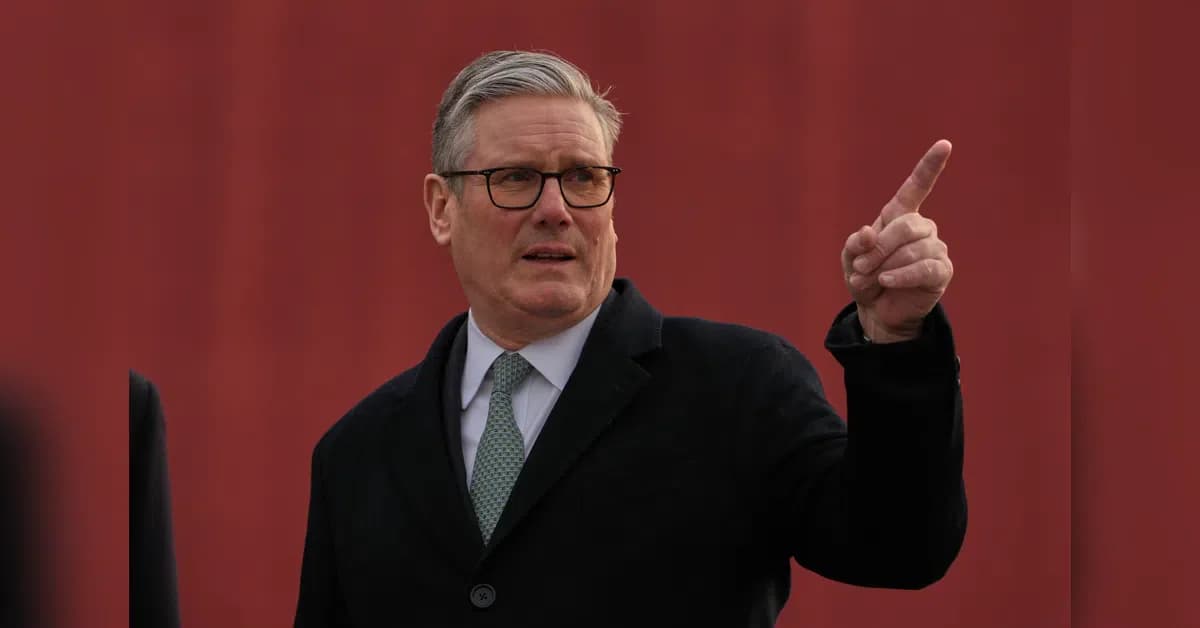
Keir Starmer officially resigned as UK prime minister on Monday, announcing outside 10 Downing Street that he would remain in office until Labour completes the process of choosing a new leader. This approach is intended to avoid an abrupt transfer of power, but it also leaves the UK with a prime minister whose authority has been weakened at a sensitive moment for public finances and policy delivery. Starmer announced his resignation on Monday after concluding, over the weekend, that he'd lost the support of cabinet colleagues and members of Parliament. He will face Prime Minister's questions in the House of Commons early Wednesday afternoon, for the first time since confirming his departure from Downing Street. The resignation follows months of pressure inside the Labour Party after heavy local election losses in May and growing unease among Labour lawmakers. The discontent has centred not only on Starmer's leadership style, but also on policy choices made since Labour returned to power in 2024 with one of its largest parliamentary majorities.
Andy Burnham is all but certain to become the UK's next prime minister after his main rival Darren Jones ruled himself out of the leadership race in an interview with Sky News on Wednesday. Jones, a minister and ally of outgoing PM Keir Starmer, said he believed Burnham would become the next PM and ruled himself out of the contest, clearing Burnham's path to succeed Starmer. Burnham, the former mayor of Manchester, is now increasingly likely to be the only contender nominated to replace Starmer as Labour Party leader and, with no contest, could be installed as PM by mid-July 2026. Former Greater Manchester mayor Andy Burnham is now expected to be a central figure in the leadership debate after winning the Makerfield by-election on June 18. His return to parliament gives Labour MPs and party members a possible alternative at a time when Starmer's support had already been slipping. A Labour MP needs the support of 20% of the parliamentary Labour Party (81 MPs) to trigger a contest, while an incumbent leader does not need to reach that threshold and is automatically put on the ballot.
An Ipsos poll published on Friday showed 52% of the British public thought Starmer should stand down as prime minister, up five percentage points from May. The same poll found that 35% believed he should continue, adding to the sense that Labour's internal concerns had started to align with wider public dissatisfaction. The political timing is important for financial markets because leadership changes can alter fiscal priorities. The UK does not automatically require a general election when a prime minister resigns, but if Labour can choose a new leader who commands a majority in the House of Commons, that person can become prime minister. Investors will watch whether Reeves remains as finance minister, whether spending commitments are reviewed, and whether the next Labour leader offers a different approach to taxation, welfare and borrowing. The path of gilt yields and sterling may depend on how orderly the transition appears.
The UK government announced on November 26, 2025 that it would grant no new oil and gas exploration licenses, making it the largest economy to take that step. As reported by multiple sources, the ban has compounded British exposure to the ongoing US-Israel conflict with Iran, which disrupted Middle East oil and gas flows and triggered sharp energy price increases. Brent crude surged from around $73 a barrel to nearly $114 since the conflict outbreak, while June gas futures on the Dutch TTF jumped nearly 50%. Ofgem confirmed a 13% rise in the household energy price cap from July, lifting the annual dual-fuel bill from £1,641 to £1,862. Trump has repeatedly urged the British government to reverse its freeze on issuing new oil and gas exploration licences in the North Sea, making energy policies a recurring point of friction between the two leaders.

The resignation follows months of pressure inside the Labour Party after heavy local election losses in May and growing unease among Labour lawmakers. The discontent has centred not only on Starmer's leadership style, but also on policy choices made since Labour returned to power in 2024 with one of its largest parliamentary majorities. Starmer and Finance Minister Rachel Reeves have faced criticism from within Labour over the government's fiscal approach. Reeves has sought to anchor Labour's economic policy around fiscal discipline, but that stance has also created tensions inside the party. Welfare reforms have been a particular source of disagreement, with a leadership contest potentially bringing pressure for a softer domestic agenda, especially from MPs worried about voter anger in Labour-held seats. For businesses, the uncertainty may delay investment decisions in sectors that depend heavily on government policy, with infrastructure, housing, energy and public services being areas where long-term planning matters.
Speculation about Starmer's future is at an all-time high after Starmer's greatest rival, Andy Burnham, won the Makerfield by-election on June 18 and became a Labour MP. Burnham, Labour's most popular politician, will be in a position to challenge Starmer's leadership once he is sworn into the Commons this coming week. A Labour MP needs the support of 20% of the parliamentary Labour Party (81 MPs) to trigger a contest, while an incumbent leader does not need to reach that threshold and is automatically put on the ballot. Starmer insisted on Friday that he would not 'walk away' from any leadership contest which may be triggered. The Prime Minister is understood to be at Chequers with his wife and close advisers, weighing up his options, including potentially resigning. The next Labour leader would be expected to visit Buckingham Palace and be invited to form a government if they can command confidence in the Commons. The new prime minister would then decide whether to retain key ministers, including Reeves, or appoint a new Treasury team to signal a change in direction.