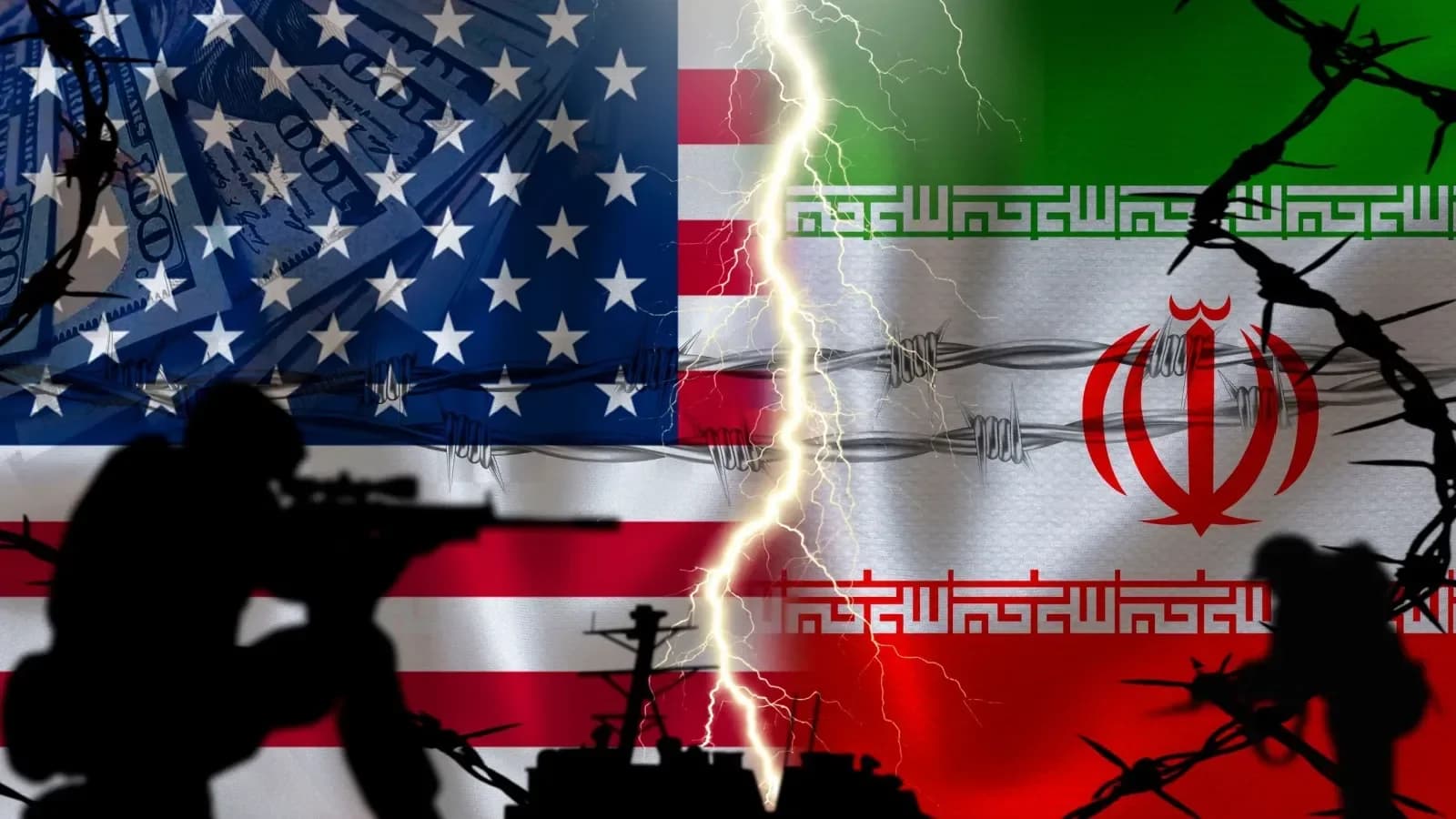
US President Donald Trump announced on Monday that he is holding off on a planned attack on Iran scheduled for Tuesday, based on requests from leaders in the West Asia region. According to CNBC TV18, Trump wrote on Truth Social that he received requests from Qatari Emir Tamim bin Hamad Al Thani, Saudi Crown Prince Mohammed bin Salman, and UAE President Mohammed bin Zayed al Nahyan to delay the military action. The president added that serious negotiations are taking place with Iran and that a deal will be reached which will include Iran not having a nuclear weapon. Trump also stated that he has instructed his Department of War and the military to be ready for attack in case a deal is not reached.
Wall Street benchmark indices recovered from day's lows in a volatile trading session on Monday, May 18, following Trump's announcement. As per CNBC TV18, the Dow Jones recovered over 300 points from the lows of the day to end with gains of 160 points. The futures had declined nearly 500 points when trading resumed on Sunday evening, but recovered significantly after Trump's post. The S&P 500 recovered 50 points from the lows but ended just below the flat line, while the Nasdaq underperformed for the second-day running, ending with losses of 0.5%. Crude oil prices are marginally lower on Tuesday, though they continue to remain at elevated levels.
The market recovery was accompanied by significant movements in other financial instruments. According to CNBC TV18, the US 10-year bond yield continues to hover around the 4.6% mark, while bond yields in Japan are at a record high for the 30-year note. The US Dollar index has slipped below levels of 99 after Trump's post. Memory chip stocks led declines on the Nasdaq, with Seagate falling 7% on Monday after its CEO spoke at a JPMorgan conference stating that new factories will take too long to build. Other memory chip names such as Micron, SanDisk and Western Digital also fell between 5% to 7% on Monday.
US President Donald Trump has disclosed that he or his investment advisers made over 3,700 trades in the first quarter, involving significant businesses that deal with his government and totalling tens of millions of dollars. According to a Bloomberg report, the transactions, detailed in over 100 pages of paperwork submitted to the US Office of Government Ethics on Thursday, indicate sales and purchases in wide ranges, making it challenging to determine their precise value. However, the transaction volume—more than 40 each day over three months—is just as noteworthy as the possible monetary value. Wall Street insiders have expressed astonishment at the frequency of trading, with Adam Sarhan, founder of 50 Park Investments, calling it "tremendous" and questioning whether the account ended up positive or negative. Eric Diton, president and managing director at The Wealth Alliance, stated that in his 40-plus years on Wall Street, this represents "an unusual amount of trading by any standards."
The filings reveal that the president invested at least $1 million in major technology and industrial companies during the first quarter, including Nvidia Corp., Oracle Corp., Microsoft Corp., Boeing Co., and Costco Wholesale Corp. Additional transactions included bargain retailer Dollar Tree Inc., eBay Inc., Abbott Laboratories, Uber Technologies Inc., and AT&T Inc. Trump's biggest sales came on February 10, when he unloaded holdings in three technology firms: Microsoft, Meta Platforms Inc., and Amazon.com Inc., in amounts between $5 million and $25 million. Since taking office, Trump has made 380 transactions in the fourth quarter, mostly purchases of municipal debt, and his first disclosure in August reported 690 transactions covering about seven months, totaling at least $103.7 million. The revelation rekindles worries about conflicts of interest that have plagued Trump's presidency, with critics frequently accusing him of combining financial interests with governmental responsibilities.
According to Bloomberg, the president's interests are separately handled by third-party financial organisations that have control over all investment choices, according to a Trump Organisation official. Trades are carried out using automated procedures, with the spokeswoman stating that Trump, his family, and his business are not involved in any transactions and don't have any input or advance notice of trading activity. The White House dismissed questions about potential conflicts, with spokesman David Ingle saying that Trump "only acts in the best interests of the American public" and adding that "there are no conflicts of interest." However, Tuttle pointed out that "when you're the president you know everything, so any stock you buy, there's a huge question mark." Previous presidents divested assets or took other steps to avoid conflicts of interest, with George H.W. Bush having a blind trust and Bill Clinton doing the same after assuming office.