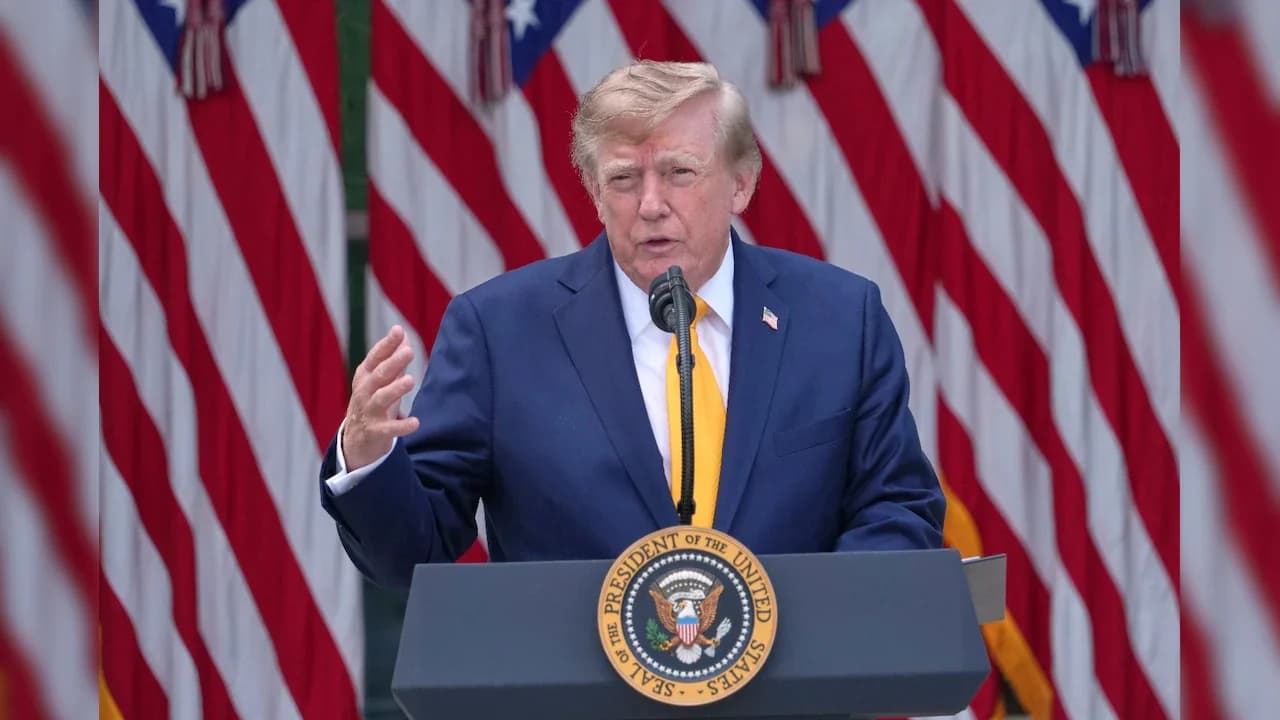
US President Donald Trump signed an executive order on Wednesday declaring a national emergency over the use of certain foreign-made equipment in America's electricity grid, according to reports from the White House. The order cites cybersecurity and national security risks as primary concerns driving the emergency declaration. Trump emphasized that the rapid expansion of AI data centers, advanced manufacturing and defense production has increased the Nation's dependence on abundant, reliable electricity and magnified the consequences of a successful attack or supply disruption. The latest developments show the order widens security checks on bulk power gear and software, aiming to block risky foreign control while domestic suppliers race to meet increased demand for compliant equipment. As per the White House, Trump stated 'I ... find that the situation with respect to the foreign supply of bulk-power system electric equipment constitutes an unusual and extraordinary threat, which has its source in whole or substantial part outside the United States, to the national security, foreign policy, and economy of the United States'.
The emergency declaration follows concrete evidence of security threats discovered by US experts. Last year, Reuters reported that rogue communication devices not listed in product documents had been found in some Chinese solar power inverters by US experts who strip down equipment hooked up to grids to check for security issues. This discovery demonstrates the practical vulnerabilities that prompted the current emergency declaration. The order specifically targets equipment and software that can be monitored or controlled remotely, with modern solar inverters, battery-management systems and other grid-connected devices increasingly having digital interfaces, raising concerns that compromised equipment could provide entry points for attackers. The administration is particularly concerned about equipment and software that can be monitored or controlled remotely, with modern solar inverters, battery-management systems and other grid-connected devices increasingly having digital interfaces, raising concerns that compromised equipment could provide entry points for attackers.
The executive order invokes two key federal statutes: the International Emergency Economic Powers Act and the National Emergencies Act, as reported by the White House. The order describes an 'unusual and extraordinary foreign threat' from bulk-power system equipment produced abroad, establishing the legal basis for the emergency declaration. The latest implementation shows the order widens security checks on bulk power gear and software, demonstrating expanded scope beyond initial restrictions. The order specifically targets countries under US arms embargoes or sanctions regimes, or governments the administration decides are working against American interests, with China not explicitly named but Chinese-made grid parts having worried US security officials for years. The International Energy Agency estimates that China accounts for about 80% of global battery and solar-inverter manufacturing capacity, while a 2020 US Commerce Department investigation found that dozens of large Chinese power transformers had entered the US market over the previous decade. The order blocks companies from buying, importing or installing certain foreign-made parts used in what the government calls the bulk-power system - the network of high-voltage lines, substations and power plants that transmits electricity across the country.
The Secretary of Energy has been directed to publish implementing rules within 120 days and identify risky equipment in consultation with the Cabinet, as reported by Bloomberg. Notably, the order does not apply to equipment used for local electricity distribution, indicating specific focus on bulk-power system components. The latest implementation shows the order widens security checks on bulk power gear and software, suggesting enhanced monitoring requirements for both equipment and software components. The order blocks companies from buying, importing or installing certain foreign-made parts used in what the government calls the bulk-power system - the network of high-voltage lines, substations and power plants that transmits electricity across the country. Energy Secretary Chris Wright has been authorized to recommend measures addressing security risks posed by equipment already operating in the US bulk-power system, though any such action must consider potential impact on electricity reliability and safety. Additionally, the order also asks the US Energy Secretary to impose conditions on the continued use and operation of such equipment to address concerns identified by the Trump administration, demonstrating comprehensive enforcement measures beyond simple prohibitions.
The policy represents the latest example of Washington's approach to tackling technology threats posed by China, following a decision by the European Commission earlier this year to ban Chinese-made inverters from publicly funded energy projects. The emergency declaration comes amid rapid growth of advanced manufacturing, artificial intelligence, and defense production that has increased America's dependence on certain foreign components necessary for reliable electricity provision. The timing is particularly significant as the US experiences a surge in electricity demand from AI data centers, semiconductor manufacturing and other energy-intensive projects, increasing pressure on utilities to build generation and transmission capacity quickly while ensuring equipment security. The order revives an approach Trump first pursued in 2020, when he declared foreign-supplied bulk-power equipment an 'extraordinary threat to national security' before former President Biden rescinded that order.