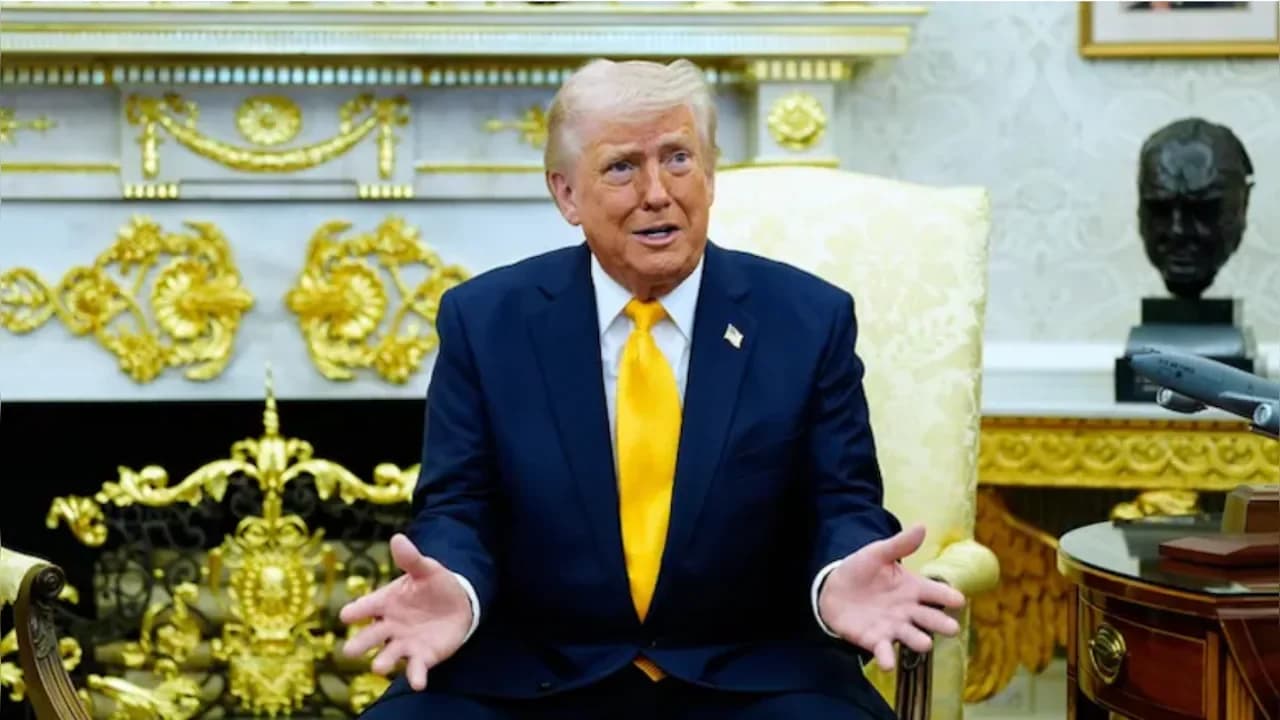
US President Donald Trump delivered his first formal national address on Operation Epic Fury, claiming sweeping battlefield successes after just one month of military operations. Speaking from the White House, Trump declared that "our armed forces have delivered swift, decisive, overwhelming victories on the battlefield — victories like few people have ever seen before." He asserted that Iran's naval forces had been eliminated, its air force "in ruins," and much of its leadership killed, while its missile and drone capabilities had been sharply reduced. Trump emphasized that "never in the history of warfare has an enemy suffered such clear and devastating large-scale losses in a matter of weeks," as reported by Upstox News Desk. The address comes amid rising global tensions, volatile markets and growing domestic unease over the conflict, with oil prices surging and financial markets remaining on edge over prolonged war risks.
Iran's Parliament Speaker Mohammad Bagher Ghalibaf has accused the United States of plotting a ground attack despite publicly pushing for a negotiated deal, as reported by Al Jazeera. In a message published to mark 30 days since the start of the war, Ghalibaf said: 'The enemy signals negotiation in public, while in secret it plots a ground attack.' The threat comes as the US Central Command (CENTCOM) announced Saturday that about 3,500 military personnel had arrived in the Middle East on board the USS Tripoli, with the Pentagon reportedly preparing for weeks of limited ground operations that could include raids on Kharg Island and coastal sites near the Strait of Hormuz shipping chokepoint. As per Al Jazeera, the Trump administration is also planning to send thousands of soldiers from the army's 82nd Airborne to the region, following Trump's threats to strike Iranian power stations and other energy infrastructure. According to the Washington Post, the Pentagon is considering sending another 10,000 troops to the region, alongside a broader bombing campaign, though whether Trump would approve plans for deploying ground troops remains uncertain.
The civilian cost of the war continues to mount with Iran's Ministry of Health reporting that 2,076 people have been killed since the start of the war, including 216 children, according to Al Jazeera. Among the deaths, six people were killed in a US-Israeli attack on a residential area in the Iranian village of Osmavandan, with five houses destroyed and 22 severely damaged. A university in Iran's central city of Isfahan said it was hit by US-Israeli air strikes on Sunday for the second time since the war erupted, leaving four university staff members wounded. As per Al Jazeera, at least 250 students and teachers have been killed amid strikes on 600 educational facilities across Iran since the war began. The Israeli military also dropped more than 120 munitions on sites used for research, development, and production of weaponry in Tehran on Sunday, with a commercial building housing Qatar's Al-Araby TV in Tehran hit, leaving the multistorey block with blown-out walls and windows. In Tehran, a building housing Qatar's Al Araby TV was hit and there were power outages in the east of the city, while five people were killed in a strike on a pier in the southern Iranian port of Bandar-e-Khamir, which also destroyed two vessels.
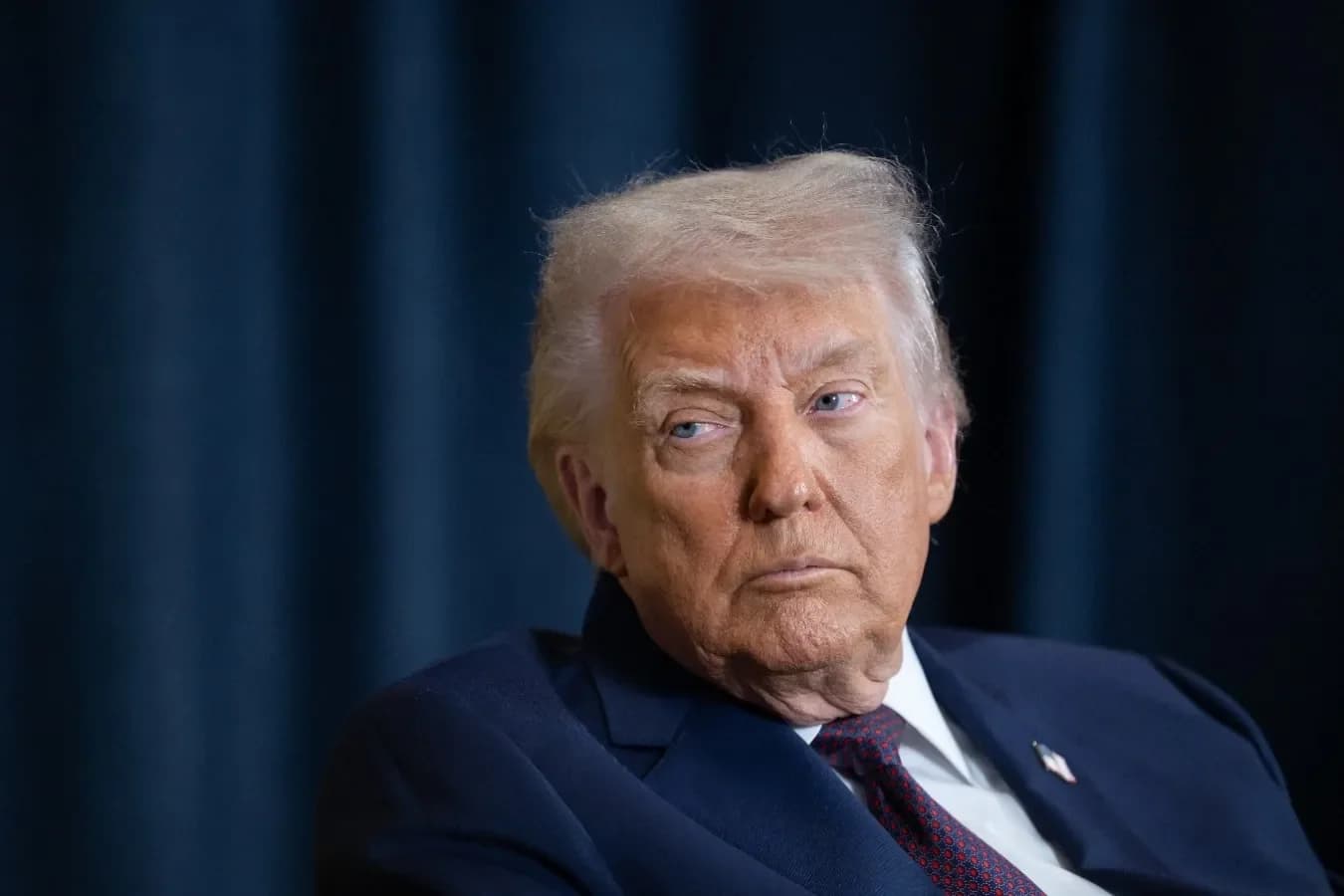
In an interview with the Financial Times published Sunday, Trump revealed his strategic thinking regarding Iran's oil infrastructure. According to the report, Trump said he was 'considering taking control of Iran's oil resources, including Kharg Island, the country's primary oil export terminal.' As quoted by Upstox News Desk, Trump stated: 'To be honest with you, my favourite thing is to take the oil in Iran,' adding that the United States had 'a lot of options.' He suggested US forces could seize Kharg Island with little resistance, stating: 'I don't think they have any defence. We could take it very easily,' while acknowledging such a move would require sustained presence. The Iranian navy has responded by claiming complete control of waters near the Strait of Hormuz, a vital chokepoint for a fifth of the world's oil, with an Iranian naval commander warning they could be targeted with coastal missile systems. Since the US-Israeli attack on Iran on 28 February, Saudi Arabia has been able to divert some of its oil exports by pipeline to the Red Sea, with Saudi commentators saying that if this route is also threatened, Riyadh could enter the war directly.
Foreign ministers from Pakistan, Turkey, Egypt and Saudi Arabia met in Islamabad, looking to de-escalate the conflict, as reported by Al Jazeera. However, the diplomatic efforts face significant challenges as Iranian forces have targeted US forces based in Jordan, launching drones on the living quarters and military equipment sites at the Muwaffaq Salti airbase in Azraq. Meanwhile, Yemen's Iran-backed Houthis entered the conflict for the first time, with missile tracers launched from Yemen at Israel sighted in the sky over Hebron in the West Bank on Saturday. The Israeli air force later said it had intercepted two unmanned aerial vehicles launched from Yemen, and the UN peacekeeping mission in Lebanon (Unifil) said a peacekeeper was killed when a projectile exploded at one of its positions near the southern Lebanese village of Adchit al-Qusayr on Sunday, with another peacekeeper critically injured. Israel's military has continued its relentless air assault on Iran, saying on Sunday its forces targeted Tehran's weapons manufacturing infrastructure, including dozens of storage and production sites, while Netanyahu announced that Israel would widen its invasion of southern Lebanon to definitively neutralise the threat of invasion by Hezbollah militants.