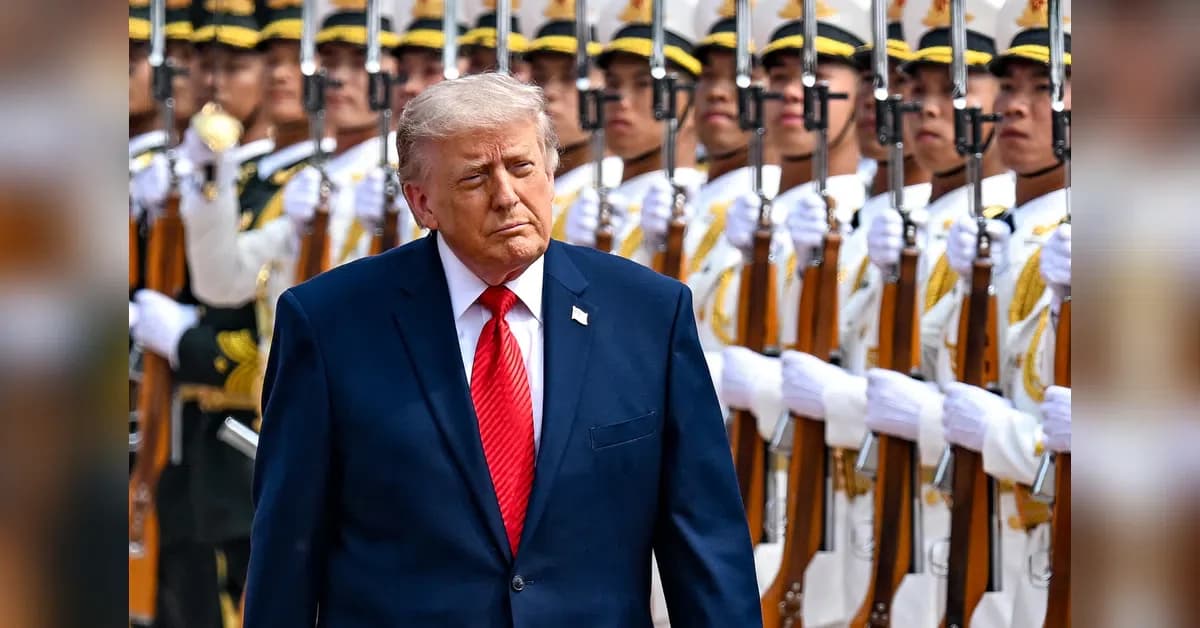
US President Donald Trump has revived his 'two weeks' victory timeline over Iran, declaring that the United States would achieve 'total victory' within the next two weeks during a tele-rally held to boost Senator Lindsey Graham. According to reports from CNN, Trump made these remarks as Iran and Israel halted hostilities after 24 hours of reignited war in West Asia, providing a backdrop for the President's optimistic statements about the diplomatic process. This marks the third time Trump has used the 'two weeks' timeline' - initially predicting the war would last two to four weeks when it began, then stating it would last two weeks when the ceasefire was announced on April 7, and now declaring victory within two weeks. As reported by CNN, Trump stated 'We have been a very strong team and I believe we are winning that battle' during his Monday speech, emphasizing that 'it will be a total victory' that 'will happen very soon'. In a phone call with BBC, Trump explained that 'All I did is say we have to use sense. We're very close to signing a very powerful deal, a very good deal'. Trump has frequently made sweeping predictions that the U.S.-Iran conflict could wrap up in a matter of weeks, starting when the war began in late February. It is unclear, however, where negotiations between the two countries stand. According to CNN, Trump has made at least 37 explicit statements about an imminent deal since the conflict began, counting both before and after the truce, with the President stating 'I think we're going to end it. I can't be certain' as early as March 29.
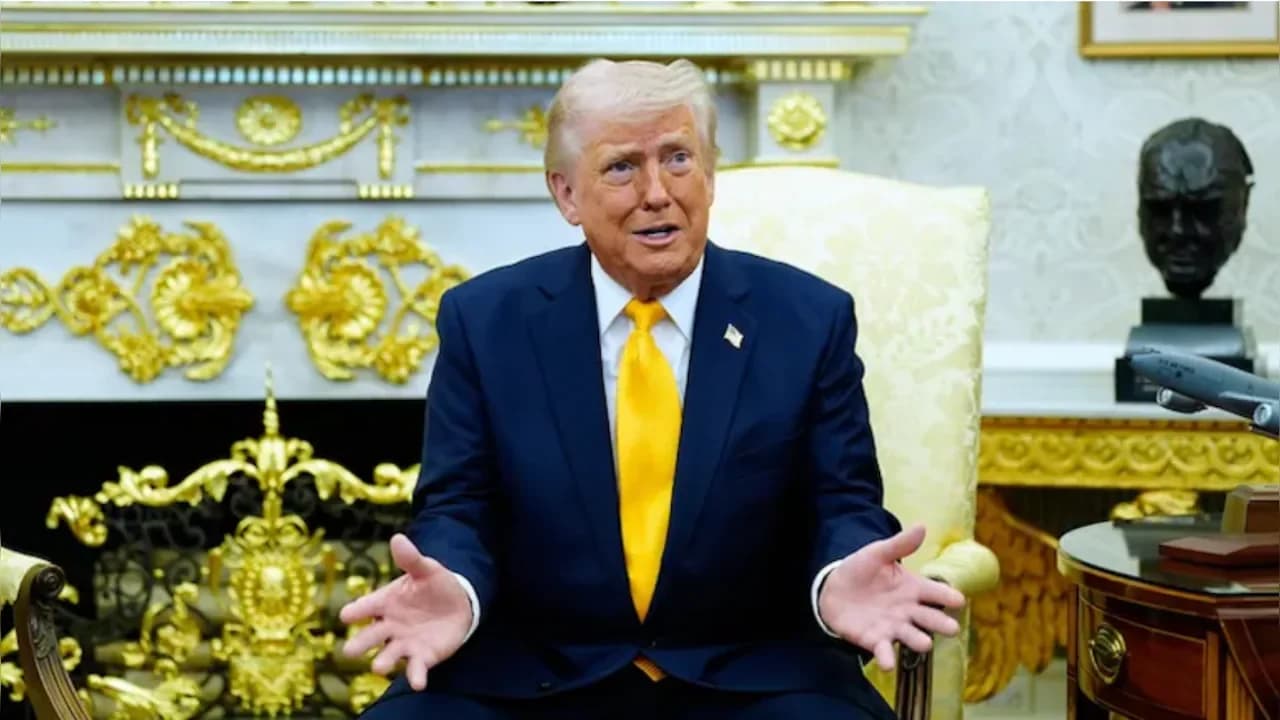
The latest developments come as Iran and Israel struck each other with missiles on June 6-7, with Trump issuing warnings to both sides to stop shooting after which both sides stopped the attacks. According to Firstpost reports, Iran launched nearly 30 missiles at Israel overnight, while Israel retaliated by targeting military sites in the Islamic republic. No casualties have been reported in either Israel or Iran after the exchange of fire. Israeli Prime Minister Benjamin Netanyahu announced that the 'fire on that front is contained' hours after Tehran said it had stopped its military action. The Israeli military identified projectiles launched towards soldiers operating in southern Lebanon, with some intercepted and one landing near troops without causing casualties. Israel's Channel 12 and the Kann News public broadcaster said Israeli leaders had agreed to halt strikes against Iran, but that operations against Hezbollah in southern Lebanon would continue. The European Union is to impose new sanctions on Iran for restricting maritime traffic, with foreign policy chief Kaja Kallas stating 'It will be the first time where the freedom of navigation sanctions will be applied on Iran' without providing further details.
Trump indicated that Iran was willing to make substantial concessions in the ongoing negotiations, stating that 'the Islamic Republic ' is seeking a 'very good deal' and is prepared to make significant concessions. As reported by CNN, the President stated that Iran was 'willing to give us everything, they're willing to give us no nuclear weapon'. When asked why Iran hasn't agreed to a deal despite being desperate to make one, as he has said repeatedly, the President explained 'Because they're strong. They're proud. There are things they never thought they'd be doing that they're going to have to do. They've got no choice. And it takes a while.' Iran has also confirmed that the exchange of views to reach an agreement with the US continues, with the country expressing willingness to make comprehensive concessions in the ongoing diplomatic discussions. Iran's chief negotiator warned on Sunday that an Israeli strike on south Beirut and the ongoing U.S. blockade of Iranian ports would trigger retaliation, with parliamentary speaker Mohammad Bagher Ghalibaf accusing Washington of giving Israel the 'green light' for strikes. Iran's president Masoud Pezeshkian said Monday that 'Iran has neither abandoned the field nor the negotiation table', stating 'Diplomacy and defense are the two wings of national power'.
Trump predicted that oil prices would come tumbling down following the anticipated victory over Iran. According to CNN reports, the President stated that 'you're really going to win it over the next two weeks when we declare total victory, it'll be a total victory, it will happen very soon'. This prediction suggests that successful resolution of the Iranian conflict could have significant implications for global oil markets. Trump emphasized that 'oil prices will fall sharply once the United States achieves what he called a successful outcome' in the negotiations, with the President noting that 'oil prices will fall sharply once the United States achieves what he called a successful outcome' in the negotiations. The prediction comes as Wall Street's main indices advanced Monday as chip stocks bounced back and Iran said it was stopping its latest military operation against Israel.
The latest developments come as Iran and Israel struck each other with missiles on June 6-7, with Trump issuing warnings to both sides to stop shooting after which both sides stopped the attacks. Since Sunday, Trump has issued at least two warnings to Israeli PM Benjamin Netanyahu, telling him that he would be isolated if he moves ahead with his Iran plans without paying heed to American negotiations. According to Axios reports, Trump has asserted his authority, saying 'I said, ''Bibi, you better be careful, or you will be on your own very soon.'' The current military situation continues to influence the broader context of Trump's diplomatic overtures to Tehran, with the President calling on both Israel and Iran to 'immediately' cease these attacks. By Monday evening, Netanyahu said the fighting with Iran had stopped 'for now,' while warning Israel would retaliate if attacked. Israel's Education Ministry said on Monday that schools would reopen throughout the country the following day after a one-day closure put in place because of Iranian missile attacks. Classes in several northern communities along the Lebanese border will only be allowed to resume if they are held next to a protected space, due to the risk of incoming projectiles from the Iran-backed Hezbollah.