US markets staged a strong recovery on Wednesday as investors turned to bargain hunting in AI stocks after recent corrections. According to reports from Upstox, the S&P 500 rose 1.3% and was on track for a third gain in four days since its wipeout last week on worries about a potential slowdown for AI-related businesses. The Nasdaq composite rallied 1.9%, but stocks outside of AI weren't performing as well, with the Dow Jones Industrial Average up a modest 57 points, or 0.1% as of 11:45 a.m. Eastern time. The positive momentum was fueled by optimism around Anthropic's upcoming $65 billion IPO, which will raise funds at a $1.45 trillion valuation with a price band of $70 to $78 per share. The AI platform operates through Claude and represents one of the largest IPOs in the sector. As of 1:50 p.m. New York time, the Nasdaq 100 Index was up 2.6%, touching its highest level since November 4 intraday, while the S&P 500 Index rose 1.7% in tandem. According to MarketWatch, the Nasdaq Composite climbed 1.60% to 25,466, leading major indexes higher, while the S&P 500 gained 1.29% to 7,618 and the Dow Jones Industrial Average advanced 0.49% to 52,486.
The AI sector received a significant boost from CoreWeave Inc.'s strong Q3 results, which exceeded street estimates despite widening losses. As reported by Upstox, the cloud computing software firm's Q3 revenue jumped 168% YoY to $3.66 billion, significantly beating analyst expectations. However, the company's net loss widened to $709 million, reflecting the typical high investment phase of AI infrastructure companies. CoreWeave announced that it has roughly $9 billion in customer prepayments and deposits expected in the next three months, along with other sources of cash to help pay its bills. This development helped allay concerns about the company's ability to handle higher interest rates in the bond market, which make borrowing money more expensive. Despite the losses, CoreWeave raised its 2026 revenue forecasts, citing continued AI demand, which helped drive the stock up 25% on Wednesday. According to Janus Henderson senior equity analyst Shaon Baqui, the results "remove a lot of the concerns around demand, pricing, and financing for CoreWeave," adding that "you can slow down the pace of AI capex, but you can't really slow down the pace of AI adoption."
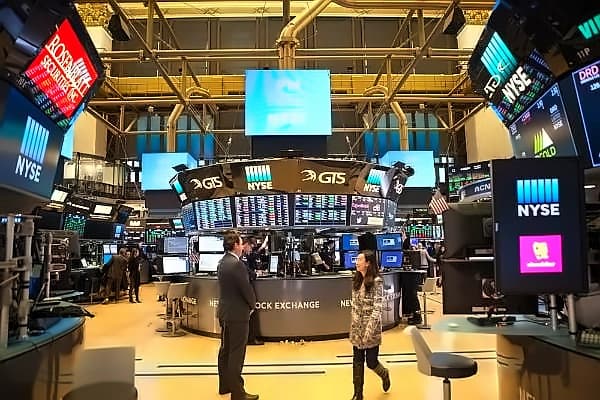
The positive AI sentiment translated into strong performance for semiconductor stocks, which recovered substantially from recent declines. According to Upstox, the Philadelphia Semiconductor index surged over 3.8%, recouping 10% of losses this week after the previous week's 12% decline. Among major chip stocks, Micron Technology (+13.4%), Broadcom (+6.6%), and GE Vernova (+3.1%) were the key gainers. The sector's recovery was attributed to the robust outlook from CoreWeave and optimism around Anthropic's IPO. NVIDIA continues to face challenges unrelated to the broader AI industry, with its board investigating CEO Jensen Huang after he admitted to a relationship with a businesswoman who allegedly fed intelligence and advanced chips to China. The news lifted the data center, storage and memory, chip equipment, and server sectors across the board, with CoreWeave shares surging as much as 27% intraday for their best single-day performance in more than a year.
The technology sector faced additional challenges from a prolonged Microsoft outage that disrupted AI services globally. According to Reuters, a disruption lasting more than 12 hours affected Outlook, Teams, Copilot and other Microsoft 365 services across businesses and government agencies worldwide. Microsoft blamed server problems and said it had found no indication of malicious activity. The incident disrupted organisations across more than 70 countries, including airlines, financial firms and public institutions. The outage also disrupted Microsoft connectors used by OpenAI and Anthropic, highlighting how heavily AI services rely on infrastructure run by a handful of major technology companies. Microsoft shares fell 1.28% in premarket trading, adding to technology sector concerns. Despite these challenges, US markets remained on track for weekly gains, with the S&P 500 and Nasdaq set for gains of around 3% and the Dow having risen nearly 2%.
Nvidia faced significant pressure following CEO Jensen Huang's sudden resignation, with the stock closing at $166.19 on Thursday, down 4.34%. The stock had dropped to an intraday low of $148.80 before recovering some losses, but it gained 1.63% in premarket trading to reach $168.90. Huang's exit has left investors questioning what it could mean for Nvidia's investments, business partnerships and position in the AI industry. CFO Colette Kress has taken over as interim CEO as the board looks for a permanent successor. The leadership change adds to existing concerns about the company's relationship with China and its role in the global AI infrastructure market. According to The Economic Times, Nvidia's ties to companies throughout the AI ecosystem mean its report on Tuesday could ripple broadly, putting pressure on new interim CEO Colette Kress. The incident also brings up the touchy subject of Nvidia's Huang and sales of powerful Nvidia AI chips to a Chinese army-linked university already on a US blacklist.