The Supreme Court delivered a 6-3 decision on Thursday, overturning a lower court order that had blocked the Trump administration's controversial asylum metering policy. According to Associated Press, the justices cleared the way for the administration to potentially revive the policy that limited the number of people who could apply for asylum each day at U.S.-Mexico border crossings. The policy, which was first used under President Barack Obama during large Haitian migrations and expanded during Trump's first term, ended in 2020 during the coronavirus pandemic and was formally rescinded by President Joe Biden in 2021. Justice Samuel Alito wrote that "A guest does not arrive in a house when he knocks on the front door," arguing that immigration agents don't have to let people apply for asylum if they haven't actually arrived in the country. The Trump administration argued that metering is a critical tool used by presidents of both parties, though it's currently not in place as authorities have imposed other restrictions on asylum seekers.
In a separate 6-to-3 decision, the court allowed the Trump administration to end humanitarian protections for hundreds of thousands of people from Haiti and Syria. As reported by Business Standard, the program known as Temporary Protected Status (T.P.S.) was created by Congress in 1990 to provide temporary legal status to people whose home countries were deemed unsafe due to war, natural disasters, or other crises. The ruling clears a path for the potential deportation of 350,000 Haitians and 6,100 Syrians, with implications for T.P.S. holders from about a dozen other countries. Justice Sonia Sotomayor dissented from the bench, stating that the majority's opinion "regrettably and tragically extinguishes the light of the Statue of Liberty," and warning that the decision could give people a "perverse incentive" to enter the country illegally.
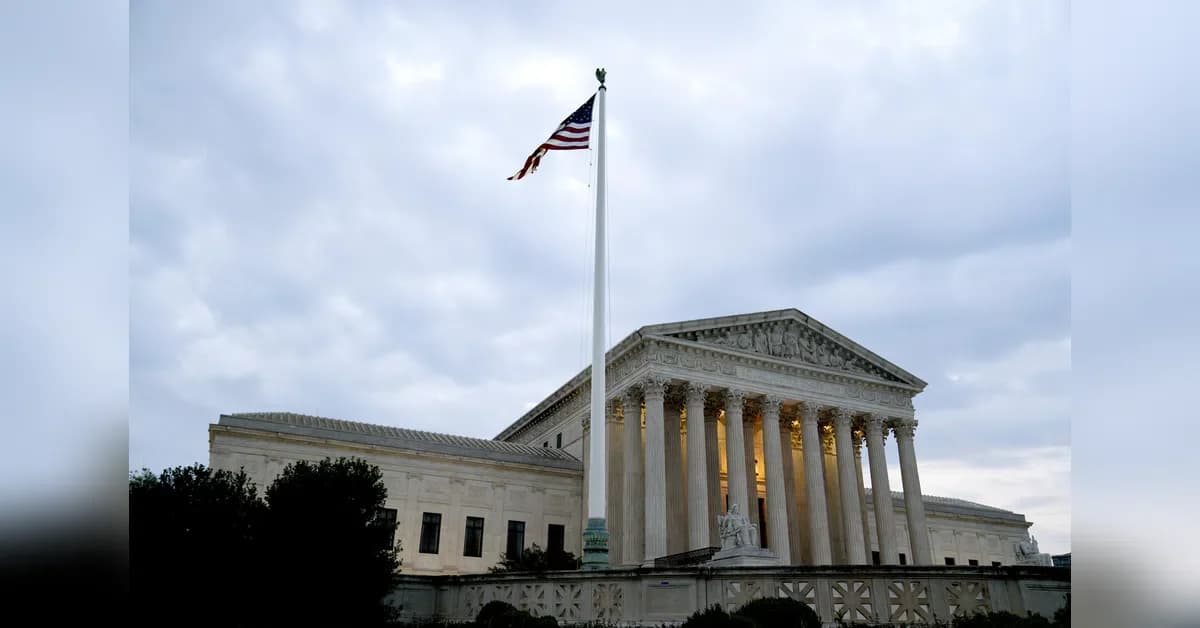
The Supreme Court's latest ruling represents a significant victory for the Trump administration's immigration enforcement strategy. According to Associated Press, the 6-3 decision overturned a California-based federal judge's ruling that had found the metering policy violated asylum seekers' rights and the law requiring screening. The policy had created a humanitarian crisis as thousands of people settled in unsafe makeshift shelters to await their turn, with advocates arguing it disregarded the nation's ideals. The Trump administration said it was necessary to deal with an increase of asylum seekers at the border, with federal attorneys noting that people turned away at the border could come back later when lines were thousands of people long. The Department of Homeland Security applauded the ruling, with General Counsel James Percival stating "This decision opens up an important tool to continue securing our southern border."
Justice Samuel A. Alito Jr. wrote in the majority decision that federal law prohibits courts from second-guessing an administration's determination, with the court rejecting claims that the administration's decision was motivated by racial hostility toward Haitians. As reported by Associated Press, the court's conservative majority agreed with the Justice Department's argument that people stopped by authorities haven't actually arrived in the country, meaning immigration agents don't have to let them apply for asylum. However, attorneys for asylum seekers argue that the law has long meant anyone arriving at a port of entry should be screened, and blocking arrivals disregards the nation's ideals. In an unusual exchange, Justice Alito voiced a response after Justice Sotomayor's dissent, expressing surprise that she'd read her dissent out loud and defending his opinion by pointing out that the policy had been used during two presidential administrations. The administration called the rulings a vindication of efforts, with Homeland Security officials noting that the T in TPS stands for TEMPORARY, yet many designations became de facto amnesty.
Since Trump returned to office last year, his administration has attempted to end T.P.S. for people from 13 out of 17 countries with the designation when President Biden left office. According to Associated Press, the administration has separately halted refugee resettlement and dramatically slowed asylum claim consideration, making it far more difficult for people from troubled nations to find refuge in the United States. The metering policy was first used under President Obama when large numbers of Haitians appeared at the main crossing to San Diego from Tijuana, Mexico, and was expanded to all border crossings during Trump's first term. The case represents one of several immigration suits the court is considering this term, including Trump's push to end birthright citizenship and his administration's effort to strip legal temporary protections for migrants. The metering policy ended in 2020 when the government introduced greater restrictions during the coronavirus pandemic, and a California-based federal judge had found it violated asylum seekers' rights.