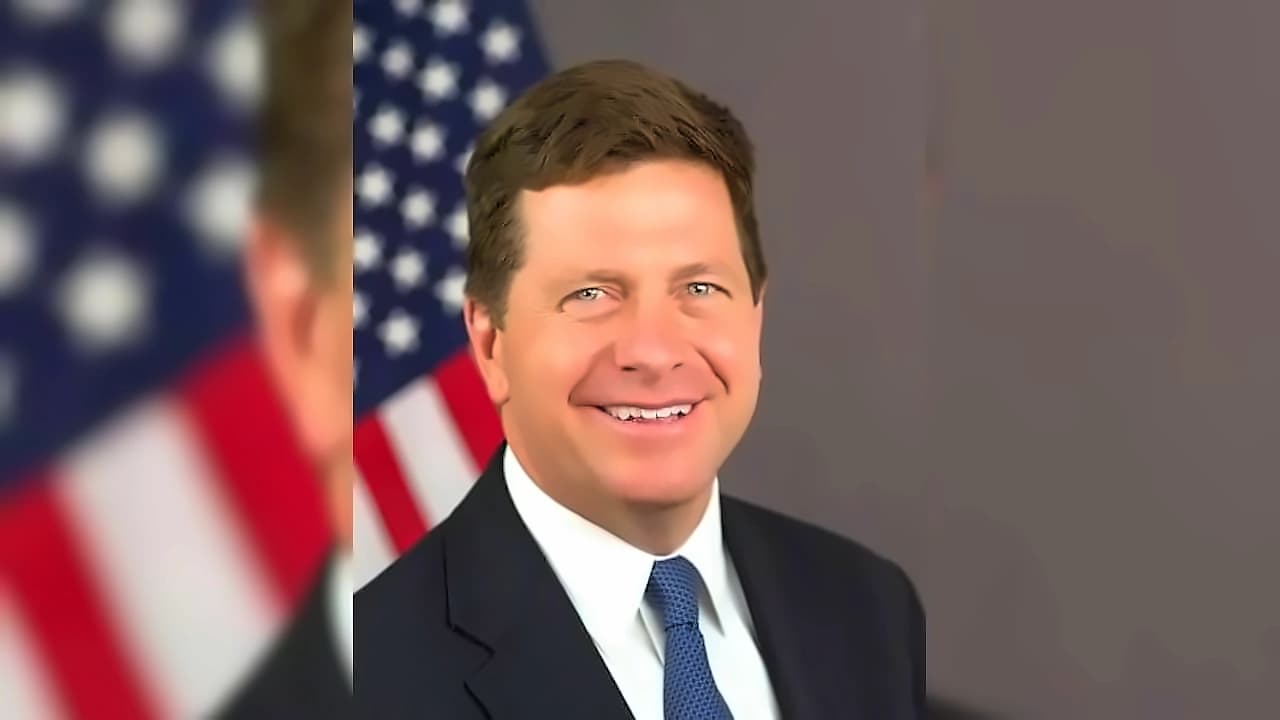
The US Senate confirmed Jay Clayton as Director of National Intelligence on Tuesday in a 51-47 vote along party lines, according to reports from The Times of India and Associated Press. The confirmation installs a former Wall Street lawyer and Securities and Exchange Commission chairman atop the country's 18 intelligence agencies. Clayton's appointment represents a significant shift from his previous career in corporate law and financial regulation to national security leadership. President Trump congratulated Clayton on his confirmation via Truth Social, writing "Congratulations to the Great Jay Clayton on his confirmation by the United States Senate, to be the next Director of National Intelligence. Jay is outstanding in every way, and will do a spectacular job as Director!"
Born Walter Joseph Clayton III on 11 July 1966 at Fort Eustis in Newport News, Virginia, and raised largely in Pennsylvania, Clayton built his career in corporate law rather than national security. As reported by The Times of India, he earned a bachelor's degree in engineering from the University of Pennsylvania, followed by a bachelor's and master's in economics from the University of Cambridge as a Thouron Scholar, and a law degree from Penn. He spent more than two decades at Sullivan & Cromwell LLP, rising to the firm's management committee and co-heading its corporate and cybersecurity practices.
US President Donald Trump named Clayton to chair the SEC in 2017, a post he held until December 2020, according to the SEC's historical summary reported by The Times of India. During his tenure, Clayton oversaw market regulation through the Covid-19 shock and Brexit-related disruptions. His SEC leadership provided him with extensive experience in financial market oversight and regulatory implementation. Senate Majority Leader John Thune praised Clayton's qualifications, stating on the Senate floor Monday that "amid a heightened threat environment, having a proven leader in this role is especially important. Jay Clayton fits this mold." Clayton later became US attorney for the Southern District of New York in 2025, a role he held through his nomination for the intelligence post.
Clayton's confirmation brings renewed attention to his role as SEC chair when the agency filed its 2020 enforcement action against Ripple Labs, making him the official who led the case when it was authorized and filed. The SEC filed its complaint against Ripple, CEO Brad Garlinghouse and Executive Chairman Chris Larsen on December 22, 2020, alleging they raised more than $1.3 billion through unregistered XRP securities offerings. Clayton's final day as SEC chair was December 23, 2020. The case ended with a mixed legal outcome in August 2024, with Judge Analisa Torres ruling that Ripple's programmatic XRP sales on exchanges did not constitute securities transactions, but finding certain direct institutional sales violated Section 5 of the Securities Act. Both parties dismissed their appeals in August 2025, leaving the $125.04 million civil penalty and injunction in force.
Democratic opposition to Clayton intensified after his contentious Senate hearing where he repeatedly refused to say that former President Joe Biden won the 2020 election, according to Associated Press. Sen. Raphael Warnock (D-Ga.) posted to X on Tuesday, "I just voted NO on Jay Clayton's nomination to be Director of National Intelligence. Why should someone who can't acknowledge who won the 2020 election oversee our intelligence agencies?" Virginia Sen. Mark Warner, the top Democrat on the Senate intelligence committee, expressed being "bitterly disappointed" in Clayton after initially praising his nomination. Senate Democratic leader Chuck Schumer said he thought Clayton's performance was "abysmal," making it "much less likely that he will get Democratic votes." Sen. Ron Wyden (D-Ore.) spoke in opposition to the nomination, warning that Clayton was unqualified and would act as the president's "election conspiracy win." After the confirmation, Warner issued a statement explaining his vote against the nomination, stating he came away with "serious reservations about whether he would be willing to stand up to political pressure when it matters most." The Democratic pushback comes as Trump has made revisiting 2020 a primary focus, repeatedly trying to cast doubt on that election and amplifying debunked theories about Biden's win.