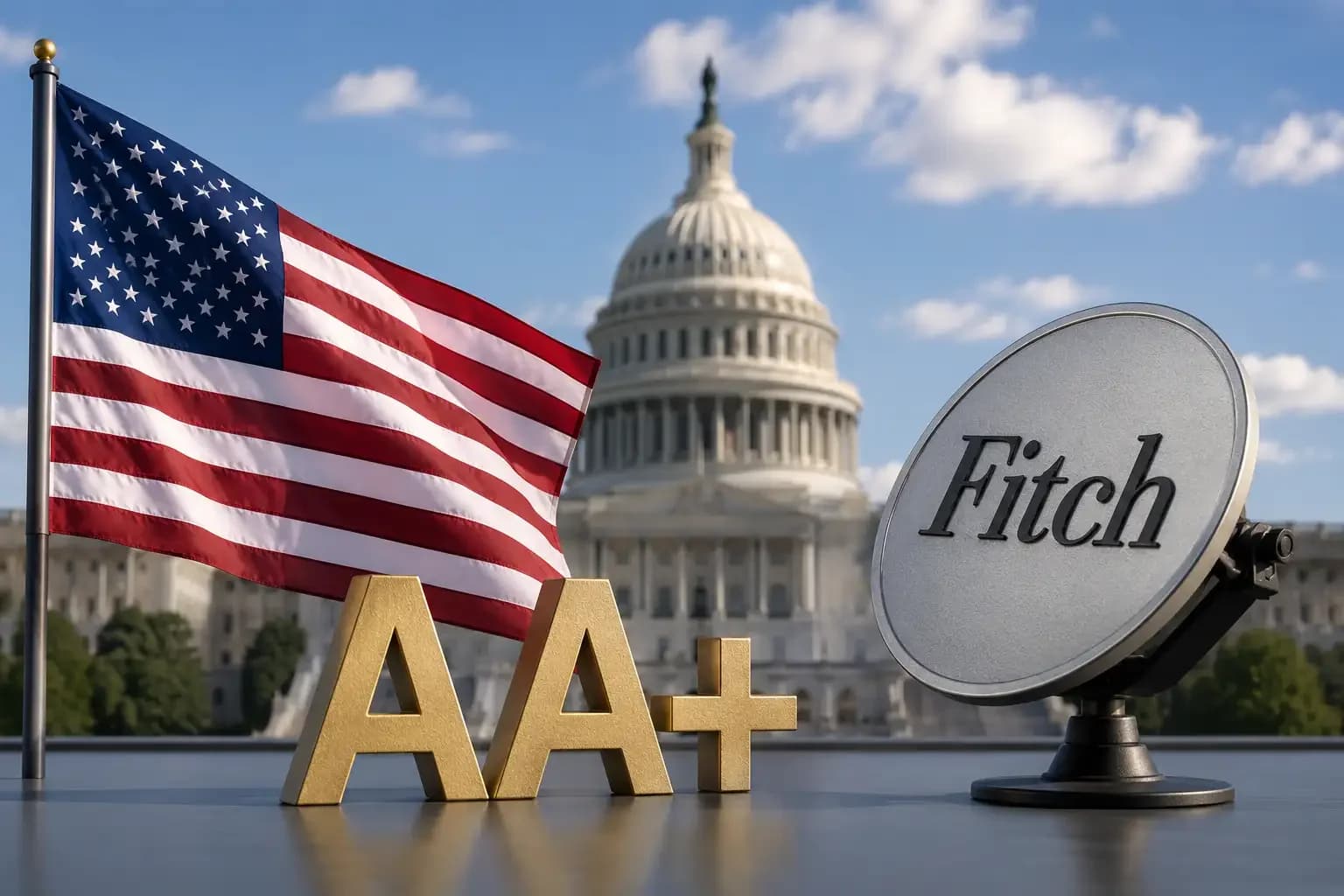
S&P Global Ratings affirmed the US's long-term sovereign credit rating at 'AA+' and short-term rating at 'A-1+' on August 18, 2025, maintaining the country one level below the top AAA ranking. The stable outlook signals a low probability of downgrade in the near term, as reported by S&P Global Ratings. Analysts led by Lisa Schineller cited the US economy's resilience as a key factor supporting their decision, with the affirmation resting on the resilience of the US economy, effective monetary policy management, and the recent $5 trillion increase to the federal debt ceiling. The rating agency noted that the outlook is stable, backed up by solid economic growth, 'credible, effective monetary policy execution,' and fiscal deficits that are high but not rising.

S&P analysts emphasized that the US economy's resilience should support solid fiscal revenue collection, including from continued tariffs, and stabilize fiscal deficits over the next several years. As reported by S&P Global Ratings, the rating agency expects US net general government debt to approach 100% of GDP given structurally rising nondiscretionary interest and aging-related expenditure. The agency indicated it expects tariff income to help cushion the fiscal impact of recent legislative changes tied to tax and spending policy. However, they noted that the US's political parties remain far apart and bipartisan cooperation to lower deficits and deal with shrink the budget, 'remains elusive'. The rating agency flagged rising interest costs and aging demographics as the slow-burn fiscal risks to watch.
According to S&P Global Ratings, the $5 trillion debt ceiling increase is relevant for US Treasury markets, as it generally reduces the risk of sudden yield spikes that come from credit concern. The rating agency noted that debt ceiling standoffs historically inject sharp uncertainty into markets, but with the ceiling now lifted, that particular source of near-term disruption is off the table. However, they identified a risk that the US's credit rating could slip over the next two years if deficits increase because lawmakers can't contain spending or 'manage revenue implications from changes in the tax code'. The agency expects that political parties will continue to resolve the recurring issue of the US's debt ceiling, which has been regularly lifted by Congress in recent years.
As reported by S&P Global Ratings, all three major ratings agencies have the US pegged one level below Triple-A with stable outlooks, but S&P said its assessment of the US is below some of its peers. The dimmer view takes into account political polarization 'with comparatively sharper swings in policies, particularly under a unified government'. S&P noted that 'it also reflects the lesser ability of the US political class to redress deterioration of the sovereign's fiscal profile'. The agency was the first major credit grader to strip the US of its AAA rating in 2011 and was harshly criticized by the US Treasury at the time. Moody's, the other major rating agency, made its own move earlier in 2025, downgrading the US from 'Aaa' to 'Aa1', which is equivalent to the S&P 'AA+' level.