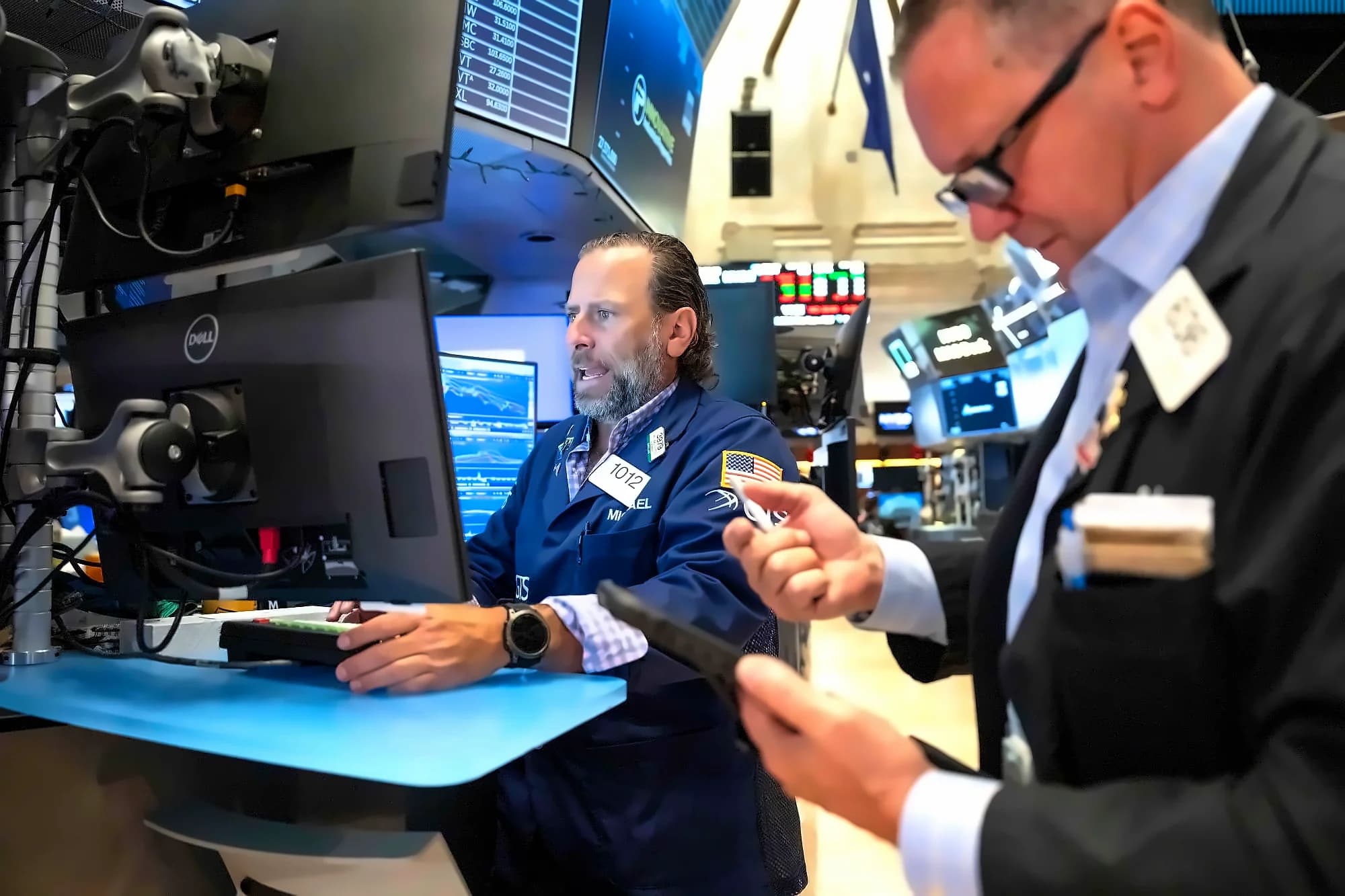
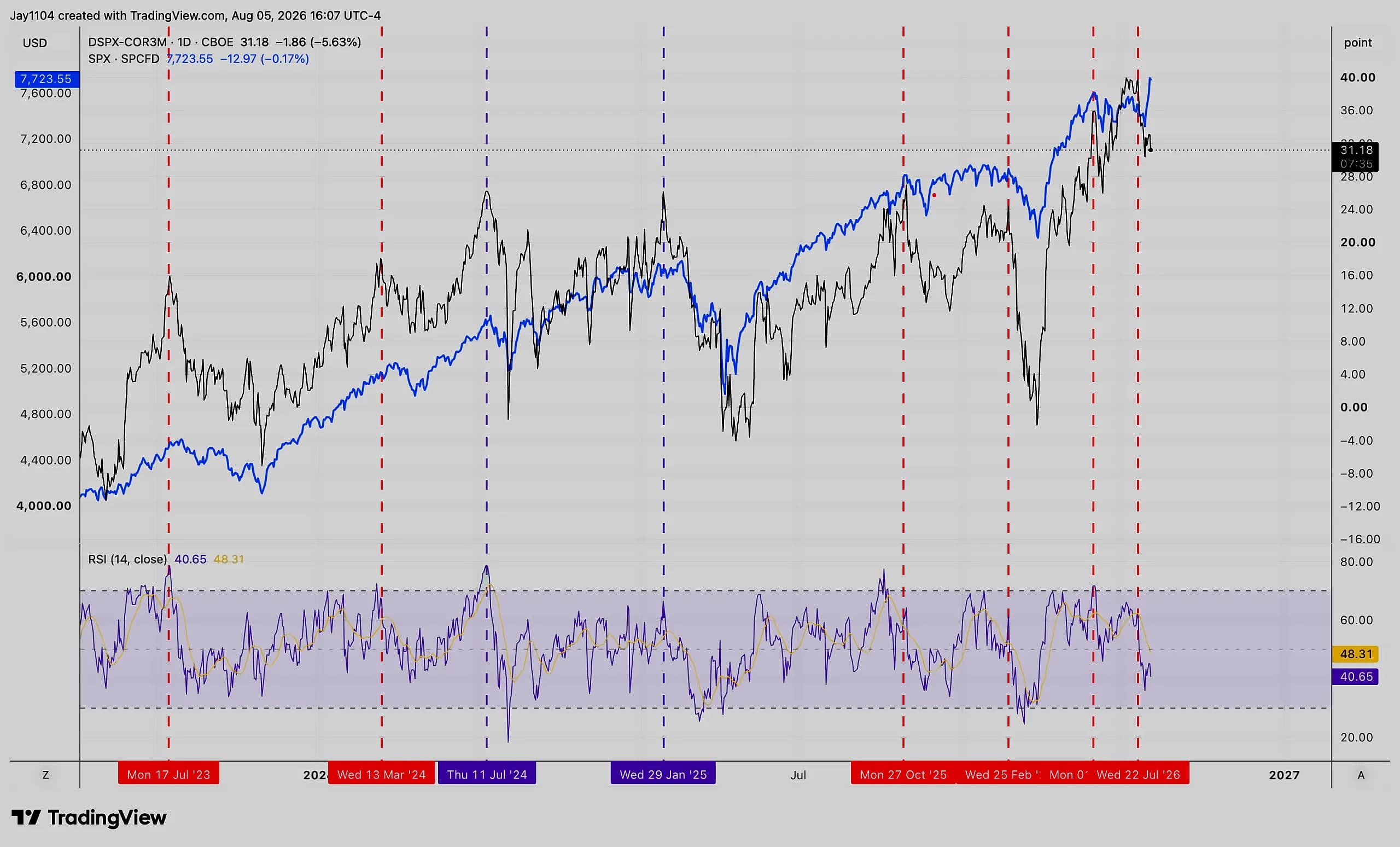
The S&P 500 rose 0.8% during early trading and surpassed 7,658 points, achieving a new intraday record high and looking positioned to close above its previous peak. Palantir emerged as the top performer, surging 20% by midmorning Tuesday, while Caterpillar jumped 10.7%, driving the Dow Jones up 541 points or 1%. The Nasdaq led gains with a 1.3% surge, as semiconductor and artificial intelligence stocks rallied broadly. Nvidia and Broadcom led the market higher on Tuesday, continuing the semiconductor rally that has characterized recent trading sessions. According to Investing.com India, gamma positioning in the S&P 500 had been negative while delta positioning was essentially flat, but both have now violently reversed into positive territory. The market had been positioned for a move lower, but instead everything was flipped on its head, and those negative gamma and delta positions have been squeezed out and unwound, explaining the violent move higher. Goldman Sachs' own flow data now gives that view some backbone, recording the largest sale of global technology in the history of the dataset between July 24 and July 29, while semiconductor positioning flipped net negative for the year.
UBS analysts wrote that Palantir posted an "outstanding" acceleration in growth, with "zero evidence of increased competition" affecting Palantir's results, addressing what they described as a key bear-case concern. Shares of Palantir had gained as much as 26% by midmorning Tuesday, making it the top performer on the Nasdaq 100. The rally comes as chipmakers make broad gains ahead of AMD's results after the close and reac-across from Caterpillar, with ARM, Marvell, Lumentum, Sandisk, Intel, Micron, AMD and others following Palantir's lead. This marks a significant turnaround from the previous week when retail selling was most pronounced in Technology, where investors sold more notional this week than during any other week in the dataset since January 2019, with two of the three largest retail Tech sell days ever observed this week alone.
According to Investing.com India, Semiconductor companies in the S&P 500 have collectively lost roughly $1.5 trillion in market capitalization, reducing the industry's weight in the S&P 500 from nearly 20% to 16%. Leveraged ETF assets have declined more than $60 billion from their June peak, with Technology leveraged ETF assets down approximately 40% and Semiconductor assets down nearly 55% over the past month. The deleveraging coincided with a meaningful decline in market concentration, with the average stock near records despite semiconductor weakness. One-month equity financing spreads have compressed from 138bps above SOFR at their peak to approximately 50bps today, suggesting leverage demand has normalized materially. Goldman Sachs' derivatives desk described clients rushing back into upside exposure, with record call demand leaving dealers increasingly short gamma as the market rose, creating a feedback loop where investors who had already sold were buying calls to catch up, while dealers hedging those calls were forced to buy more stock into the advance. Gross leverage also suffered its second-largest monthly decline on record during this period.
As reported by Investing.com India, consensus expectations for second-quarter S&P 500 earnings growth have increased from 22.4% at the start of the reporting season to approximately 45% today, marking one of the strongest earnings seasons outside of major post-recession recoveries. The S&P Information Technology sector now trades at roughly 20x forward earnings, near one-year valuation lows and well below its 10-year average of 23x. Companies have consistently delivered results well above already-elevated expectations, producing one of the steepest earnings revision paths on record. Goldman noted that aggregate earnings growth of roughly 46% falls to around 28% once private-company effects are stripped out, showing how much of the headline strength is tied to assets and investment vehicles that are difficult to value in real time. Wall Street is in the midst of quarterly earnings, with about 61% of companies in the S&P 500 having reported earnings as of July 31, and 86% of those companies reporting a positive surprise on earnings per share, according to FactSet. Companies' earnings growth is proving robust, with a blended measure the combines results and estimates on pace for the highest earnings growth rate in five years.
According to Investing.com India, corporate buyback demand is set to accelerate as earnings blackout windows expire. Today, only approximately 45% of the S&P 500 by weight is eligible to repurchase shares, expected to increase to 75% by the end of next week and nearly 85% by mid-August. August is typically one of the busiest months of the year for corporate buyback executions, creating one of the most supportive supply-demand backdrops since early summer. The results to date have been exceptionally strong, with approximately 40% of the S&P 500 by market capitalization yet to report, including many semiconductor companies. The next support should come from corporate demand, with buyback blackout windows beginning to expire precisely as positioning has become materially cleaner, creating one of the most supportive supply-demand backdrops since early summer. The market has just staged a record-high melt-up powered partly by short covering, call buying and performance anxiety, while the long end remains capable of repricing the entire trade. We remain constructive on the medium-term outlook because the structural pillars of this bull market, including record retail participation, passive ownership, and corporate demand for equities, remain firmly intact, but the character of the opportunity has changed from lifting from an underowned, deeply washed-out base to sitting near records after a huge rebound.