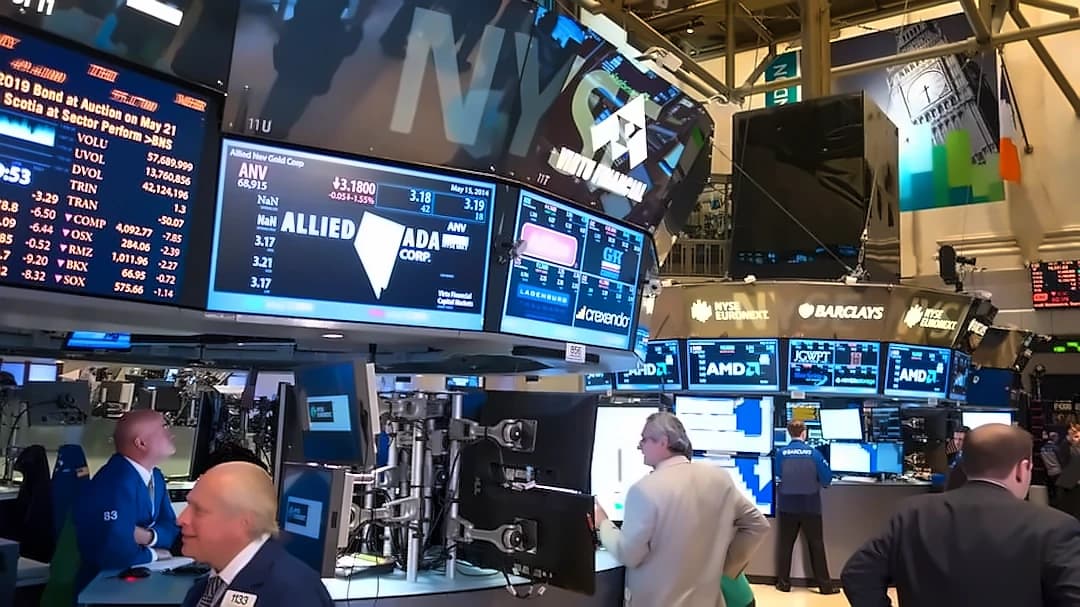
Major Wall Street banks are raising their S&P 500 end-of-year targets to $8,000 from previous levels, driven by expectations of continued corporate profit growth. According to reports from Reuters, Goldman Sachs raised its S&P 500 target to $8,000 from $7,600, citing expectations that valuations will be supported by sustained corporate profit growth. Deutsche Bank and Morgan Stanley also maintain S&P 500 price targets of $8,000, while Ed Yardeni has set an even higher target of $8,300 for the index. The banking sector's optimism is particularly strong due to upcoming IPOs, including the SpaceX IPO that will enrich investment banks like Goldman Sachs. Goldman's strategists upgraded their 2026 earnings-per-share forecast for the S&P 500 to $340, representing 24% year-over-year growth, following an exceptionally strong first-quarter earnings season that saw widespread upside surprises. Goldman also raised its S&P 500 earnings-per-share forecast to $385 for 2027, a further 13% increase, as reported by Bloomberg.
Recent economic data shows GDP growth is accelerating significantly, with the Commerce Department announcing that durable goods orders surged 7.9% in April, substantially exceeding economists' expectations of a 3.5% increase. As reported by Investing.com India, transportation orders surged 21.5% in April, while excluding transportation, durable goods orders rose at a robust 1.1% pace, much stronger than the consensus estimate of 0.5%. The Commerce Department lowered its first-quarter GDP calculation to a 1.6% annual pace, down from 2% previously estimated, with higher than expected inventories being the primary reason for the revision. However, second-quarter GDP growth is currently estimated at a 4.3% annual pace according to the Atlanta Fed, indicating much stronger momentum. Goldman's revised projections reflect a fundamental shift in how the bank views the durability of the current profit cycle, with AI infrastructure beneficiaries expected to contribute roughly half of the S&P 500's earnings growth this year. The S&P 500 has already gained more than 9% this year, with Goldman's new target implying a total return of approximately 17% for 2026.
AI infrastructure beneficiaries are set to drive approximately half of the S&P 500's earnings growth this year, according to Bloomberg, making this the single most important structural fact in Goldman's revised forecast. The first-quarter reporting season was described as "exceptionally robust" by Goldman, with the beat rate strong enough to push the bank's full-year EPS assumptions materially higher. However, Goldman has flagged a specific tension within this theme: "While S&P 500 earnings estimates have risen more quickly than index price appreciation, the semiconductor stocks at the heart of the AI infrastructure complex have recently outpaced their forward earnings," the bank noted. This creates a two-speed market where the overall target can still be justified, even while the hottest names carry elevated risk. The bank's base case is that strong AI investment would be able to offset weak consumer spending and elevated costs, at least through year-end. Goldman is not making a valuation argument; it is making an earnings argument, with earnings estimates rising faster than index prices, meaning the market is not getting ahead of fundamentals at least not yet. Goldman disputes bubble concerns by highlighting that forward earnings estimates are growing faster than prices, suggesting a market supported by fundamentals rather than speculation.
The banking sector's optimism extends beyond traditional market indicators, with Wall Street not wanting the party to end due to upcoming IPOs that will benefit investment banks. As reported by Investing.com India, Goldman Sachs is the lead underwriter on the upcoming SpaceX IPO and set to collect record underwriting fees, contributing to the positive outlook. The S&P 500 came in off a record close at 7,519, already up nearly 10% year-to-date before Goldman's upgrade was announced. Goldman's move to 8,000 crystallises the prevailing bull narrative around AI infrastructure as a transformative profit engine, with the index trading at roughly 22 times forward earnings. The bank's target is an earnings call more than a market call, with the math working if the 24% EPS growth assumption holds. The key variables are Q2 and Q3 earnings seasons, with strong results and stable or improving guidance from major tech names validating Goldman's revised EPS assumptions and keeping the 8,000 target in play. The combination of strong economic growth indicators, robust corporate earnings expectations, and significant investment banking opportunities is driving the consensus among major financial institutions to raise their S&P 500 targets to $8,000, with some analysts even targeting higher levels. However, current models assign only a 15-20% probability to the S&P 500 reaching 8,000, with higher odds between 7,200 and 7,600, indicating significant uncertainty around the bullish AI earnings thesis.