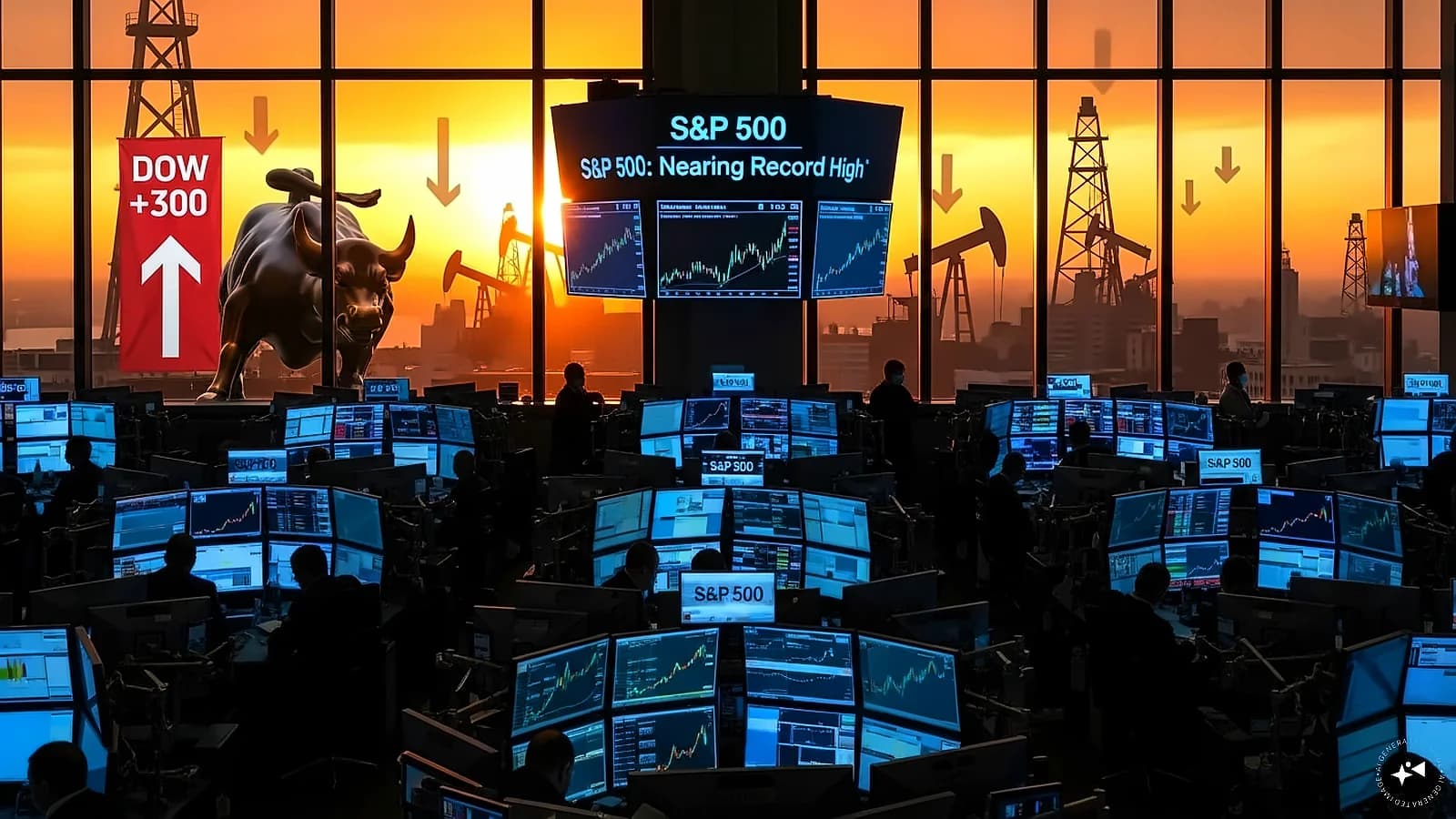
Wall Street's benchmark S&P 500 index closed higher, gaining 0.4% to 7,444.51 according to latest data, while the Dow Jones Industrial Average rose 1.31% to 50,288.26, hitting a new record high. The Nasdaq Composite climbed 1.54% as investors responded positively to corporate developments and geopolitical developments. After spending the morning in negative territory, stocks clawed their way back to gains in afternoon trading as oil prices shifted from a rally to a decline as investors monitored social media for news on peace progress. Advancing issues outnumbered decliners by a 1.51-to-1 ratio on the NYSE, with 234 new highs and 106 new lows, while the Nasdaq recorded 2,985 stocks rising and 1,798 falling.
IBM Corp (IBM.US) surged 12% after landing a US$1 billion CHIPS Act award to build a domestic quantum chip foundry, becoming the standout performer in Thursday's session. The quantum computing breakthrough provided significant momentum to the broader market, with the S&P 500 gaining 1.08% and the Nasdaq climbing 1.54% in response to the announcement. GlobalFoundries also climbed along with quantum computing firms including D-Wave Quantum, Rigetti Computing, and Infleqtion, with D-Wave Quantum adding 33.4%, Rigetti Computing jumping 30.6% and Infleqtion gaining 31.5%. The quantum computing sector's strong performance highlighted investor optimism about the technology's potential applications and government support for domestic manufacturing capabilities.
Market movements were significantly influenced by mixed geopolitical signals around Iran peace talks, with oil prices finishing lower as investors hoped for a Middle East peace deal even as the U.S. and Iran appeared to take directly opposing stances. According to Reuters, U.S. Secretary of State Marco Rubio told reporters there had been 'some good signs' in talks with Iran, though he also stated a diplomatic deal would be unfeasible if Tehran implemented a tolling system in the Strait of Hormuz, which is a key conduit for oil transportation. However, a Reuters report signaled a hardening stance from Tehran with Supreme Leader Ayatollah Mojtaba Khamenei issuing a directive that the uranium should not be sent abroad. President Donald Trump said the U.S. will eventually recover Iran's stockpile of highly enriched uranium, which Washington views as weapons-related, while Tehran maintains it is for peaceful use. Brent crude surged past US$114 per barrel as geopolitical tensions escalated in the Middle East, with news of Iranian strikes targeting the United Arab Emirates adding to market concerns.
Walmart shares tumbled after the largest global retailer forecast second-quarter profit below estimates and maintained its annual targets, citing pressure from high fuel prices and potential retail inflation if costs stay elevated. As reported by Reuters, CFO John David Rainey said consumers were feeling pressure from high fuel prices and that if the 'elevated cost environment persists, we'd expect somewhat higher retail price inflation in Q2 and the second half of the year'. Among S&P 500 sectors, consumer staples led losses as they were weighed down by Walmart's fall along with declines in some other retailers that fell in sympathy, including Casey's General Stores and Costco Wholesale. Nvidia also declined as some investors took profits after the AI heavyweight's upbeat second-quarter revenue forecast and $80 billion share-repurchase program, amid concerns about rising competition from Intel and AMD. However, the Philadelphia Semiconductor Index finished up 1.3% as investors viewed Nvidia's results as a positive sign for the group.
In economic data, jobless claims fell last week, signaling labor market resilience and supporting expectations that the Federal Reserve may stay focused on inflation risks. According to Reuters, U.S. manufacturing activity rose to a four-year high in May as businesses built inventories to guard against potential shortages and rising prices tied to the Iran conflict. Among other movers, Intuit's shares plunged after the software maker lowered the annual revenue forecast for its tax-filing software, TurboTax, and said it would cut 17% of its full-time workforce. Memory stocks bore the brunt of the selling: Seagate Technology (STX.US), SanDisk (SNDK.US), Micron Technology (MU.US), and Western Digital (WDC.US) each fell as the 10-year Treasury yield reached its highest intraday level since early 2025, pressuring growth stocks sensitivity. Among the 'magnificent seven', only Microsoft (MSFT.US) share price dipped, while Alphabet-A (GOOGL.US) hit a new high, driven by continued momentum in its AI advertising business.
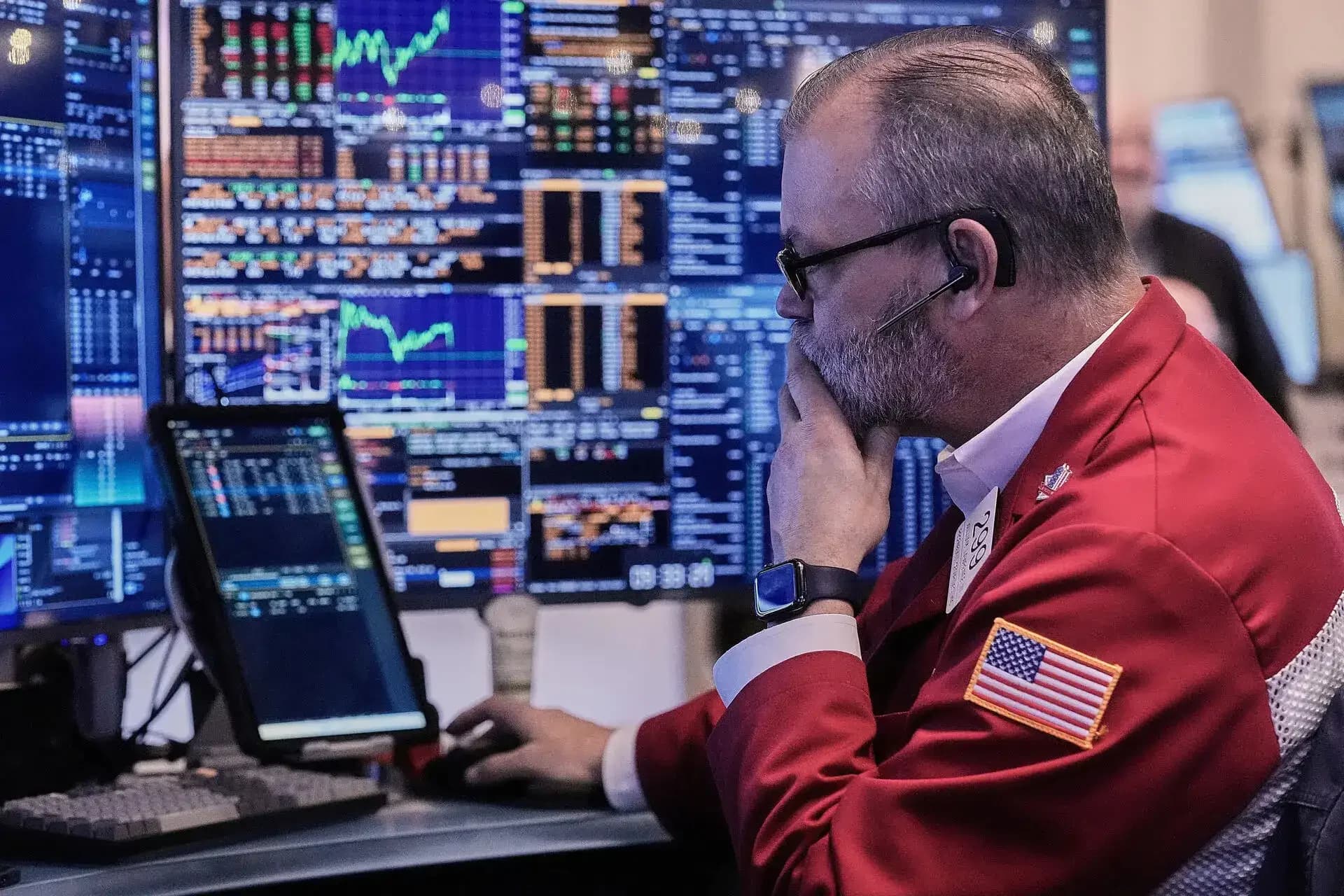
Market experts emphasized the sensitivity of oil and sentiment to geopolitical headlines, with Marc Dizard, chief investment officer at Huntington Wealth Management, noting that 'The silver lining is that from a market perspective, the fragile ceasefire is still holding. It's positive there's still, according to news reports, the possibility of an off-ramp. Oil and market sentiment is very sensitive to every headline.' However, he added that 'Nobody knows, except the inner circle in Iran and in the U.S., how much progress is truly being made.' The market's near-term direction will likely depend on actual announced deals regarding Iran, according to Jason Pride from Glenmede. On U.S. exchanges, 17.67 billion shares changed hands compared with the 18.57 billion moving average for the last 20 sessions, reflecting active trading amid the geopolitical uncertainty.