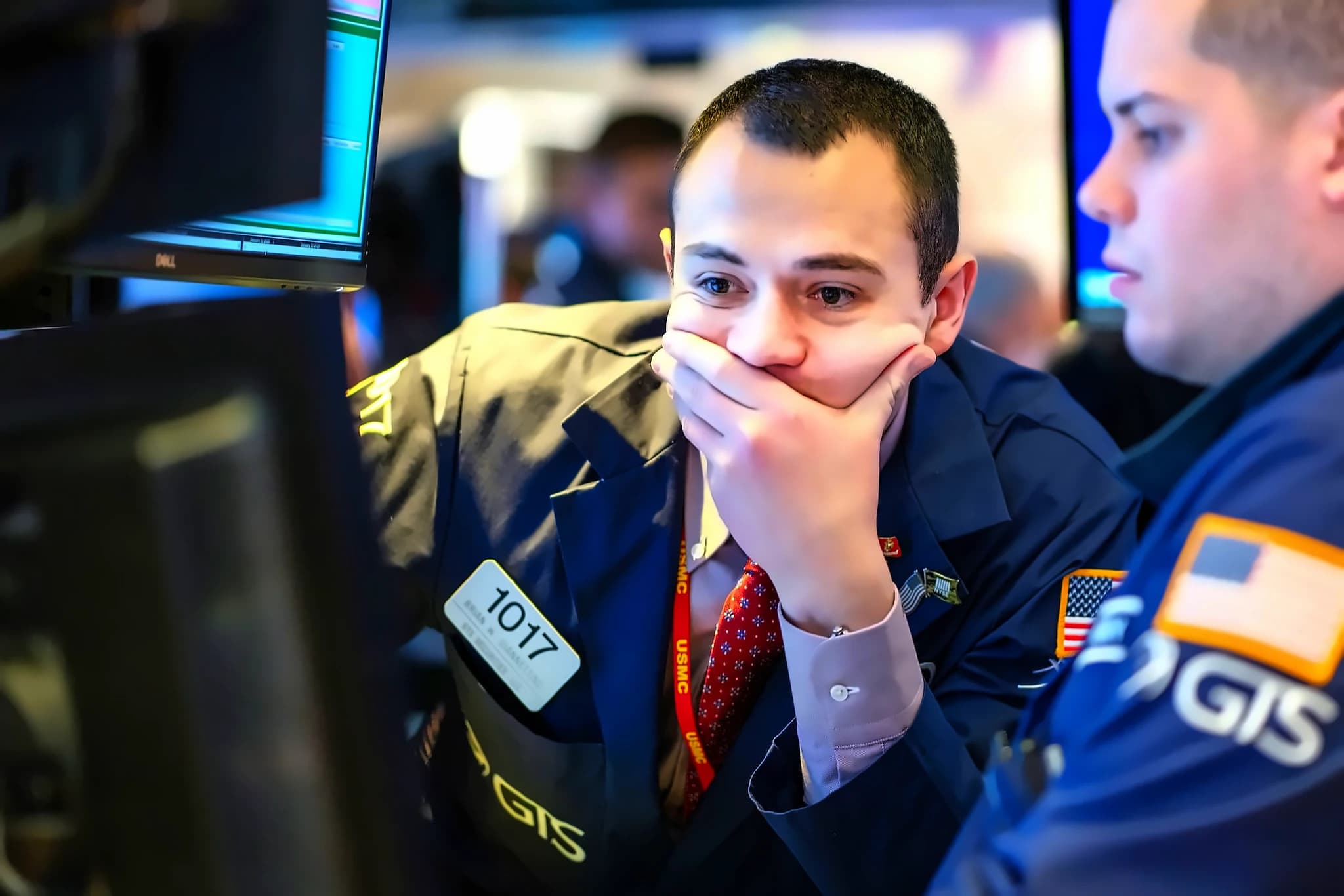
Bank of America analysts maintain their year-end price target of 7,100 for the S&P 500, indicating a 5% decline from recent closing levels despite the index's strong performance. According to Bank of America, the bank attributes this skepticism to several "bear market signposts" suggesting that speculation levels have reached an extreme. The analysts note that stocks with high valuations have significantly surged, a trend often preceding a valuation correction, or "snapback." Companies within the S&P 500 are experiencing diminishing free cash flow relative to their net income, particularly as major tech players grapple with declining cash flows due to extensive investments in artificial intelligence.
The S&P 500 has risen 9.3% year-to-date through July 2, according to reports from Investing.com India, with the index achieving its best quarterly performance since 2020 with a 9% increase. Following an all-time high of 7,621 reached just weeks ago, the S&P 500 has experienced tumultuous fluctuations, losing around 2% in recent sessions. Despite this volatility, market analysts believe the index could achieve an additional 10.2% gain over the remainder of the year, potentially reaching their target of 8250. This would represent a significant extension from current levels, driven by what analysts describe as fabulous earnings momentum (FEMO) rather than fear of missing out (FOMO) dynamics that characterized previous market bubbles. Wall Street analysts have set a median year-end target of 7,850 among 19 firms, representing a 5% upside from current levels of 7,473, which would bring the S&P 500's full-year return to 15%.
Despite investor concerns about AI infrastructure investments and potential excess capacity among providers, the S&P 500 Information Technology sector forward P/E of 22.2 remains relatively modest compared to historical levels. As reported by Investing.com India, this is significantly lower than the 55.0 forward P/E peak before the Great Tech Wreck and the 25.0 forward P/E peak during the late 1990s tech bubble. Recent performance in the chip sector has been particularly noteworthy, with companies such as Micron Technology soaring 242% in 2026 and 700% from a year ago, despite a recent downward trend. However, this meteoric rise has sparked concerns that favorable conditions may soon change, with analysts drawing parallels to past bear markets. The top five contributors to the index's earnings growth were companies at the heart of the artificial intelligence (AI) infrastructure build-out: Alphabet, Amazon, Meta Platforms, Micron Technology, and Nvidia, with technology and communication services sectors leading with earnings growth of 55% and 49% respectively.
Industry analysts have raised their long-term earnings growth expectations for S&P 500 companies to a record 25.5% per year over the next 3-5 years, according to Investing.com India reports. The Tech sector's long-term earnings growth projection reached an off-the-charts 43.5% reading, while S&P 500 forward earnings rose to yet another record high at the end of June. Analysts project S&P 500 EPS will increase 26.1% this year and 17.8% next year, with the percentage of S&P 500 companies showing positive three-month changes in forward earnings reaching a new cyclical high of 86.2%. In the first quarter, S&P 500 companies reported revenue growth of 12%, the highest level since 2022, and earnings growth of 29%, the highest level since 2021, according to FactSet Research. However, Bank of America's cautious outlook suggests that the journey to higher levels might not be straightforward, given anticipated challenges in forthcoming earnings reports.
The Federal Reserve is working to combat persistent inflation, which has been above the 2% target for over five years. Recent forecasts from Bank of America suggest that the Fed may hike interest rates three times this year as a decisive measure against inflation. According to Bank of America, the S&P 500 is currently valued at its highest level ahead of an initial rate hike since the major cycle that occurred between 1999 and 2000. However, high inflation has taken interest rate cuts off the table, at least in the near term, as the situation got more complicated when the U.S. attacked Iran in late February, sending oil prices to their highest level since Russia invaded Ukraine in 2022. President Trump plans to impose new tariffs this summer following the expiration of the 10% global tariff in late July, adding to economic uncertainty. Historically, the S&P 500 has often enjoyed positive returns during periods of tightening monetary policy, typically peaking six to twelve months following a first rate hike.
Despite the strong performance, analysts remain divided on the trajectory of the S&P 500, with differing implications for investors and stakeholders. JPMorgan maintains a mostly optimistic outlook with a year-end S&P 500 target of 7,800, slightly up from their previous expectation of 7,600, influenced by strong earnings predictions. Ed Yardeni, president of Yardeni Research, recently elevated his year-end target for the S&P 500 to 8,250 from 7,700, citing robust corporate earnings and differentiating today's market surge from the dot-com bubble of the late 1990s. However, Capital Economics analysts draw parallels to past bear markets, including the Asian financial crisis and the Great Financial Crisis, warning that current market movements indicate excessive exuberance and challenge the sustainability of the rally. Wall Street analysts expect more strong financial results from S&P 500 companies in the remaining quarters of 2026, with the consensus estimate projecting revenue will increase 11% (the fastest growth since 2022) and earnings will increase 23% (the fastest growth since 2021).