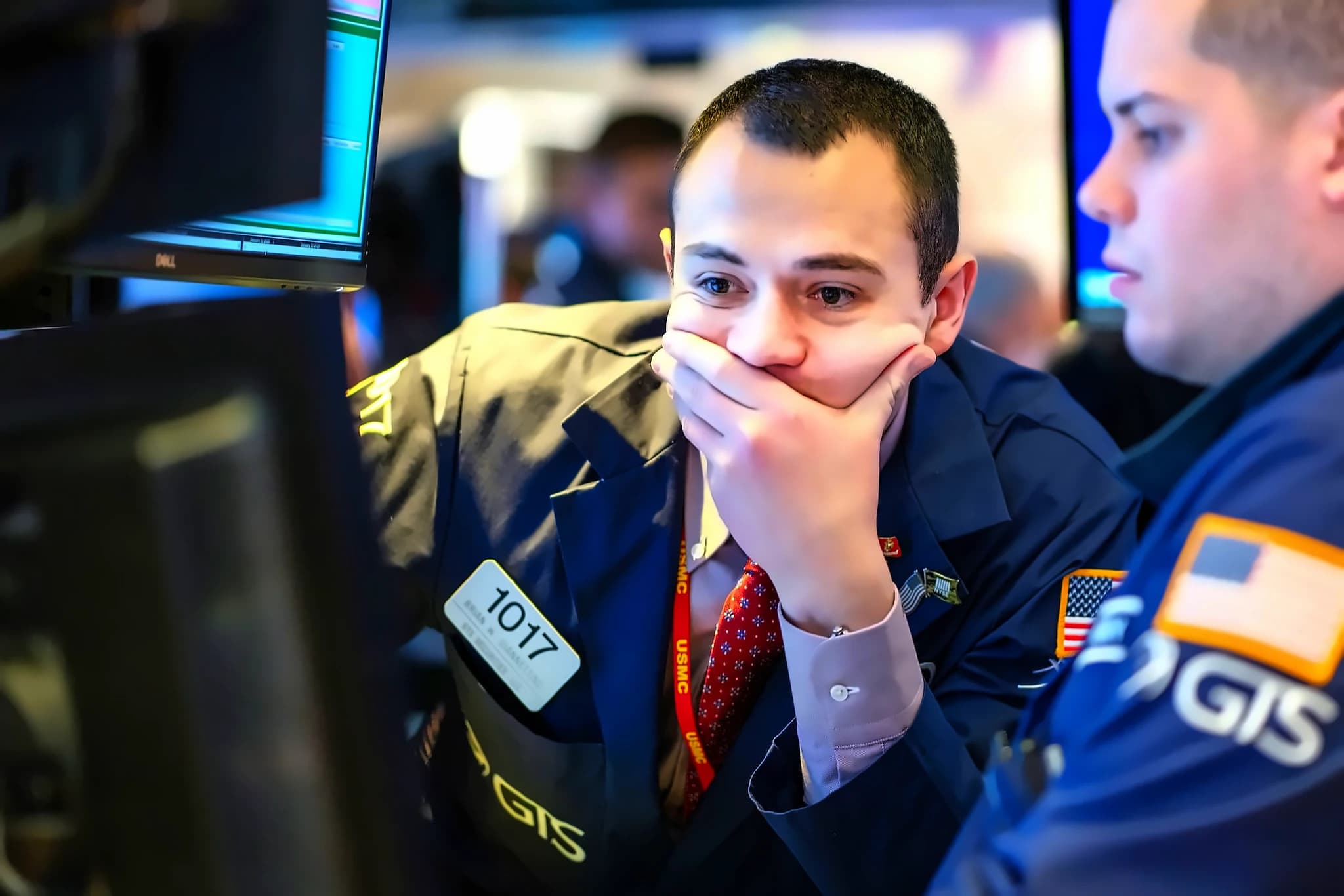
Individual investor confidence has dropped to its lowest level in over a year, with bearish sentiment surging to 53.3% according to the latest survey by the American Association of Individual Investors (AAII). This represents the most pessimistic retail investor positioning since May 2025, when sentiment was similarly elevated during the early weeks of Trump's tariff rollout. The bullish expectations fell to 28.8%, marking the lowest proportion of optimistic retail traders in 12 months. The difference between optimistic and pessimistic investors—known as the bull-bear spread—plunged to -24.5 percentage points, which marks the lowest reading for the index since May 2025 and keeps the metric below its long-term historical average of 6.5 percentage points for a ninth straight week.
The shift in sentiment comes as the Federal Reserve enacted its first interest rate increase since 2023, compounded by sustained high oil prices that continue to weigh on market expectations. As per AAII, the combination of fresh interest rate hikes and elevated oil prices has contributed to rising market anxiety among individual investors. The S&P 500 index and Dow Jones were on track to drop about 0.2% and 1.6% this week, while the Nasdaq 100 added 0.6%. Retail sentiment on Stocktwits towards major ETFs including SPY, QQQ, and DIA was 'bearish' with 'high' message volumes, reflecting widespread pessimism across different market segments.
In response to market uncertainty, retail accounts are increasingly shifting toward safer asset classes. More than 50% of survey participants reported holding above-average cash allocations, reflecting a clear pivot toward risk mitigation. Furthermore, 19.1% of respondents indicated that their cash holdings were 'much higher than normal', pointing to strong defensive positioning among individual traders. The SPDR S&P 500 Index (SPY) slipped about 0.4% this week, the Dow Jones ETF (DIA) eased 1.6%, and the tech-heavy Invesco QQQ (QQQ) index rose 0.6%. According to AAII vice president Charles Rotblut, the current gap between bulls and bears has reached 'unusually low' territory.
Despite the bearish sentiment across broader markets, Tesla (TSLA) is demonstrating strong bullish momentum with multiple technical analysts highlighting potential breakout opportunities. The stock is currently trading around $428.35 with a 68% confidence level according to professional trader analysis, having rallied strongly over the past week after pushing above major moving averages. Technical indicators including bullish MACD alignment and RSI pushing toward the upper range suggest the trend still has energy behind it. Multiple traders are pointing to a cup-and-handle pattern forming near the $430 zone with immediate breakout confirmation targets around $435-$450, with options positioning and gamma exposure supporting potential continuation toward $452.43 if price breaks above key resistance levels.
Despite the bearish sentiment, the S&P 500 Index trades within roughly 2% of its record high following late-summer price swings, highlighting the disconnect between sentiment and market performance. While extreme pessimism often reflects heightened fear across trading desks, contrarian market participants often view such low sentiment readings as potential buying signals, seeing high bullishness as a sign of market complacency. The current bearish sentiment levels represent the most pessimistic investor positioning since the early 2025 tariff policy implementation, indicating sustained concerns about market direction and investment outlook amid persistent energy cost pressures and renewed policy tightening by the Federal Reserve. However, individual stock movements like Tesla's rally and the recent mixed market performance suggest that market participants are selectively finding opportunities even in challenging conditions.