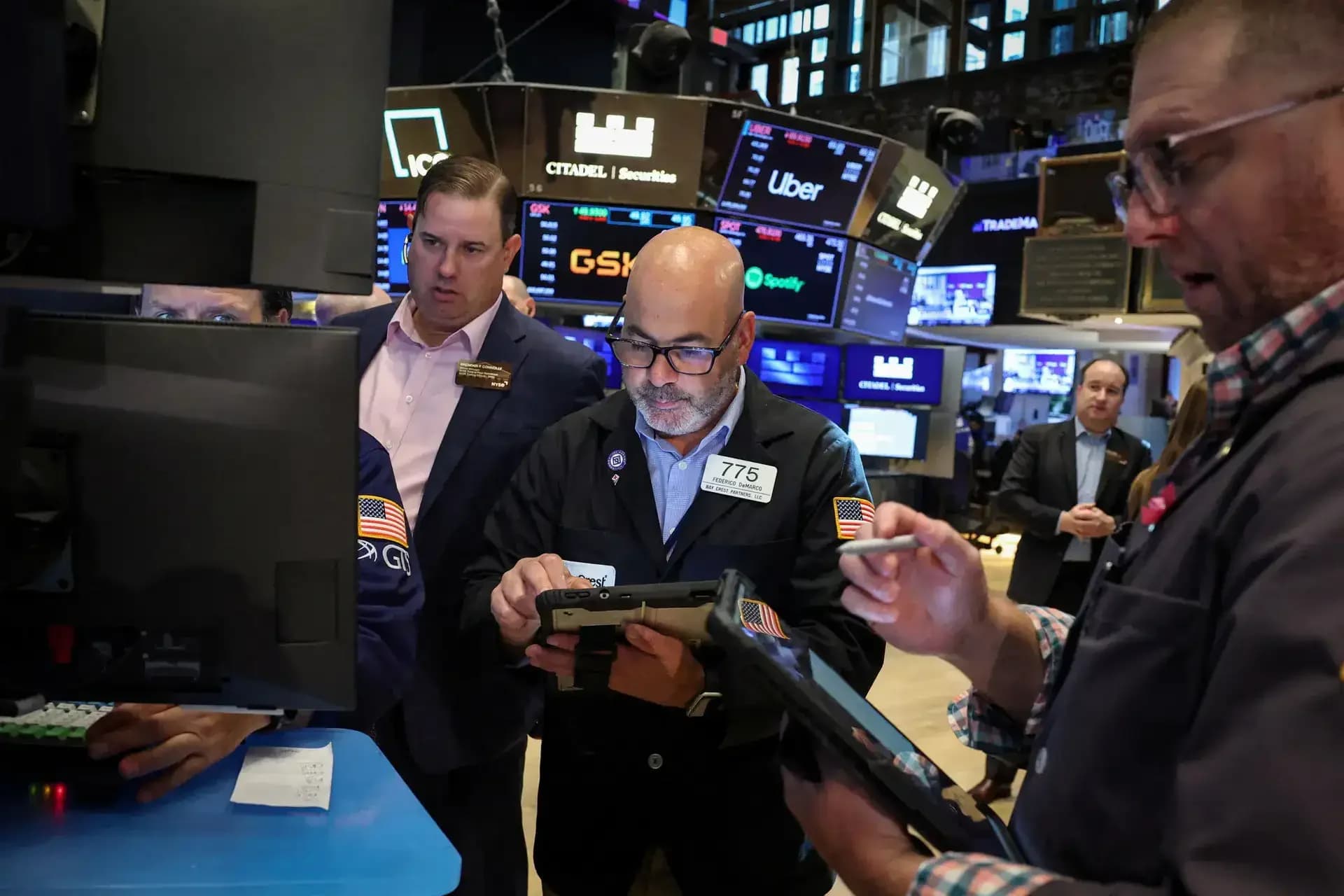
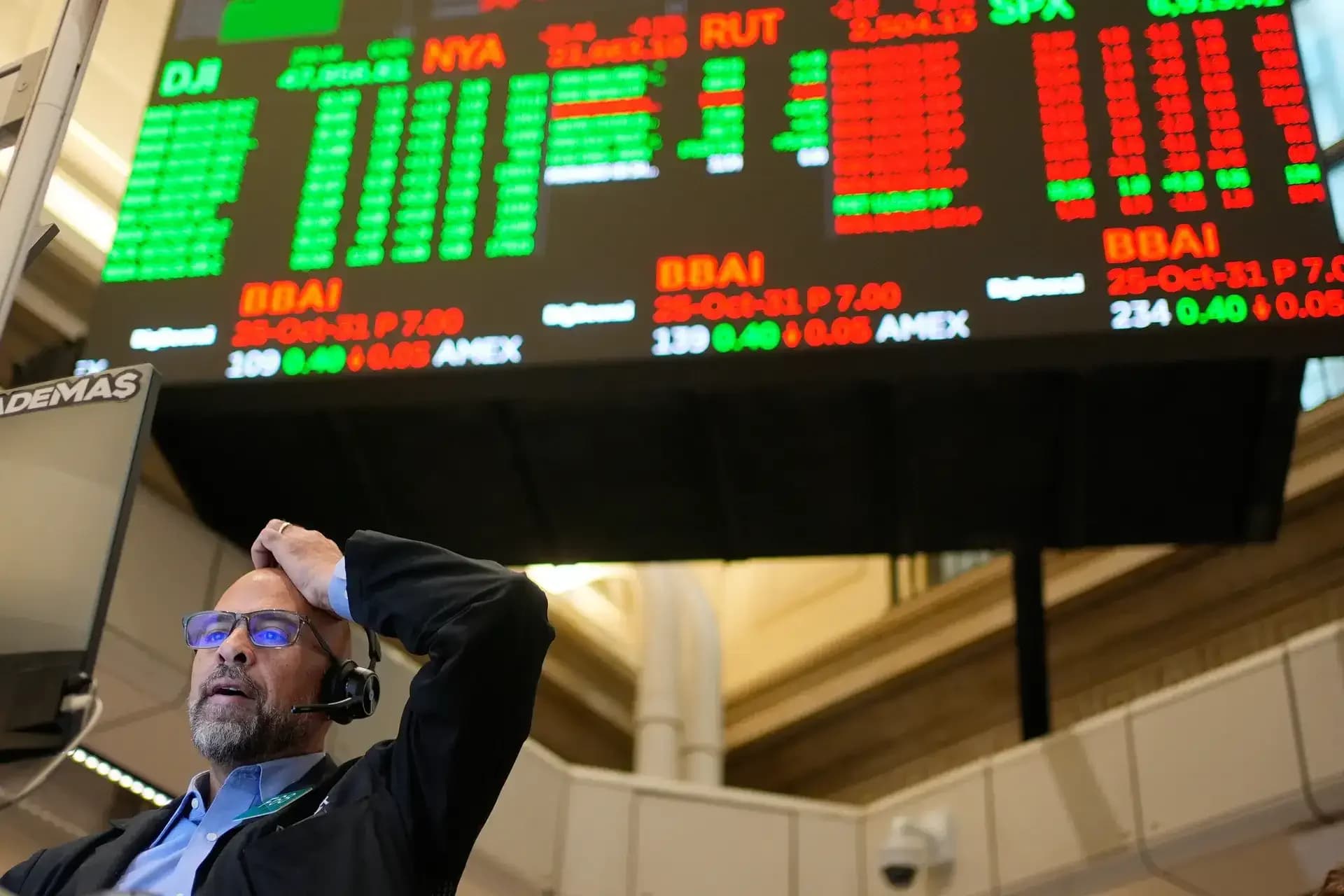
US stocks experienced a broad decline on Tuesday, with the technology-heavy Nasdaq 100 falling 1.15% while the S&P 500 Index slipped 0.57% to 7,511.35. According to reports from Reuters, investors rotated into economically sensitive sectors and sold richly valued technology stocks, with technology being the biggest laggard at -2.3%. The Philadelphia Semiconductor Index (SOX) dropped 5.7%, leading the market lower after days of significant gains. BTIG chief market technician Jonathan Krinsky noted that "momentum is clearly waning" and the SOX was down for five of the past nine days as some investors were "getting cold feet." The semiconductor selloff was particularly pronounced, with AMD falling 7.30%, Intel dropping 8.45%, Micron sliding 6.18%, KLA declining 7.45%, Lam Research losing 5.03%, Broadcom falling 4.37%, and Nvidia declining 2.37%. In a Bank of America fund manager survey, semiconductors were singled out as the "most crowded trade" with a record-high 80% response rate, providing cover for profit-taking as portfolios were reshuffled following SpaceX's IPO.
The Dow Jones Industrial Average rose 328.64 points, or 0.64%, to 50,199.67, marking its second consecutive record close and achieving the historic 50,000 milestone for the first time. During the session, the Dow climbed as high as 50,219.29, breaking through the 50,200 level for the first time. As reported by Reuters, of the S&P 500's 11 major industry sectors, seven ended higher with financials leading gains at 1.5% and industrials up 0.7%. Mark Luschini, chief investment strategist at Janney Montgomery Scott, noted that "we had a big move yesterday in the market" alluding to the S&P 500's 1.65% rally on Monday and Nasdaq's advance of more than 3%, explaining that "we're just digesting some of those gains and the setup in anticipation of the Fed meeting is always a little tentative." The fact that the Dow and Nasdaq moved in opposite directions signals that money is rapidly shifting from tech stocks to more cyclical, economy-sensitive shares.
SpaceX extended gains, surging more than 17% during trading to finish at $201.68, closing up 4.8% and reaching a market value of $294 billion after just four trading days since listing. According to Reuters, the rocket and AI company briefly moved to fourth place among US companies by market cap, surpassing both Microsoft ($293 million) and Amazon ($267 billion) in market value. The company announced today that it will acquire xAI's parent company, Anysphere, for $60 billion, following the xAI merger it is also expanding into the AI software space. After hitting a record high of $225.64 during the session, SpaceX closed at a level 49% higher than the offer price of $135. Options trading also began today, with Wedbush analyst Dan Ives noting that "SpaceX going public is an important watershed moment for the broader tech sector" and bodes well for coming debuts for OpenAI and Anthropic.
Chinese concept stocks experienced significant selling pressure, with the China Golden Dragon Index closing down 2.5%. Among popular Chinese concept stocks, ASE Group, Pony.ai, XPeng, Daqo New Energy, and MINISO fell at least 4.2%, while Meituan ADR, NIO, Tencent Music, and Baidu each dropped at least 3.45%. H World Group and NetEase each declined at least 3.27%, and Autohome and Bilibili fell less than 3.1%. BYD ADR, WeRide, KE Holdings, Xiaomi Group ADR, and Trip.com each slipped at least 2.47%, with Li Auto falling 2.36% and Pinduoduo losing 2.35%. This broad-based decline across Chinese concept stocks reflects investor concerns about the sector's valuations and growth prospects, particularly as technology stocks face broader selling pressure globally.
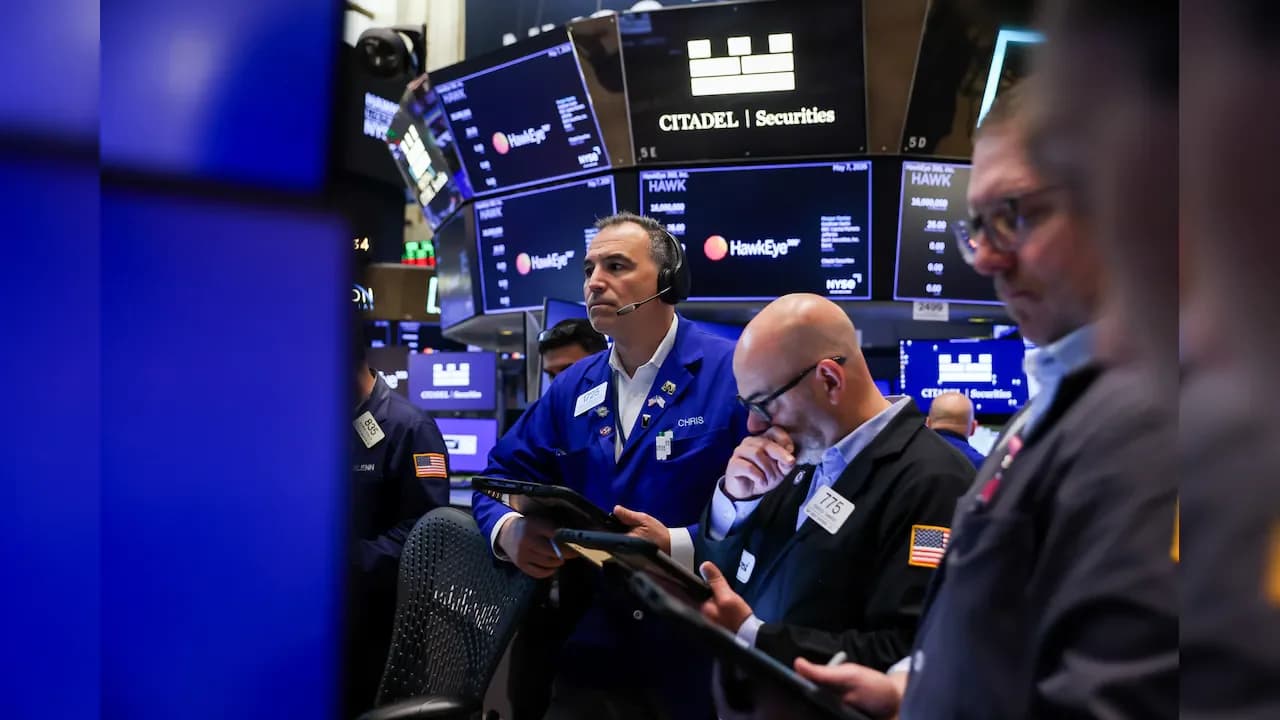
While semiconductors were plunging, financials and industrials instead looked strong with JPMorgan rising 3.68%, Charles Schwab gaining 2.99%, and Visa climbing 2.87%. An industrials ETF (XLI) hit a record high, with Hubbell rising by more than 7.5% on a weekly basis, GE Vernova jumping more than 5.5%, and Caterpillar also logging a record high. An infrastructure-themed ETF (PAVE) also reached a record intraday peak. With energy costs falling as oil prices dropped, the expectation that the US economy will regain momentum is pulling money towards cyclical, economy-sensitive stocks. The rotation reflects investor sentiment that the US economy is positioned to regain momentum as the US-Iran agreement on cessation of hostilities takes effect.