The VIX 1-Day closed at just 13, which analysts describe as a very low level heading into the June jobs report. According to reports from Investing.com India, this low volatility reading suggests the equity market doesn't appear concerned about the upcoming jobs data. However, 21-day realized volatility is now trading above the VIX Index, which doesn't mean much by itself but could signal potential for a sudden jolt that pushes the VIX significantly higher. As noted by Investing.com, unless implied volatility really ramps up overnight, the odds of a post-jobs-report volatility crush are unlikely, though a hot jobs report could easily push the VIX back to 22 based on historical spread analysis.
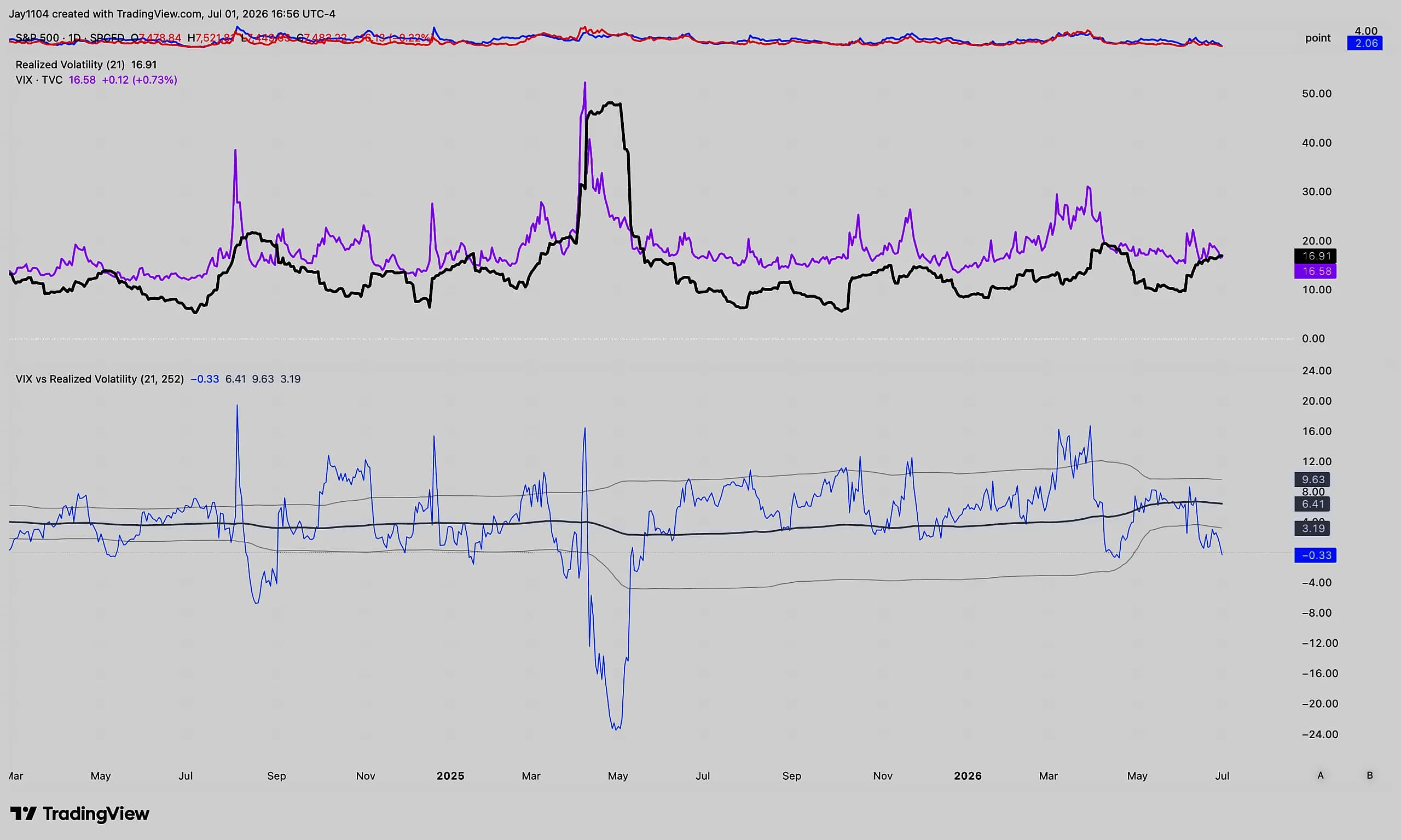
Market analysts are betting on 140,000 jobs being created in the June report, with this estimate steadily trending higher over the past few days. As reported by Investing.com India, this expectation level feels similar to what was seen heading into the May jobs report just a month ago, when expectations were also relatively low. The jobs report is considered as important as previous ones given the trends in the dollar and interest rates that have been observed. According to Investing.com, the equity market doesn't seem concerned about this report in the least, but the low VIX reading doesn't necessarily mean complacency, as it could be interpreted as a sign that the market is pricing in a low-volatility outcome.
The 3-month implied correlation index rose slightly today and failed to surpass the July 3, 2024, low, primarily due to a sharp decline in semiconductor stocks. According to Investing.com India, the SMH dropped by more than 5% and has clearly been the leader of both the market and the dispersion trade for some time. With implied correlation this low and index implied volatility very low relative to single-stock implied volatility, a hot jobs report could trigger a surge in the VIX Index and a fairly sharp unwind of the market's dispersion trade. As noted by Investing.com, it is hard to say what will happen next because semiconductors are inherently volatile, but the current setup suggests potential for significant market moves.
A hot jobs report would likely trigger further dollar strength and push interest rates higher, which would almost certainly weaken the JPY and the KRW. As reported by Investing.com India, if this represents a broader regime shift, those weaker currencies carry trade positions are unlikely to be major factors. Additionally, tomorrow will mark the first day of the Treasury bill net issuance calendar for July, which will be a heavy one. The combination of dollar strength and higher interest rates could create significant pressure on emerging market currencies and carry trade positions.
With investors pricing in a hawkish Federal Reserve policy outlook under new Chairman Kevin Warsh, the underlying details of the employment report could influence the timing of a possible interest rate increase. According to the CME FedWatch Tool, markets are currently pricing in about a 34% probability of the Fed raising rates by 25 basis points as early as July, compared to a 6% chance seen in early June. The probability of at least two rate increases by the end of 2026 now sits slightly above 40%. Cleveland Fed President Beth Hammack delivered a moderately hawkish message, stressing that the job market is "right around full employment" and warning that "inflation is still too high." An additional positive surprise of 130K or higher in the headline NFP could feed into July rate hike projections and fuel another leg higher in the USD, potentially keeping EUR/USD under bearish pressure.