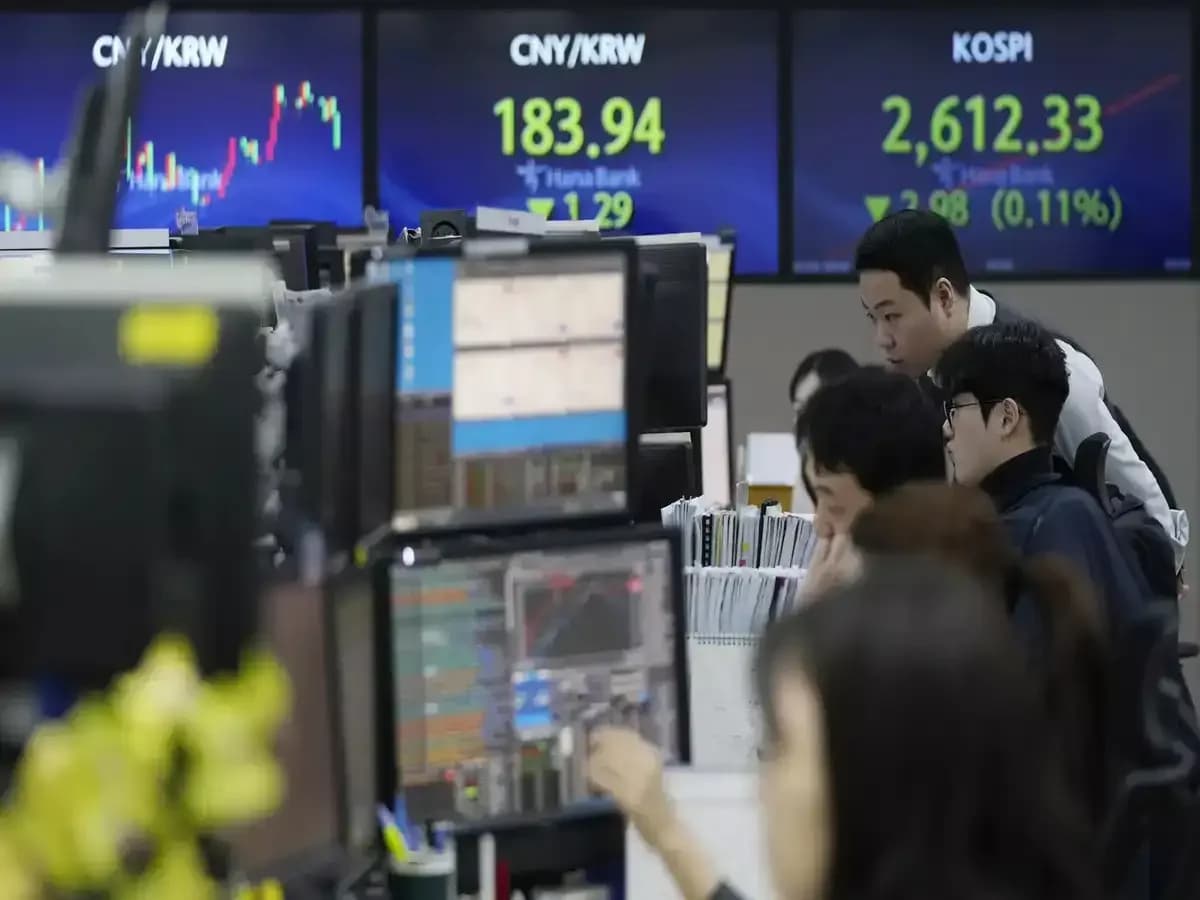
South Korean stocks delivered their best quarter in almost three decades, with the KOSPI index soaring 68% during the quarter. According to reports from The Economic Times, this represents the biggest quarterly gain since the fourth quarter of 1998, when the internet was still in its infancy. The benchmark index has risen 101% year-to-date, highlighting exceptional investor confidence in the AI-driven semiconductor sector. The latest developments show South Korean and Taiwanese shares rose on Tuesday as investors continued piling into AI-linked technology stocks, putting the MSCI EM Asia index on track for its strongest quarterly performance since 2009. However, Tuesday's session saw some volatility with the index closing up 81.83 points at 8,476.48, after falling as much as 2.1% and rising as much as 3.3% during the trading session.
The phenomenal performance was led by major semiconductor companies, with Samsung Electronics rising 3.41% and SK Hynix gaining 0.84% in Tuesday's session. As reported by The Economic Times, for the quarter, Samsung Electronics surged more than 90% while SK Hynix posted gains of over 220%. The rally was fueled by a new government strategy for semiconductor and AI investments, with President Lee Jae Myung announcing more than $576 billion in chip investments to bolster global competitiveness. The latest session saw continued momentum as investors remained focused on AI-linked technology stocks across the region, though the KOSPI slipped 1% on Tuesday despite the strong quarterly performance.
Despite the strong quarterly performance, Tuesday's session showed significant volatility with the index closing up 81.83 points at 8,476.48. According to The Economic Times, the index fell as much as 2.1% and rose as much as 3.3% during the volatile trading session. Among other major companies, LG Energy Solution declined 9.61%, while Hyundai Motor and Kia Corp fell 0.40% and 1.85% respectively. Of the total 917 traded issues, 262 shares advanced while 623 declined. The latest session reflects continued investor focus on technology and AI-related sectors across the Asian markets, with Taiwan's benchmark set for a more than 40% rise this quarter while other regions cannot quite keep pace with the semiconductor-led markets.
Foreign investors remained net sellers, offloading shares worth ₹3.8 trillion ($2.45 billion) during the quarter, as reported by The Economic Times. The South Korean won was quoted at 1,549.4 per dollar, representing a 0.41% decline from its previous close of 1,543.0. In the bond market, September futures on three-year treasury bonds gained 0.05 point to 103.27, while the most liquid three-year Korean treasury bond yield fell by 2.1 basis points to 3.718%. The behavior of big investors through the record quarter has been unusual, with the surging index weighting of Asia's big chipmakers driving foreigners to sell all the way up as they rebalance portfolios and worry about diversification. A net $17.3 billion has left South Korean equities in the year so far, according to BNY, with the gap between returns and flows fitting a broader pattern across Asia's tech-heavy markets.