Samsung Electronics projected a record quarterly profit of over 100 trillion won ($80.17 billion), marking the first time a technology company has achieved such a milestone. The world's largest memory chipmaker estimated an operating profit of 107.4 trillion won for the July-September period, slightly ahead of an LSEG SmartEstimate of 106.1 trillion won. According to Business Standard, the forecast marks Samsung's fourth straight quarter of record operating profit, driven by surging AI chip demand and booming memory sales. However, as noted by Business Standard, Samsung shares moved sideways despite flagging another record profit, slipping 0.2% in early trade versus a 0.5% fall in the benchmark KOSPI. The company's share price has slumped more than 25% from a record high in June amid concerns about the durability of the AI boom, with analysts noting that the market's focus has shifted to whether the sharp earnings growth would be sustainable.
Despite the strong profit expectations, analysts have lowered their profit forecasts by nearly 8% since the end of August, according to Reuters. The pace of price increases slowed in the third quarter, fanning concerns that chip margins may have peaked. SK Securities analyst Han Dong-hee puts Samsung's Q3 memory operating margin at 76%, leaving it unchanged from the April to June period. This compares to US rival Micron's expectation of its gross margin easing to 86.3% from 87% this quarter, partly due to employee compensation costs. Chipmakers expect the memory shortage, which began more than a year ago, to persist into next year and perhaps through 2028. However, analysts expect profit in the fourth quarter to grow 8.2% from the previous quarter, slowing from 20% sequential quarterly growth in the third quarter, with chip price growth abating. As per Business Standard, market research firm TrendForce expects conventional DRAM contract prices to rise 10% to 15% in the fourth quarter from the preceding quarter, much slower than a second-quarter surge of roughly 60%.
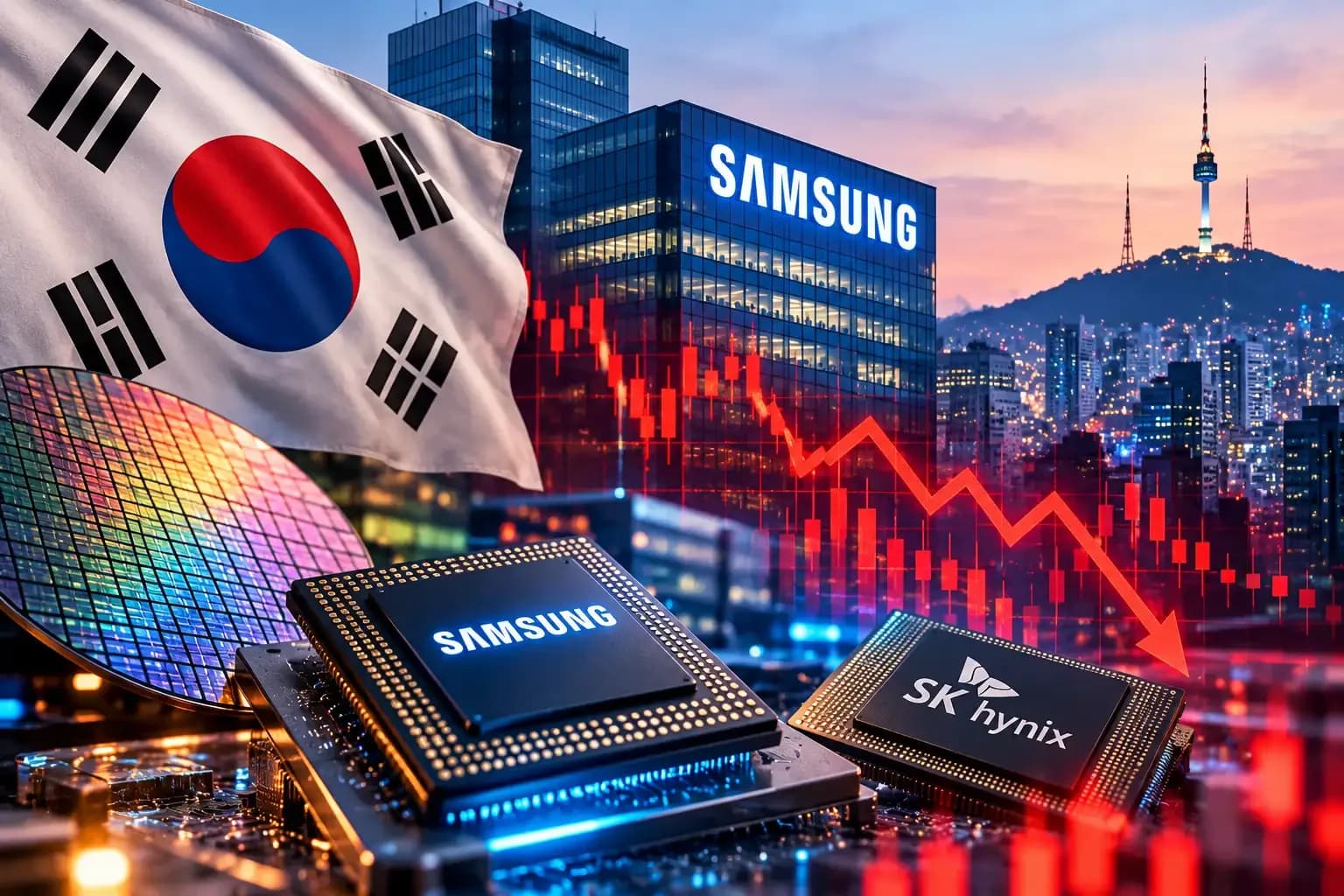
Samsung is gaining ground in the high-bandwidth memory (HBM) market, which AI data centers depend on, after recovering from delays in qualifying its products for Nvidia. J.P. Morgan's estimates show Samsung's HBM market share rising to 34% in 2026, up from 20% last year, while SK Hynix's share is forecast to fall to 46% from 60% over the same period. Douglas Kim of Douglas Research Advisory estimated that Samsung's HBM bit shipments expanded by close to 50% quarter-over-quarter in the third quarter, as reported by Reuters. Larger shipments of Samsung's latest HBM4 chips have helped it recover ground after falling behind its rival. TrendForce expects the slowdown in memory price gains to continue into Q4, projecting conventional DRAM contract prices will rise 10% to 15% over Q3, after a roughly 60% jump in the second quarter. As per Business Standard, prices have soared due to the tight supply of conventional DRAM and NAND chips as well as growing demand for high-bandwidth memory essential for processing vast amounts of data for AI applications.
Memory chips are expected to account for the bulk of the earnings improvement, with analysts expecting supply to continue to lag demand. The imbalance is expected to potentially widen in 2027 as AI-related demand absorbs an increasing share of global memory capacity. Conventional DRAM bit shipments are expected to remain broadly flat because of limited inventories, while HBM shipments could rise sharply from the previous quarter on strong demand for HBM4. Micron, a key supplier of high-bandwidth memory to Nvidia, said the chip market could be tighter in 2027 and 2028 than this year, after forecasting quarterly revenue well above estimates on Wednesday. A stronger South Korean won may offset some of the gains by reducing the value of dollar-denominated overseas sales when converted into local currency. As per Business Standard, Samsung and Micron expect the imbalance to persist into 2028, although Chinese competition and a potential slowdown in AI spending pose risks to the longer-term earnings outlook.
The memory chip boom presents challenges for Samsung's other businesses, particularly its smartphone and consumer electronics divisions, which face mounting pressure from higher component costs. Higher memory prices, while benefiting Samsung's semiconductor arm, are raising costs for its own smartphones and other electronic devices, squeezing margins in those businesses. According to Business Standard, Samsung's mobile business posted a larger-than-expected loss of more than $1 billion in the third quarter, analysts said. Samsung's contract chipmaking, or foundry, business is expected to remain loss-making because of the burden of fixed costs and still-low utilisation rates. However, utilisation is expected to improve over the next several quarters, supported by stronger demand for advanced manufacturing processes. Samsung has been seeking to narrow the gap with industry leader TSMC in advanced contract chip manufacturing. As per Business Standard, investors said they would also be closely watching for details of Samsung's shareholder return policy during its earnings call later this month.
Samsung is significantly ramping up its AI infrastructure investments to secure next-generation AI leadership. The company announced a $1 billion investment in the AI infrastructure company Helix in late September, making it a founding investor alongside KKR, the Kuwait Investment Authority (KIA), NVIDIA, and US power company Vistra. As per Samsung's press statement, AI data centres are rapidly evolving beyond simple facility investments into core business platforms, integrating diverse, high-value business models including GPU-as-a-Service (GPUaaS), Sovereign AI, and colocation services. The investment is expected to serve as a pivotal milestone for Samsung's affiliates, allowing them to leverage world-class hardware and component expertise to build system- and infrastructure-level influence. Additionally, Samsung announced a partnership with French AI startup Mistral AI in September, helping the European startup raise 3 billion euros ($3.5 billion) in a funding round.