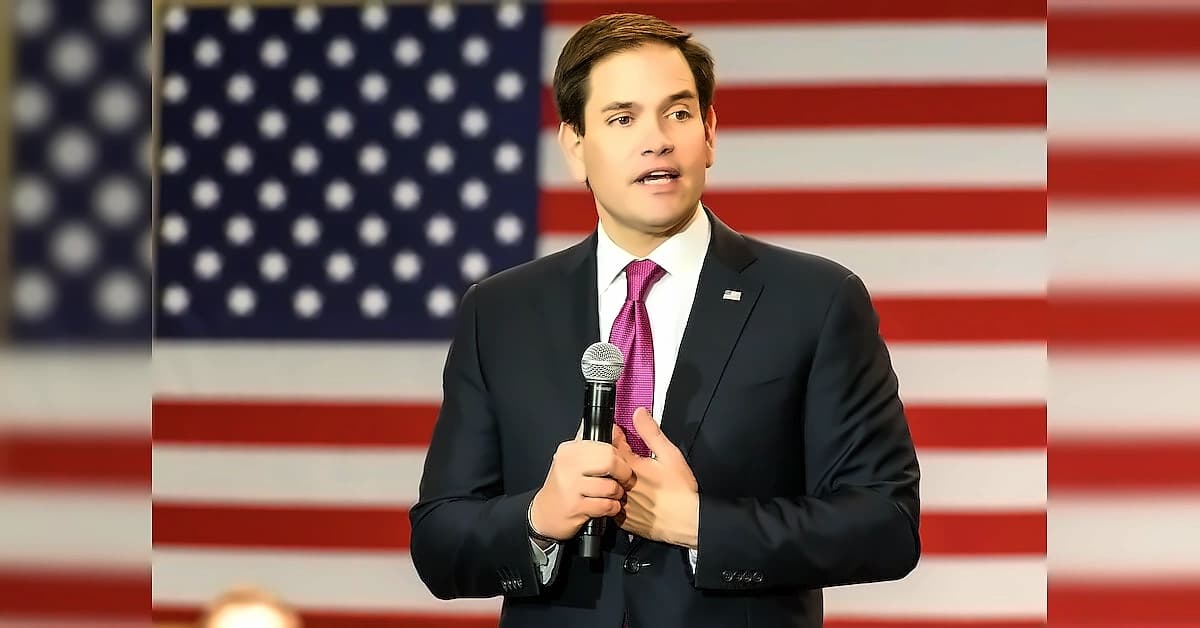
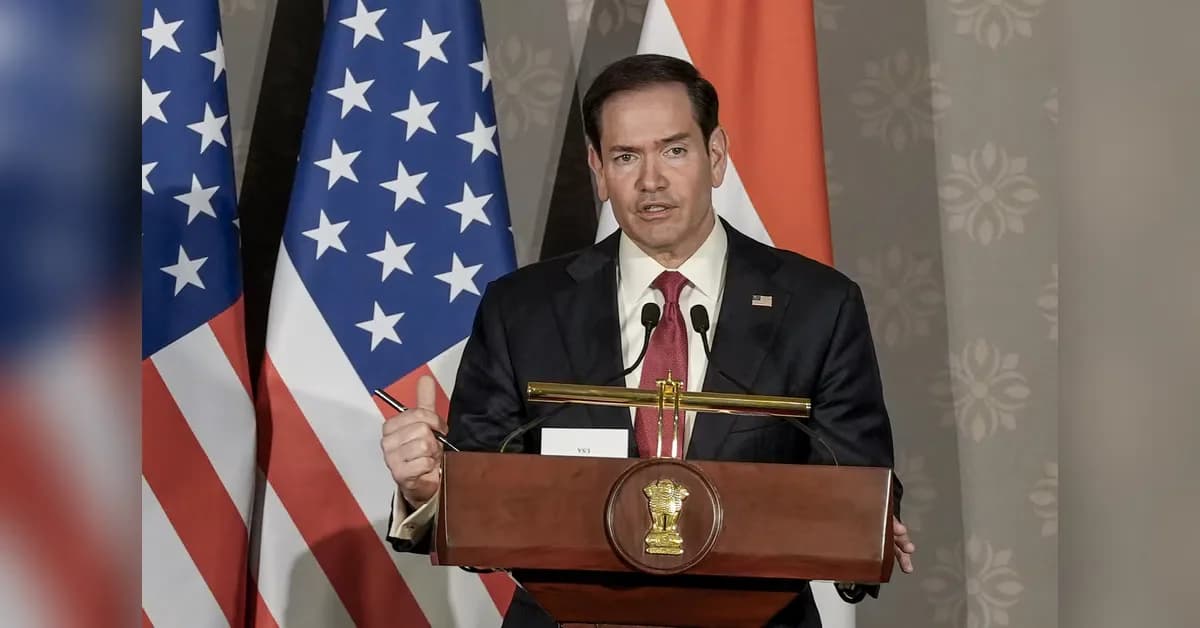
US Secretary of State Marco Rubio met with Russian Foreign Minister Sergey Lavrov on Thursday in Manila during the Association of Southeast Asian Nations (Asean) meetings. According to reports from Associated Press, the meeting occurred on the sidelines of the gathering by Southeast Asian foreign ministers, representing one of the most high-profile side meetings at the regional diplomatic event. The US State Department confirmed that "they discussed the U.S.-Russia relationship and the need to end the Russia-Ukraine war," as stated by a State Department spokesperson. Russia did not immediately offer a readout and Lavrov largely ignored shouted questions from reporters after leaving the meeting room. The meeting lasted approximately 35 minutes due to tight schedules, with the Americans requesting the encounter, as confirmed by Foreign Ministry spokeswoman Maria Zakharova.
Rubio told reporters in Manila on Wednesday that he plans to raise the conflict in Ukraine with Lavrov, stating that the US remained open to playing a role in ending the conflict "if that opportunity presents itself." As reported by Associated Press, he acknowledged that US efforts to broker an end to the Russia-Ukraine war have "kind of fallen off a little bit over the last few months" but said the meeting would explore whether there's an opportunity to renew talks. The US Secretary emphasized that "we have to have a relationship with the Russian government, even though we have areas of disagreement," noting they are two largest nuclear-armed countries. Rubio suggested that new circumstances could create an opening to discuss potential pathways toward a settlement. The meeting is widely seen as an attempt by Rubio to revive peace negotiations, which President Donald Trump has sought to mediate between Russia and Ukraine since returning to the White House early last year.
Russian Foreign Minister Sergey Lavrov indicated he intends to question Rubio about President Donald Trump's recent assessment that a settlement is "getting close." According to Associated Press, Moscow claims "Anchorage agreements" emerged from Trump's August 2025 summit with Russian President Vladimir Putin, though Rubio disputes that any formal agreements concerning Ukraine were reached. Expectations for renewed discussions about ending the war come as Ukraine has made significant progress this year but a rift between defense leaders has threatened to derail its efforts. President Volodymyr Zelenskyy has also undertaken a major government reshuffle, including changes to the top military brass. However, the talks have so far failed to produce any breakthroughs and have largely stalled since the US became embroiled in the war in the Middle East. Moscow has praised Trump's efforts while largely blaming Ukraine's European backers for trying to sabotage the negotiations.
Rubio also had separate meetings with Chinese Foreign Minister Wang Yi and Indian External Affairs Minister Subrahmanyam Jaishankar during his visit to Manila. As reported by Associated Press, he and Wang discussed a recent altercation this week between Chinese and Filipino forces in a disputed shoal in the South China Sea, which Beijing claims virtually in its entirety. Rubio called the incident "escalatory" and noted that "those need to be managed very carefully, because obviously, a conflict - be it economic or otherwise - between the US and China would have a dramatic global impact." According to the Chinese Foreign Ministry, Wang protested over "recent negative words and actions by the US side," with Trump recently accusing China of meddling in the 2020 election and the US administration shortening visas for Chinese journalists. Wang also said China and the US were "preparing the upcoming high-level exchanges," referring to President Xi Jinping's visit to the US in September.
The Trump administration has repeatedly criticised China's assertive actions in the South China Sea to the disadvantage of smaller claimant countries like the Philippines. According to Associated Press, ASEAN foreign ministers discussed territorial disputes, welcoming progress in years-long negotiations between China and their regional bloc on a proposed non-aggression pact that both sides hope to conclude this year. The proposed code of conduct, which both sides hope to conclude this year, is aimed at preventing a major conflict in the disputed waters, a key global trade route that could also draw in the United States. In Manila, Rubio's meetings have brought the Ukraine war, US-Russia contacts, US-China tensions and ASEAN's South China Sea negotiations into one round of high-level diplomacy.