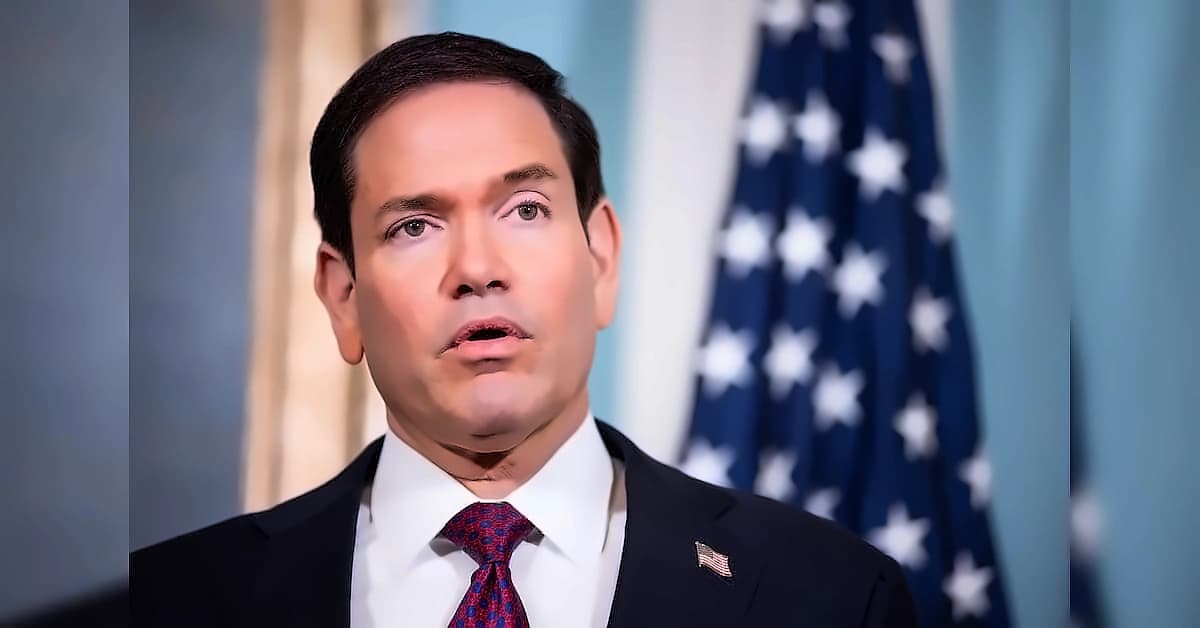
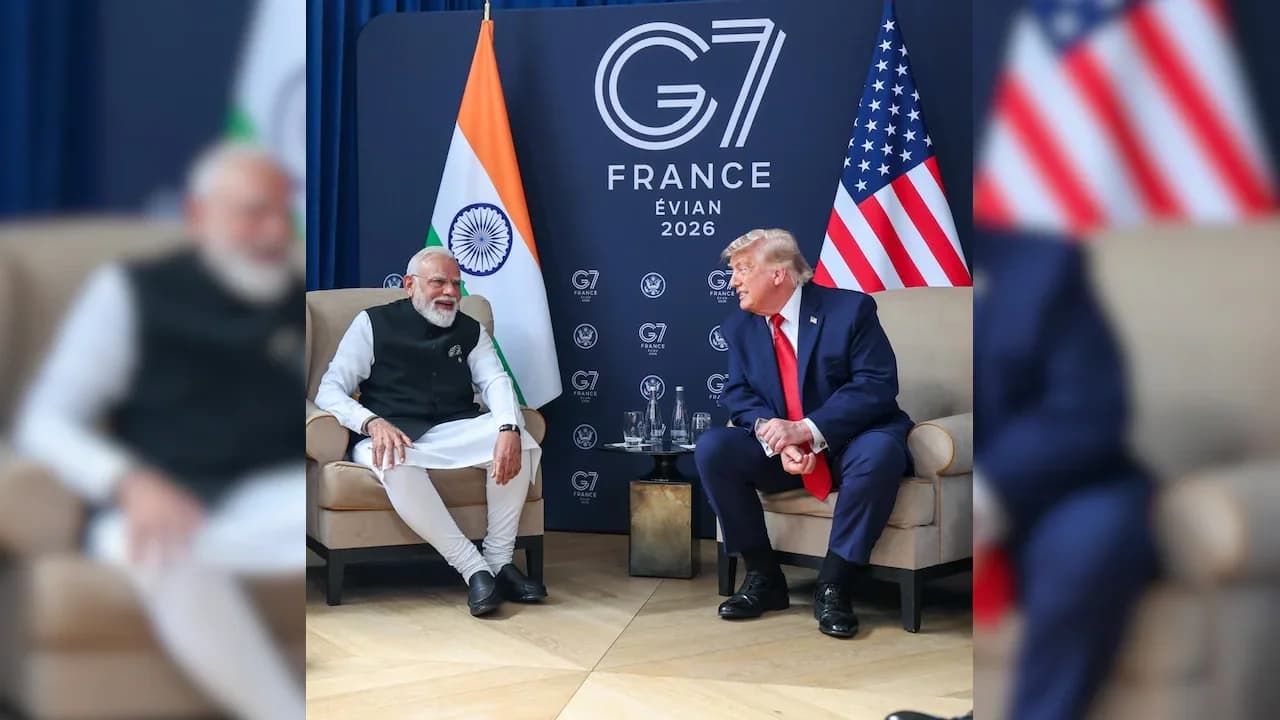
US Secretary of State Marco Rubio's four-day visit to India comes at a critical juncture as India remains on the outside looking in following Trump's high-stakes summit with Chinese President Xi Jinping earlier this month. According to The Times of India, Trump phoned Japanese Prime Minister Sanae Takaichi from Air Force One immediately after concluding his talks with Xi on May 13-15, while Prime Minister Narendra Modi's government was left to parse a stark shift from the adversarial, anti-China posture India relied upon during the previous Biden administration. As noted by Sourabh Gupta of the Institute for China-America Studies, 'The first time, Washington under Trump is asking New Delhi not what it can do for New Delhi but what New Delhi can do for Trump's USA'. The summit has left Indian officials 'better have a good and ready answer; it has so far fumbled or punted the question', with analysts noting that 'the relationship appears rudderless' after decades of US administrations wooing India as a democratic counterweight to China in Asia. Trump's visit this month to Beijing amplified concerns about U.S. ties, according to Basant Sanghera, a former State Department South Asia policy expert, who said Trump's approach had 'created a perfect storm of anxiety' in India about the U.S. relationship.
US Secretary of State Marco Rubio emphasized US energy products' potential to diversify India's energy supply during his meeting with Prime Minister Narendra Modi on Saturday, as reported by Business Standard. According to a US summary of the meeting, Rubio 'emphasised that the United States will not let Iran hold the global energy market hostage' and pressed his case for increased US energy cooperation. Rubio said on Thursday that the U.S. was already in talks to expand its share of India's energy supply, stating 'We want to sell them as much energy as they'll buy'. This development comes as the Iran war has set back US efforts to wean India off Russian oil, creating new opportunities for US energy companies to compete in India's diversified energy supply chain. India has been hard hit by the ripple effects of the war, with the crisis in the Strait of Hormuz leading to a shortage of cooking fuel supplies. The US is ready to supply as much energy as India is willing to buy, with Rubio highlighting growing opportunities for cooperation, including announcing a planned visit to India by Venezuela's interim President, Delcy Rodriguez, though New Delhi has not made any official announcement. Washington has promoted Venezuelan oil as an alternative source for India following the removal of then-Venezuelan president Nicolas Maduro in January, steering New Delhi away from Russian or Iranian crude.
The meeting addressed ongoing trade negotiations, with Rubio expressing hope that the long-pending trade deal between India and the US is approaching completion, as reported by Business Standard. The two countries reached a 'framework for an interim agreement' in February that lowered Trump's tariffs on Indian goods to 18% from a punishing 50%, with half of the previous rate linked to India's prior purchases of Russian oil. However, talks to finalize the deal have slowed after the US Supreme Court struck down Trump's tariffs in late February, effectively bringing the duty rate down to 10%. New Delhi has been weighing its options as the Trump administration pursues investigations under unfair trade practices legislation, which are widely expected to restore much of the prior levies. One person familiar with the talks said the U.S. had been disappointed with India's perceived foot-dragging and apparent belief that it could strike a good deal without giving much up, and this mood was likely to cloud Rubio's efforts to stabilize ties. The lack of a trade agreement - more than three months after the announcement of the 'interim deal' - clouds other areas of engagement, according to Richard Rossow of the Centre for Strategic and International Studies. Market access disagreements and broader transactional pressures continue to strain bilateral trade ties, with immigration bottlenecks impacting skilled professionals and long delays affecting Indian families in the US visa system now being driven directly by the White House as political and economic tools.
US Secretary of State Marco Rubio declared that India-US relations have not lost momentum during his meeting with External Affairs Minister S Jaishankar in New Delhi, according to Business Standard. Rubio expressed optimism about the bilateral relationship, stating that India-US relations will come out much stronger in the coming years. The meeting, which included high-level discussions on multiple global issues, reinforced the strategic alignment between the two nations despite recent tensions. Rubio also extended an invitation on behalf of President Trump for Modi to visit the White House in the near future, as confirmed by US Ambassador to India Sergio Gor. However, analysts note that Rubio has 'only limited influence over some issues that triggered recent turbulence' in relations, with issues that normally fall squarely within the State Department's remit, like visas-immigration, are driven by the president himself as a political and economic tool. Rubio's meeting with other Quad foreign ministers in Delhi next week will be the third such gathering without a leader-level engagement and effectively an 'unannounced downgrade' of the grouping, according to Richard Rossow. The Quadrilateral Security Dialogue (Quad) faces weakening momentum as Trump appears 'no longer interested in the grouping', with last year's leaders' summit in India never taking place because he refused to attend unless there was a breakthrough trade deal. India's entreaties for the White House to schedule a Trump visit for a summit of the Quad have so far gone unanswered, with the U.S. Embassy in New Delhi emphasizing that the Quad stands 'together for a free and open Indo-Pacific ... From supporting regional security to diversifying critical minerals supply chains'.

Despite the positive energy cooperation discussions, analysts remain cautious about the relationship's trajectory amid what Richard Rossow of the Centre for Strategic and International Studies describes as 'a perfect storm of anxiety' in India about US ties. Basant Sanghera, a former State Department South Asia policy expert, acknowledged that 'ties have stabilised and both sides are trying to build momentum in the areas that there is convergence', but warned that 'the lack of a trade agreement more than three months after the announcement of the 'interim deal' clouds other areas of engagement'. The lack of direct reassurance to Modi after the Trump-Xi summit has left Indian officials concerned about Trump's statement that arms sales to Taiwan can be used as a negotiating chip with China, with analysts noting that 'Indian officials will dissect Trump's statements on China to understand the true direction of US policy'. Dhume of the Council on Foreign Relations concluded that 'Indians are no longer certain that US authorities view the world through the prism of great power competition', marking a significant shift from the previous quarter-century of US-India strategic alignment. The Biden administration lavished attention on India as a vital strategic partner and feted Modi during a 2023 state visit, while Trump also welcomed the prime minister to the White House early in his second term before imposing steep tariffs that threw ties off course.