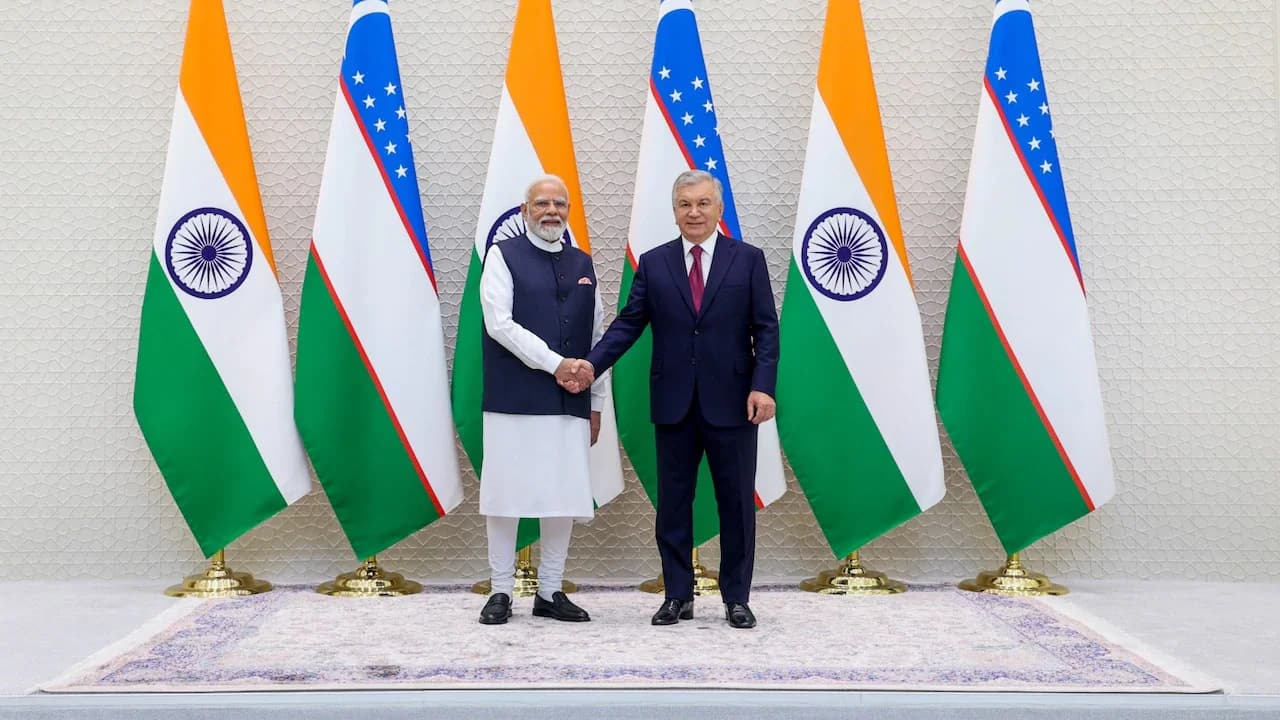
Prime Minister Narendra Modi and Uzbekistan President Shavkat Mirziyoyev have elevated their bilateral relationship to a comprehensive strategic partnership during their delegation-level talks in Tashkent on Sunday. According to reports from PTI, Modi announced that "We are celebrating the 15th anniversary of our strategic partnership. I am delighted that, on this special occasion, we are elevating our ties to the level of a Comprehensive Strategic Partnership." The leaders agreed to establish a framework for long-term uranium supply to support India's civilian nuclear energy program. Modi noted that "We will move forward by setting concrete goals within this framework" and emphasized the significance of the upgraded partnership, stating "We had a productive discussion over dinner last night and took several important decisions."
The two-day state visit from August 29-30 delivered 11 key agreements and outcomes across multiple sectors, as announced at the conclusion of Modi's visit. The agreements seek to broaden economic ties while creating new institutional mechanisms for long-term cooperation. According to official reports, the framework covers trade, minerals, finance, tourism, education, digital payments and culture, signalling a deeper and more structured engagement between the two countries. The comprehensive nature of these agreements provides a broader framework for India to expand its economic and strategic presence in Central Asia.
India's Ministry of Mines and Uzbekistan's Ministry of Mining Industry and Geology signed an MoU to expand cooperation in geology and mineral resources. The framework could open avenues for mineral exploration, resource development and technical cooperation. For India, stronger engagement with Uzbekistan's mineral sector could support efforts to diversify sources of strategic and critical minerals. This cooperation represents a significant development in India's strategy to secure reliable supply chains for critical resources in the region.
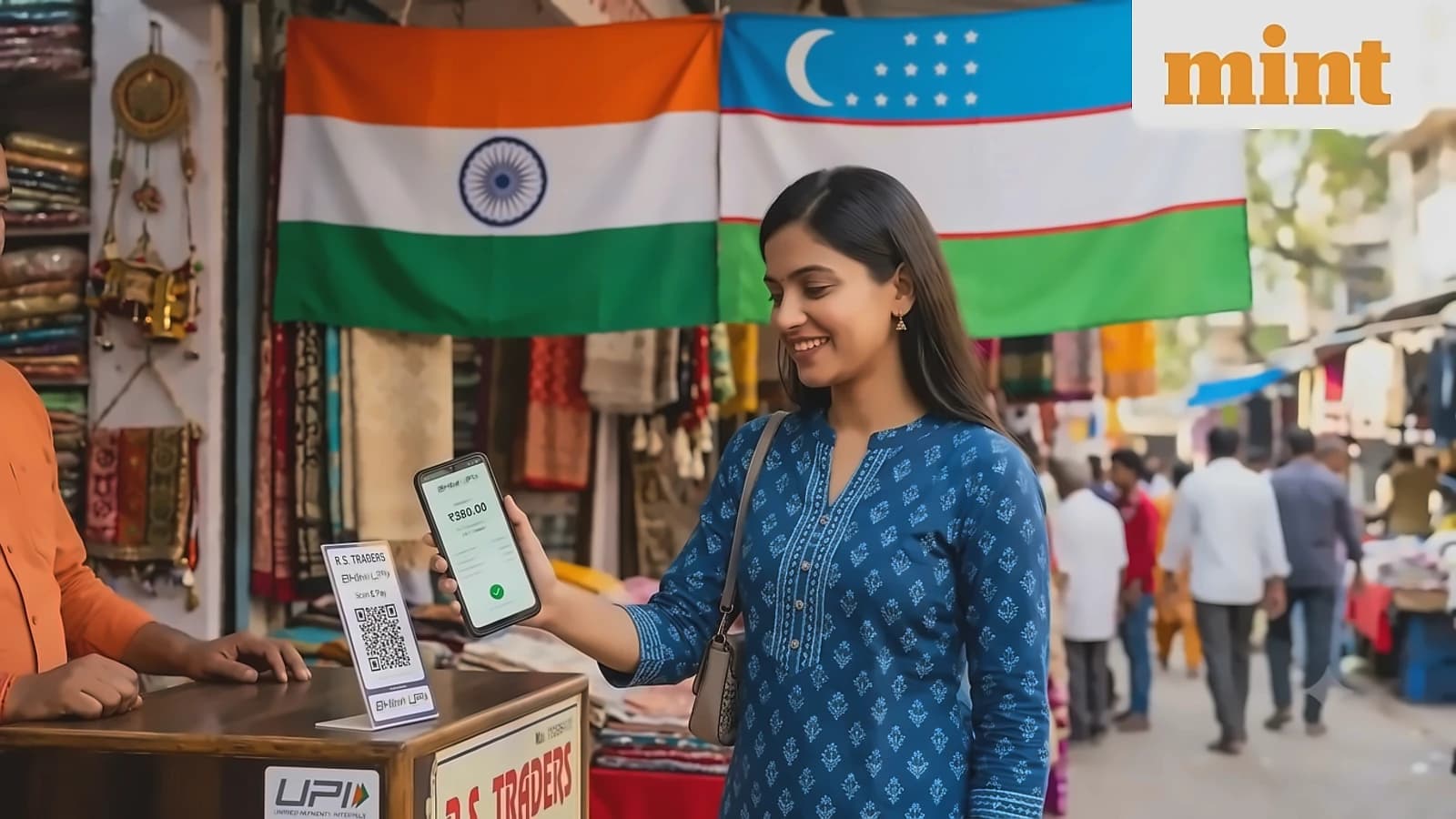
The countries agreed to establish an Economic and Financial Dialogue between their finance ministries to provide a formal platform for discussing macroeconomic developments, financial cooperation and ways to deepen bilateral economic engagement. On the digital payments front, NPCI International Payments Ltd and Uzbekistan's National Interbank Processing Centre signed a commercial agreement that will allow Indian UPI apps to scan Uzbekistan's UZQR national QR codes for merchant payments. This arrangement could make payments easier for Indian travellers and strengthen India's digital public infrastructure footprint overseas. Additionally, Gujarat and Uzbekistan's Samarkand region signed an agreement to establish partnership relations, creating a new state-to-region channel for economic, cultural and people-to-people cooperation.
A Cultural Exchange Programme for 2026-30 was signed to strengthen people-to-people ties and facilitate greater cooperation in culture and heritage. During his visit, Modi witnessed a yoga session hosted by the Yoga Federation of Uzbekistan and interacted with members of the Indian community. Modi noted that Yoga has immense appeal in Uzbekistan and is bringing people and cultures together while strengthening people-to-people ties between India and Uzbekistan. The prime minister also attended cultural performances including Kathak and Andijan Polka by the diaspora, and a fusion performance of tabla with traditional Uzbek instruments. India offered 100 Lal Bahadur Shastri Scholarships for Hindi language studies and announced an ICCR Sanskrit Chair at Tashkent State University of Oriental Studies. The Mahatma Gandhi Centre and Shastri Memorial in Tashkent symbolise the deep cultural bonds, with exchanges in education, yoga, and traditional medicine, reinforcing historical linkages rooted in shared cultural and educational heritage.
The two sides signed an agreement covering environmental protection and climate-related cooperation. India also announced a $1 million grant for afforestation in Uzbekistan's Aral Sea region, adding an environmental dimension to the bilateral partnership and supporting restoration efforts in one of Central Asia's most environmentally fragile areas. The countries have decided to establish an official coordination council at the level of foreign ministers to provide direction to all aspects of cooperation through close coordination. As reported by PTI, Modi announced that "We will establish a Coordination Council at the level of foreign ministers to provide direction to all aspects of our cooperation through close coordination." Additionally, both sides will elevate their existing joint commission from the level of secretaries to that of ministerial level. The leaders also agreed to jointly organise a business summit featuring business leaders from both nations, demonstrating their commitment to deepening commercial engagement.