Prime Minister Narendra Modi arrived in Evian-les-Bains on Tuesday to attend the G7 Summit and exchange views with world leaders on key global issues. This marks India's 13th participation at the G7 summit and the 7th consecutive participation for Modi personally, highlighting India's growing role in global governance and diplomatic engagement. Modi expressed his forward-looking approach to the summit proceedings, stating on social media platform X, "On 16th and 17th June I will be in Evian to participate in the G7 Summit... India will always focus on giving voice to the aspirations of the Global South." He emphasized India's continued commitment to global cooperation, stating "India remains committed to advancing collective efforts for a more sustainable and prosperous planet."
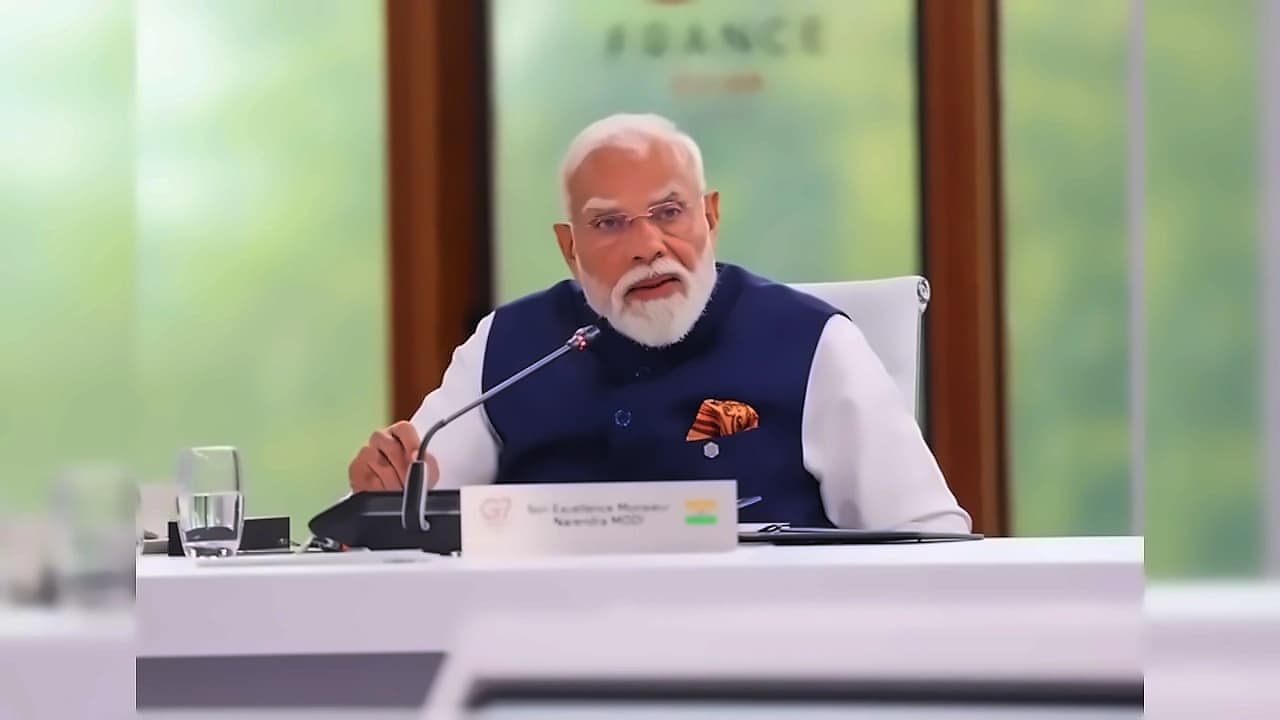
During his intervention at the G7 outreach session on 'Forging New Partnerships and Rebuilding International Solidarity', Prime Minister Modi emphasized that mutual trust is the most important strategic asset today. With US President Donald Trump seated on his immediate left, Modi stated, "But, sadly, today, the world does not suffer from a shortage of resources…it suffers from a shortage of trust. And the future of our partnerships depends on rebuilding this trust." Modi called for international partnerships to move beyond the donor-recipient paradigm to one of solidarity and equal ownership, noting that lack of respect for international law was the biggest hurdle to building international solidarity. Addressing the session, Modi emphasized that international partnerships needed to prioritize dialogue and diplomacy for ensuring peace and stability. As per Business Standard, Modi underlined that in an interconnected world where energy, food, health, cyber, and economic security are intertwined, building international partnerships was a necessity for the progress and prosperity of humanity.
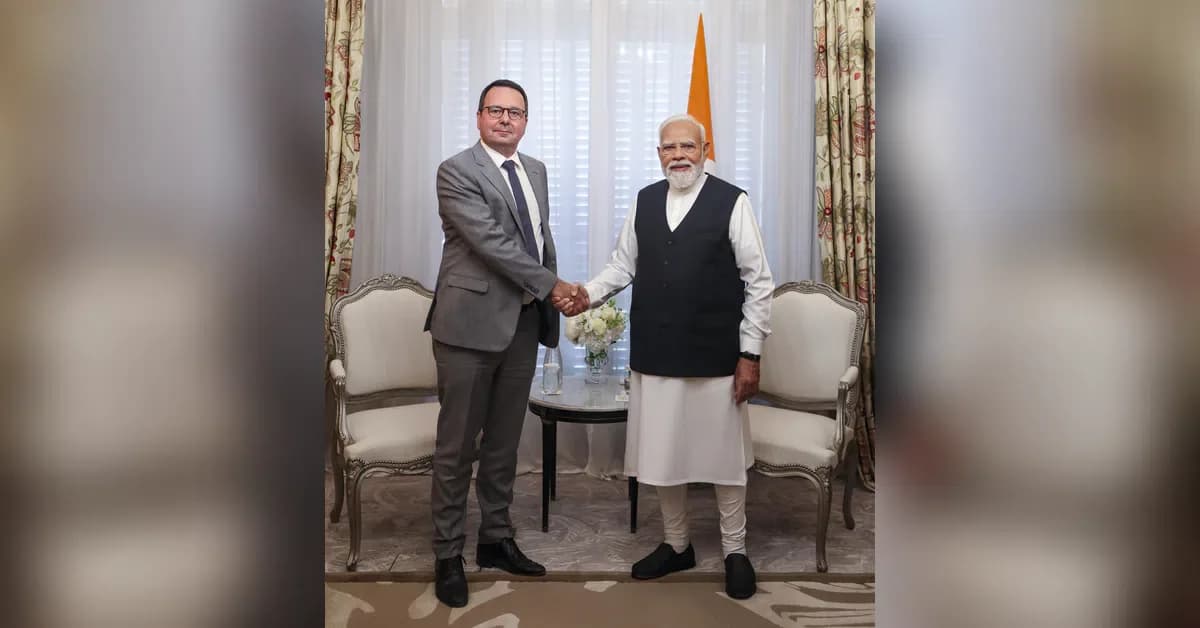
Upon arrival in Evian-les-Bains, Modi emphasized India's continued commitment to global cooperation and sustainability. The Prime Minister stated, "India remains committed to advancing collective efforts for a more sustainable and prosperous planet." Modi's arrival from Geneva was marked by diplomatic protocol, with the President of Switzerland, Guy Parmelin, receiving him at the Geneva airport during his transit. Both leaders exchanged warm greetings and reaffirmed their commitment to further strengthen the India-Switzerland partnership. Earlier, Prime Minister Modi concluded a "historic and productive" visit to Slovakia, marking the first-ever visit by an Indian Prime Minister to Slovakia and establishing a new diplomatic milestone in India's European engagement.
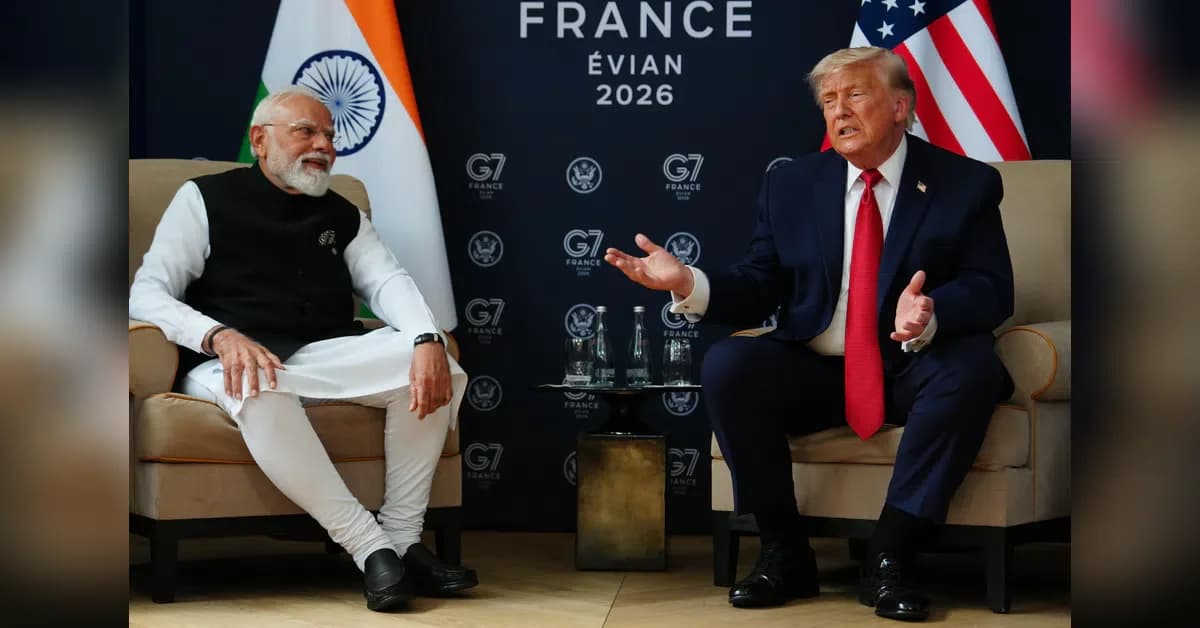
The Modi-Trump bilateral meeting is scheduled for Wednesday on the sidelines of the G7 gathering, marking their first in-person encounter in 16 months amid continuing strain in bilateral ties. The two leaders shook hands and chatted briefly when Modi reached the summit venue, with their last meeting occurring in February 2025 when Modi visited Washington DC. India-US ties have hit a low amid the White House imposing punitive tariffs on Indian produce, America's immigration policies and the Trump administration's proximity to Pakistan's military leadership. Last week, US military attacks on three merchant vessels with Indian seafarers off the coast of Oman killed three Indian sailors, further straining relations. India's Ministry of External Affairs summoned the US charge d'affaires twice over the attacks, with External Affairs Minister S Jaishankar raising the issue with US Secretary of State Marco Rubio during his four-day visit to India in May.
During his Slovakia visit, India and Slovakia elevated their ties to a comprehensive partnership and finalized 11 agreements to expand bilateral cooperation across multiple sectors. These agreements cover several key areas including migration, digital technology and defence, demonstrating the comprehensive nature of the enhanced partnership between the two nations. Modi met his Canadian counterpart Mark Carney on the sidelines of the Summit, discussing ways to build a stronger partnership driven by trade, energy, innovation, education and people-to-people exchanges. India and Canada plan to sign the Comprehensive Economic Partnership Agreement (CEPA) by the end of this year and have set a bilateral trade target of $50 billion by 2030. The two sides are working to finalize Modi's visit to Canada by the end of the year when the pact is likely to be signed, with sources indicating the CEPA signing is set for the end of 2026.