The government has implemented significant fuel price increases as part of its daily pricing mechanism overhaul. Petrol prices increased by ₹5.44 per litre while diesel prices jumped by ₹31.50 per litre in the latest revision. According to reports from The Times of India, Petroleum Minister Ali Pervaiz Malik announced that the decision was approved by Prime Minister Shehbaz Sharif and the federal cabinet. The move comes against the backdrop of soaring international energy prices, with Brent crude futures up 0.6% at $84.75 per barrel and US crude advancing 1.1% to $79.8 per barrel. Malik noted that international diesel prices had risen sharply from around $110 per barrel to $140 per barrel following recent Middle East hostilities. Information Minister Attaullah Tarar explained that the latest increase in domestic fuel prices was linked to regional developments and volatility in international oil markets.
Pakistan's short-term inflation has reached a concerning 13.08% year-on-year for the week ending July 16, driven primarily by rising petroleum product prices. According to the Pakistan Bureau of Statistics, the Sensitive Price Index (SPI) increased by 1.40% compared to the previous week, marking the 66th consecutive week of increase. The inflation surge was largely driven by sharp year-on-year gains in key items, including electricity charges (49.14%), gas charges (29.85%), wheat flour (71.81%), and liquefied petroleum gas (42.50%). Food inflation remained elevated with notable increases in onions, tomatoes, potatoes, mutton, beef and wheat flour. With the government shifting to a daily pricing mechanism for petroleum products, the impact of fuel price changes is expected to be reflected more quickly in short-term inflation measurements.
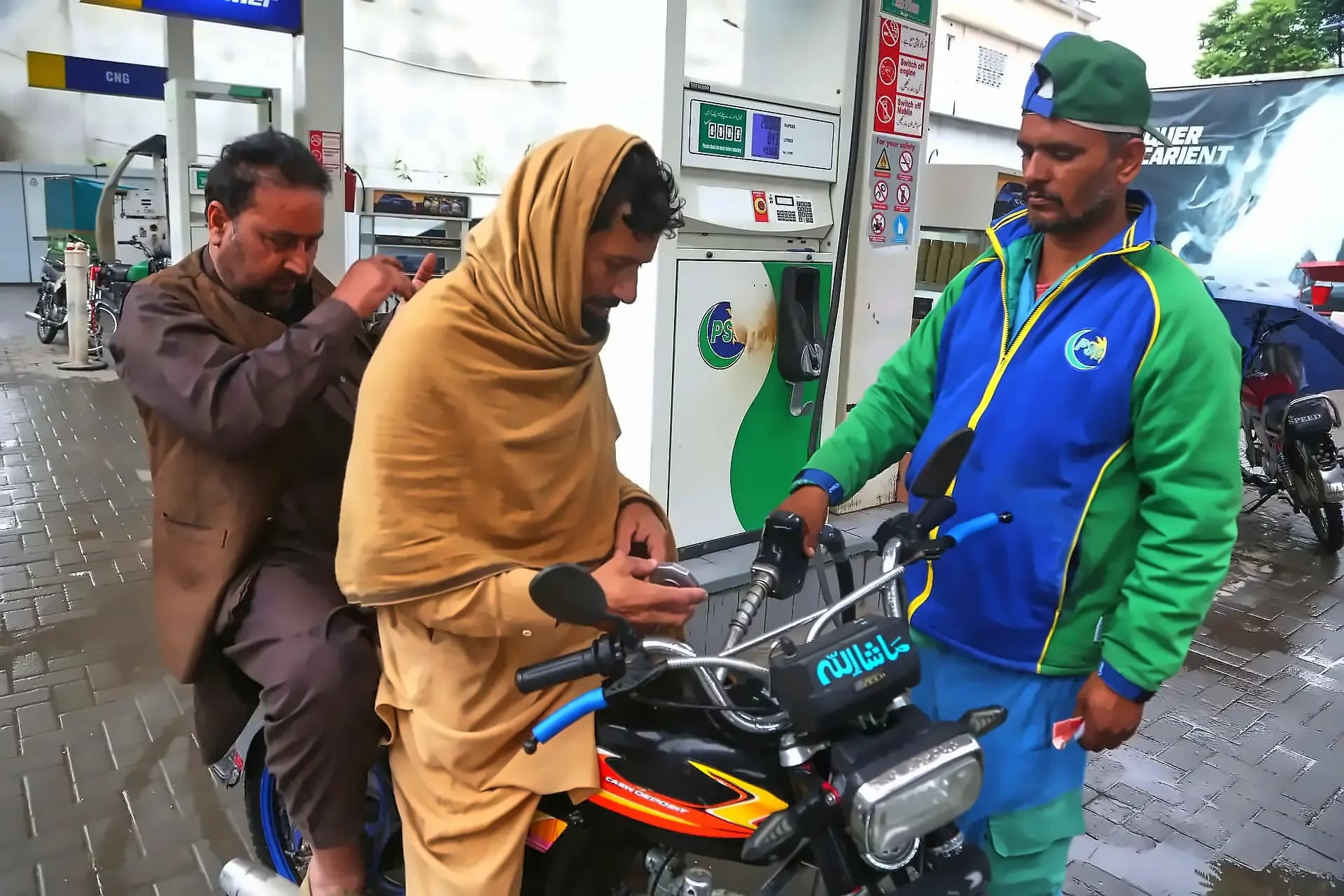
US-Iran tensions have pushed global oil prices to their highest levels in several months, creating additional economic challenges for Pakistan. Brent crude rose by $3.10 (3.68%) to $87.33 per barrel, marking its highest level in recent months, while US benchmark WTI increased by $3.14 (3.98%) to $82.09 per barrel. Other energy benchmarks also recorded significant gains, with Murban crude rising nearly 3.91% to $80.77 per barrel and WTI Midland increasing to $81.81 per barrel. Market analysts said traders were adding a geopolitical risk premium to oil prices due to concerns that further escalation could threaten supplies passing through the Strait of Hormuz, a key global oil route. The rise in oil prices also spread across the wider energy market, with US gasoline futures increasing by 3.86% and European natural gas prices and Asian LNG benchmarks recording gains.
Pakistan has announced a significant shift in its fuel pricing mechanism, moving from weekly to daily price revisions for petroleum products. According to reports from The Times of India, Petroleum Minister Ali Pervaiz Malik and Information Minister Attaullah Tarar announced this change at a press conference on Friday. The Cabinet has decided to hand over the task of fixing fuel prices to the Oil and Gas Regulatory Authority (OGRA), Pakistan's oil and gas regulator. Under the new system, OGRA will determine fuel prices on a daily basis, with Malik stating that OGRA would 'not just publish the fuel rates on its website that are used to determine prices, but also publish the factors leading to the price that we see in each petrol pump'. The move follows the government's earlier decision to conduct weekly petroleum price adjustments after tensions escalated following the US-Israeli conflict with Iran on February 28. During the last review, the government raised petrol and high-speed diesel prices by ₹13.18 and ₹13.80 per litre, respectively, taking rates to ₹310.71 and ₹323.30 per litre.
The fuel price revision announcement came alongside Pakistan's current account deficit of $139 million for FY2025-26, according to data released by the State Bank of Pakistan (SBP) on Friday. As reported by The Times of India, this represents a significant reversal from the surplus of $1.838 billion recorded in FY2024-25. The SBP data showed that Pakistan recorded a current account deficit of $649 million in June, compared with a surplus of $500 million in May. The deficit, although marginal, remains a source of concern and could worsen due to the ongoing Middle East situation and rising energy costs. However, the current account deficit remained under control mostly because of strong remittance inflows, which rose to $41.585 billion in FY26 from $38.3 billion in FY25, an increase of about $3.3 billion. The trend shows that the economy was largely supported by remittances, as exports could not grow enough to reduce the current account pressure, with imports remaining high and creating a trade deficit of over $35.5 billion in FY26.
Power companies have sought a ₹1.20 per unit increase in fuel cost charges for consumers across the country in August, primarily due to expensive imported fuels. According to reports from The Times of India, the Central Power Purchasing Agency (CPPA) filed a petition seeking higher fuel cost adjustments for June, with the National Electric Power Regulatory Authority (Nepra) calling a public hearing on July 29 to examine the request. The increase was driven by the nearly doubled price of Regasified Liquefied Natural Gas (RLNG), which resulted in a fuel cost of ₹35 per unit, compared to ₹16 per unit in June last year. Once approved, power companies would charge consumers of all utilities, including ex-Wapda Distribution Companies and K-Electric, an additional ₹15.7 billion through August bills. The CPPA reported electricity consumption of 13,066 billion units in June this year, compared to 13,310 billion units in the same month last year. Despite 39% of power supply coming from hydropower with zero fuel costs, the utilization of furnace oil-based plants at ₹52 per unit and diesel at about ₹57 per unit contributed less than 1% of overall grid supply.