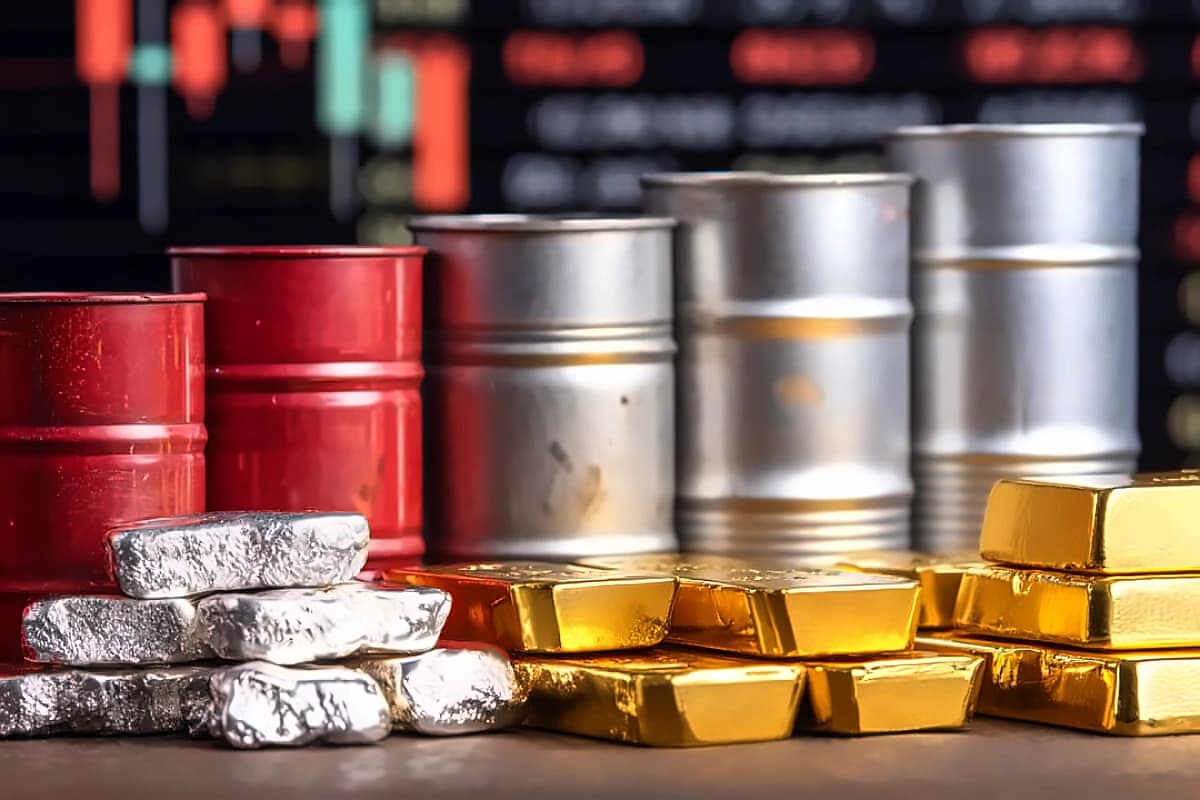
Oil prices have experienced a dramatic surge, with WTI crude futures holding above $100 per barrel and Brent crude climbing 3% to above $111, pulling capital into energy names. According to latest reports, WTI crude is trading near $103, up about 1%, while Brent has pushed to roughly $110, up 2%, following a volatile April in which WTI swung from $85.91 on April 17 to a peak of $114.58 on April 7 before settling near $99.89 to close the month. The rally has been driven by renewed tensions in the Persian Gulf region, with the US-Iran conflict entering its third month after a fragile ceasefire briefly broke down on Monday. Iranian drones and missiles struck targets in the United Arab Emirates, while Washington said its forces had destroyed Iranian vessels in the Strait of Hormuz, underscoring how quickly tensions were sliding back toward open confrontation. The CBOE Volatility Index (VIX) is up 2.2% today to hover just above 17, snapping back from Friday's close as renewed Middle East tensions and crude price spikes reintroduce risk premium into options markets.
The 30-year US Treasury yield has surged past 5%, nearing its highest level in roughly two decades as the Iran war raises inflation fears. According to the Global Markets Investor, yields rose across the curve with the 2-year and 10-year notes each climbing more than 6 basis points yesterday, while the 30-year added 5 basis points and the 10-year hit a 9-month high. The policy-sensitive 2-year yield closed at 3.96% on Monday, close to its highest level since the war began, with the 2-year yield consistently trading above the upper end of the Fed funds target range, suggesting that the bond market expects a rate increase in the near term. The Iran conflict has accelerated the move as higher oil prices threaten to flow through to broader inflation, forcing the Fed to stay restrictive. Markets now imply a 37% probability of a rate hike by year-end, against just 3% for a cut, with the 2023 peak near 5.17% sitting as the next major test. Some central banks are already responding, with Australia's central bank lifting its policy rate to 4.35%, noting that "higher fuel prices are adding to inflation and there are indications that this is likely to have second-round effects on prices for goods and services more broadly."
The S&P 500 (^GSPC) opened the week lower as oil prices spiked on renewed Iran tensions, with index futures slipping 0.1% after conflicting reports about a U.S. warship near the Strait of Hormuz. After last week's record setting performance, the S&P 500 remains above the 7,200 threshold despite today's modest pullback. The macro backdrop is fragile with the University of Michigan consumer sentiment at 53.3, deep in recessionary territory, and the 10-year Treasury yield is back at 4.40%. The VIX at almost 17 suggests options markets see today's wobble as a headline event rather than a regime shift, with small caps confirming the cautious tone as the Russell 2000 proxy is up 13% year to date, but they tend to crack first when oil-driven inflation fears return. This week's catalysts include Friday's April jobs report expected to show 60,000 new positions, down from 178,000 in March, and semiconductor earnings from AMD, Arm and Lattice.
Economist Peter Schiff warned that the trajectory points to an accelerating crisis given US debt levels, stating that "the move from 5% to 6% will be much quicker than the move from 4% to 5%, and the move from 6% to 7% will be quicker still. Given our sky-high debt, this move will trigger an economic crisis." Analysis by RBC Wealth Management's head of investment strategy estimates that a persistent rise in inflation triggered by an oil shock must last at least three months, with "We're not quite there in that window," but "we [will be] soon." The Fed's restrictive stance is driven by higher oil prices threatening to flow through to broader inflation, with bond markets potentially forcing another policy reversal depending on how quickly inflation data reflects the energy shock. At 5%, government bonds become attractive enough to pull capital away from equities, while simultaneously raising borrowing costs for mortgages, corporate loans, and US government debt.
The S&P 500 fell by roughly 40 basis points on Monday, representing what appears to be a relatively mild reaction to the spike in rates and oil prices amid renewed Persian Gulf tensions. The SPDR S&P 500 ETF Trust (NYSE: SPY) closed Friday at $721, up 10% on the month, while the Invesco QQQ Trust (NASDAQ: QQQ) added 15% and the iShares Russell 2000 ETF (NYSE: IWM) gained 12%. A key test awaits in next week's April report on consumer prices (May 12), with another 3%-plus annual change looking likely, which would mean the Fed's 2% inflation target will look like ancient history for a second straight month. The US economy isn't immune to a global oil shock, but the country's near-self sufficiency on energy production helps, which is a factor for why the Federal Reserve left its policy rate unchanged last week at a 3.50%–3.75% range. The CBOE Volatility Index (VIX) has oscillated between 17 and 21 since April 23rd as investors weigh a busy earnings slate, surging AI capital expenditure, oil prices, and a protracted geopolitical standoff.