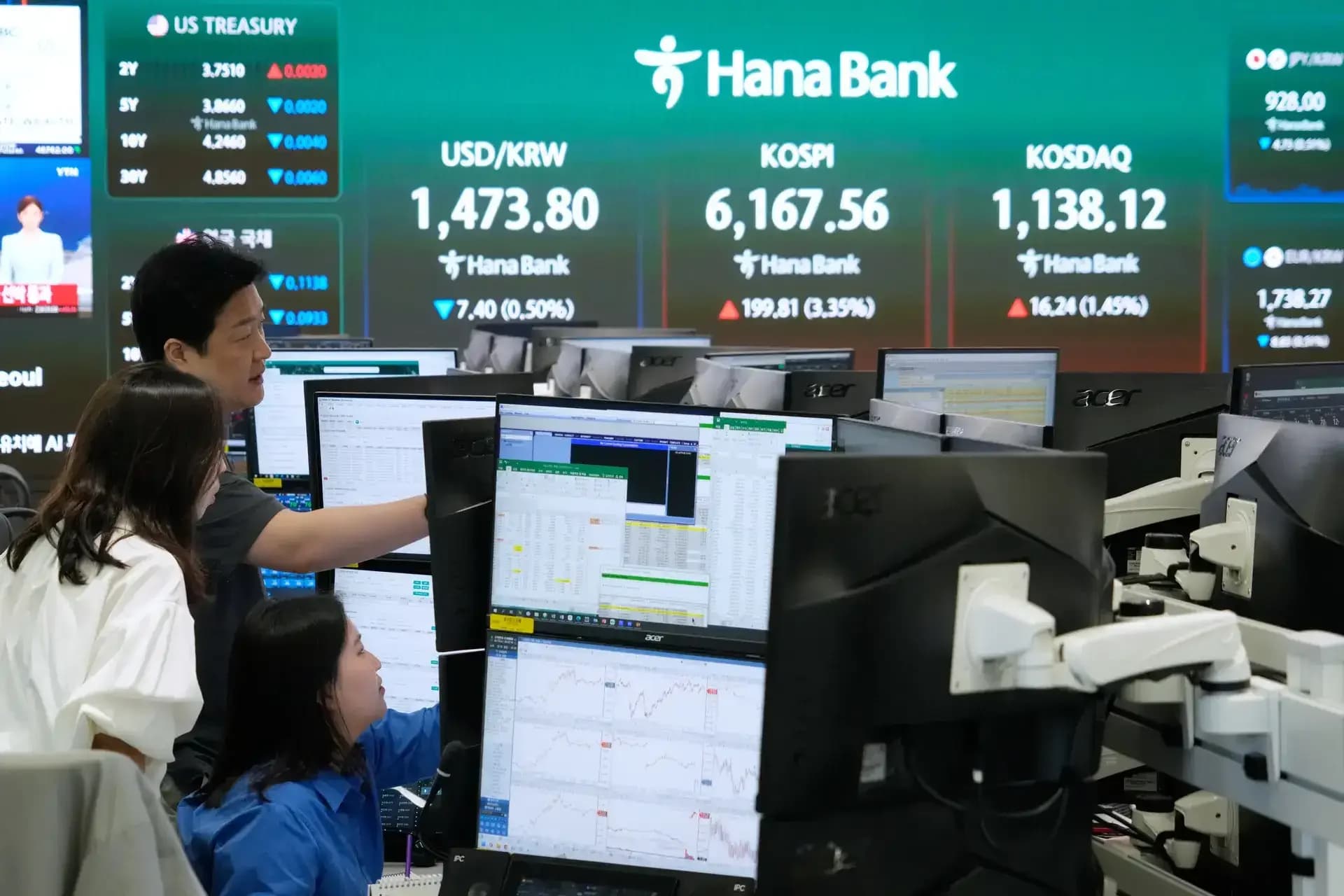
US stock markets experienced their first back-to-back decline in three weeks, with the S&P 500 dropping 1.6% to close at 7,266.99, falling back to where it was in early May. The Dow Jones Industrial Average tumbled 953.33 points, or 1.9%, to finish at 49,918.78, while the Nasdaq Composite sank 509.32 points to 25,169.50, leading the market lower with a 2% slide. According to Business Standard, another sell-off for artificial-intelligence stocks helped drag the U.S. market sharply lower Wednesday, as Wall Street's former superstars continue to face heavy scrutiny for their success. The question now is whether the break lower has cleared out excessive optimism that may have built into their stock prices, or if it is the start of a longer downturn. US stock futures indicate a weak start for Wednesday's trade, with Nasdaq 100 futures falling 1.3%, S&P 500 futures down 0.9%, and Dow Jones futures declining 0.8%, as reported by Live Mint.

Technology shares continued to lead market losses, with semiconductor and AI-related stocks building on Monday's rebound after recent weakness in the sector. According to CNBC TV18, this sector recovery was particularly notable given the previous session's broad-based tech selloff. The chip stock rebound suggests that investors are beginning to view semiconductor companies more favorably after the previous session's decline, with Nvidia's leadership encouraging investors to view the pullback as an opportunity. Chipmaker Micron Technology swung from an early loss of nearly 4% to a modest gain and back to a loss of 4.7%, coming off a wild stretch where it sank 7.7% last Thursday, then plunged another 13.3% Friday and rallied 9.9% Monday. Nvidia, the chip company that has grown into a nearly $4.9 trillion behemoth because of the AI boom, was the heaviest weight on the S&P 500 after falling 3.7%. The second-heaviest was another AI winner, Broadcom, which fell 5.1%. Super Micro Computer tumbled 28% after saying it plans to raise $7 billion in cash by selling shares of stock and convertible preferred stock, as reported by The Hindu BusinessLine.
Oil prices experienced continued volatility as Brent crude rose 1.8% to $93.10 after President Donald Trump warned Iran would "pay the price" for stalled negotiations between the two on their war. According to The Hindu BusinessLine, the war has been keeping the Strait of Hormuz effectively shut to oil tankers, which has prevented the delivery of crude from the Persian Gulf to customers worldwide. Weakening stocks for companies with big fuel bills also pulled the market lower, with United Airlines sinking 6.2% and cruise operator Carnival falling 6.3% after oil prices rose. The fresh military exchanges between Iran and Israel over the weekend that had initially raised concerns about regional stability were showing signs of de-escalation, but recent developments suggest renewed tensions. Crude oil prices rebounded in Wednesday's trade, with Brent crude futures recovering nearly $2 per barrel to hit an intraday high of $93.26, while WTI crude futures rose $1.8 to $90 per barrel, as reported by Live Mint.
Commodity markets reacted sharply with gold prices falling 1.76% to $4,286.40 an ounce, marking their lowest closing level since December 10, 2025. According to CNBC TV18, the precious metal has now declined more than 18% since the Iran conflict began, as investors reduced demand for safe-haven assets. Silver also came under pressure, falling 4.88% to $65.24 an ounce, its lowest settlement since December 18, 2025. The macroeconomic setup remains unfavorable for equities as markets brace for inflation readings that are expected to hit their highest level in more than three years. According to Bloomberg, economists expect annual inflation to accelerate to 4.2% in May, the highest since April 2023, compared with 3.8% a month earlier, with core inflation projected to edge up to 2.9% from 2.8%. A report on Wednesday showed that prices for US consumers jumped in May at the highest speed in three years, with high oil prices sending inflation higher. The yield on the 10-year Treasury edged up to 4.54% from 4.53% late Tuesday, while the two-year Treasury yield held at 4.13%, as reported by The Hindu BusinessLine.
Fresh data pointed to strength in the US housing market, with existing home sales rising 3.2% in May to a seasonally adjusted annual rate of 4.17 million units, according to data released by the National Association of Realtors. The figures exceeded economists' expectations for a 0.7% increase and annual sales of 4.05 million homes. The median home sale price reached a record $429,300, up 1.3% from a year earlier, with despite higher prices, affordability improved slightly as home price growth remained below the broader rate of inflation. This housing market strength provides additional support to consumer confidence and economic fundamentals, even as broader market sentiment remains mixed due to tech sector volatility.