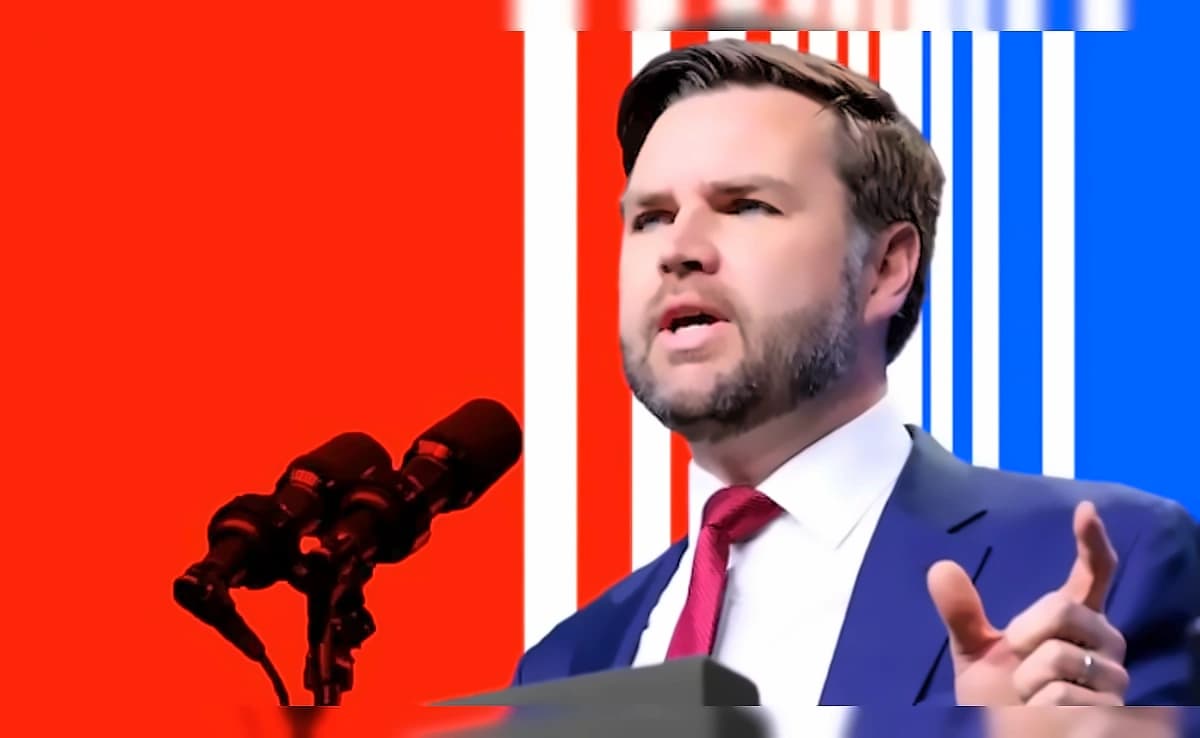
The White House press briefing room has unexpectedly become a testing ground for potential 2028 Republican presidential contenders, with Vice President JD Vance and Secretary of State Marco Rubio taking turns leading high-profile briefings while press secretary Karoline Leavitt is on maternity leave. Vance spent nearly an hour taking questions from reporters and later pushed back when asked about his future ambitions, saying 'I'm not a potential future candidate. I'm a vice president'. Despite downplaying presidential speculation, many in Washington view these appearances as part of an early 'shadow primary' - the subtle positioning that often begins years before a formal presidential campaign starts. The briefing room appearances have intensified scrutiny around both figures as potential contenders for the Republican nomination, with political observers noting the White House has become a stage for 2028 auditions.
Vice President JD Vance has strongly rejected claims that he is isolated within the Trump administration following the departure of National Intelligence Director Tulsi Gabbard. According to reports from The Daily Mail, Vance's team dismissed the allegations as 'just a flimsy compilation of completely illegitimate sources who have no idea what they're talking about'. The denial comes after Gabbard's resignation, which was publicly cited as due to her husband's bone cancer diagnosis, though she had been widely reported as sidelined from central foreign policy debates due to her differences with the administration. Vance's spokesperson categorically denied the claims, asserting that the constructed narrative lacks real support.
The departure of National Intelligence Director Tulsi Gabbard from the Trump administration has left Vance more exposed than ever inside the West Wing. As reported by The Daily Mail, Gabbard announced her exit citing her husband's diagnosis with a rare form of cancer, which left Vance without what insiders described as his 'most senior non-interventionist ally'. Like Gabbard, Vance had privately expressed scepticism and reservations about the Iran war behind closed doors, people familiar with the matter told The Daily Mail. The exit marks the second of Vance's most visible allies in opposing the war to leave, following Joe Kent's resignation as director of the National Counterterrorism Centre in March in protest of the war.
The clearest divide appears to center on Iran policy and the broader question of US military involvement overseas. Trump's harder line on Tehran, including military coordination with Israel and recent strikes linked to the regional conflict, has highlighted competing approaches within his team. While Vance has publicly backed administration policy, reports indicate he remains more aligned with the 'America First' non-interventionist approach and has been cautious about deeper US military engagement abroad. This contrasts sharply with Secretary of State Marco Rubio, who is increasingly seen as representing a more traditional Republican foreign policy outlook that supports a stronger global military posture. The shifting balance has reportedly opened space for Rubio to gain influence within the administration, with a White House insider stating 'Rubio has more mojo than Vance. The President listens to him. Vance is out of step and has been for a long time.'
Multiple sources told The Daily Mail that Vance is now even considering abandoning a run for the presidency in 2028, with insiders suggesting it might be better for him not to 'own everything that's gone on in the last couple of years'. Allies have floated alternatives that would let him sit out the next cycle and re-emerge later, though a separate source close to the vice president pushed back, warning that 'anyone who wants to be a viable nominee for president has a very small window'. Should Vance skip a 2028 presidential run, age would be on his side for a future campaign, being only 41 years old. However, a source close to the vice president told The Daily Mail that 'anyone who wants to be a viable nominee for president has a very small window. And if you don't go when that window is open, most likely it never opens up again.'
President Trump has repeatedly fueled the 2028 presidential speculation, testing support for both potential contenders during White House events. At a recent event, he openly asked the crowd 'Who likes JD Vance?'' before following up with 'Who likes Marco Rubio?'' After both drew strong reactions from the crowd, Trump remarked 'Sounds like a good ticket,'' calling them 'a dream team'. Days later, Trump praised Rubio's performance in the briefing room and later offered a balanced assessment of both men, saying 'I think they both did great...I watched both of them. Both very good men -- really are'. For now, neither Vance nor Rubio has entered the race, but as foreign policy divisions deepen and political positioning becomes more visible, the contest over Trump's future political legacy may already be taking shape inside the White House.