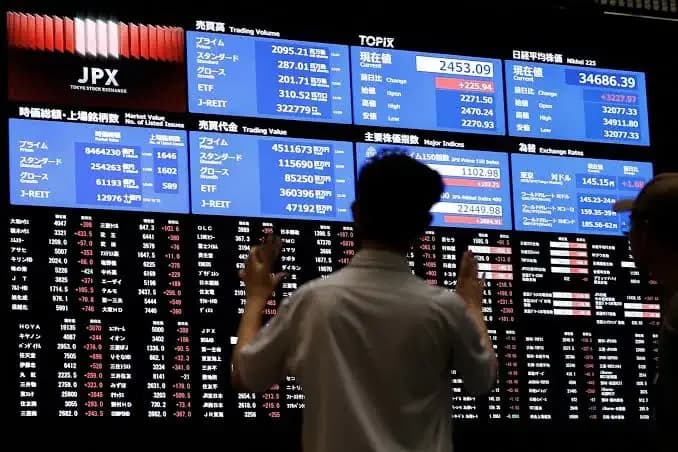
Japan's benchmark 10-year government bond yield climbed to its highest level in nearly three decades on Tuesday, reaching 2.945% as traders increasingly priced in a Bank of Japan rate hike as soon as September. The yield retreated from the day's high following US Treasury intervention to contain a surge in long-term borrowing costs, with the Treasury increasing the scale of its bond buybacks while Treasury Secretary Scott Bessent signalled additional support for market liquidity. According to Reuters, the intervention helped global bond markets recover temporarily, but analysts warn that the underlying factors pushing Japanese yields higher remain intact. The 10-year yield had previously climbed to 2.93% on Monday, with the 20-year and 30-year JGB yields having risen 2.5 basis points to 2.935% and 4 basis points to 4.115% respectively in the Tokyo morning. Since the start of 2026, the benchmark yield has climbed more than 70 basis points, with selling pressure showing little sign of easing as bond prices and yields move inversely.
Mizuho Financial Group Inc. expects the Bank of Japan to pick up the pace of interest-rate hikes, with the next one coming as soon as next month, as the weak yen and inflation prompt the central bank to act more quickly. Kenya Koshimizu, co-head of the global markets division that manages the bank's ¥41 trillion ($257 billion) securities portfolio, also anticipates longer-term rates to keep rising after 10-year Japanese government bond yields hit a 30-year high this week. The upshot for Japan's third-largest lender is that it will still avoid buying the nation's bonds apart from inflation-linked notes and those that mature within a year, said Koshimizu. "We've limited the the amount of interest-rate risk we take, and so our portfolio's duration is very short," he said in an interview in Tokyo. His remarks underscore how many — though not all — Japanese financial institutions remain reluctant to wade back into the nation's bond market as rates rise and inflation persists.
The government has yet to explain how it intends to fund a proposed two-year cut to the food sales tax, leaving investors uncertain about the scale of future bond issuance needed to cover the resulting revenue shortfall. Increased debt issuance would add to the supply of Japanese government bonds in the market, a dynamic that tends to push bond prices lower and yields higher, compounding the pressure already stemming from rate-hike speculation. With Japan carrying one of the highest public debt burdens among developed economies, a further sustained rise in yields would materially increase the government's debt-servicing costs, adding another layer of complexity to the central bank's policy calculus as it weighs the timing of its next move. According to Reuters, the U.S. Treasury's intervention has raised speculation that Tokyo could consider similar measures to stabilise the JGB market, though analysts suggest such measures may provide only temporary relief rather than reverse the broader rise in long-term borrowing costs.
Persistent inflation, a weak yen, expansive fiscal policy, rising oil prices and expectations of Bank of Japan tightening continue to pressure Japanese debt markets, keeping borrowing costs elevated. As reported by Reuters, the continuing Middle East crisis and elevated oil prices have increased concerns about persistent inflation, while Japan's bond market had already been under pressure before the conflict because of growing worries over the fiscal implications of stimulus policies advocated by Prime Minister Sanae Takaichi. Mari Iwashita, executive rate strategist at Nomura Securities, expects the long-term Japanese government bond yield could eventually rise toward 3.3%, with shorter-dated Japanese government bonds also facing pressure as investors increasingly expect the Bank of Japan to tighten monetary policy to support the yen and contain inflation. The prospect of further increases in Japanese interest rates means the upward pressure on JGB yields is unlikely to disappear soon, with Keisuke Tsuruta, senior fixed income strategist at Mitsubishi UFJ Morgan Stanley Securities, saying the phase of rising interest rates remains ongoing.
The Bank of Japan's July 2027 policy meeting scheduled for July 21-22 is drawing significant attention as it allows hawkish board members Naoki Tamura and Hajime Takata to vote just before their terms expire on July 23. According to Reuters, this timing could prove important for Japan's rate-hike path as inflation pressures persist and a potential board reshuffle approaches. The central bank typically holds July meetings toward the end of the month, but the 2027 schedule represents a strategic window for policymakers. Reuters reports that the BOJ is expected to consider raising rates as soon as September and could pursue more aggressive tightening afterwards if policymakers believe inflation is becoming entrenched. The current policy rate stands at 1%, with some investors now considering the possibility that the rate could eventually reach 1.75% or even 2%, requiring several additional rate increases. For Japanese bond investors, the key test now is whether the recent global bond-market relief can be sustained, with the 3% level on the 10-year JGB becoming an increasingly realistic target if U.S. yields resume their climb and domestic fiscal and inflation pressures persist.