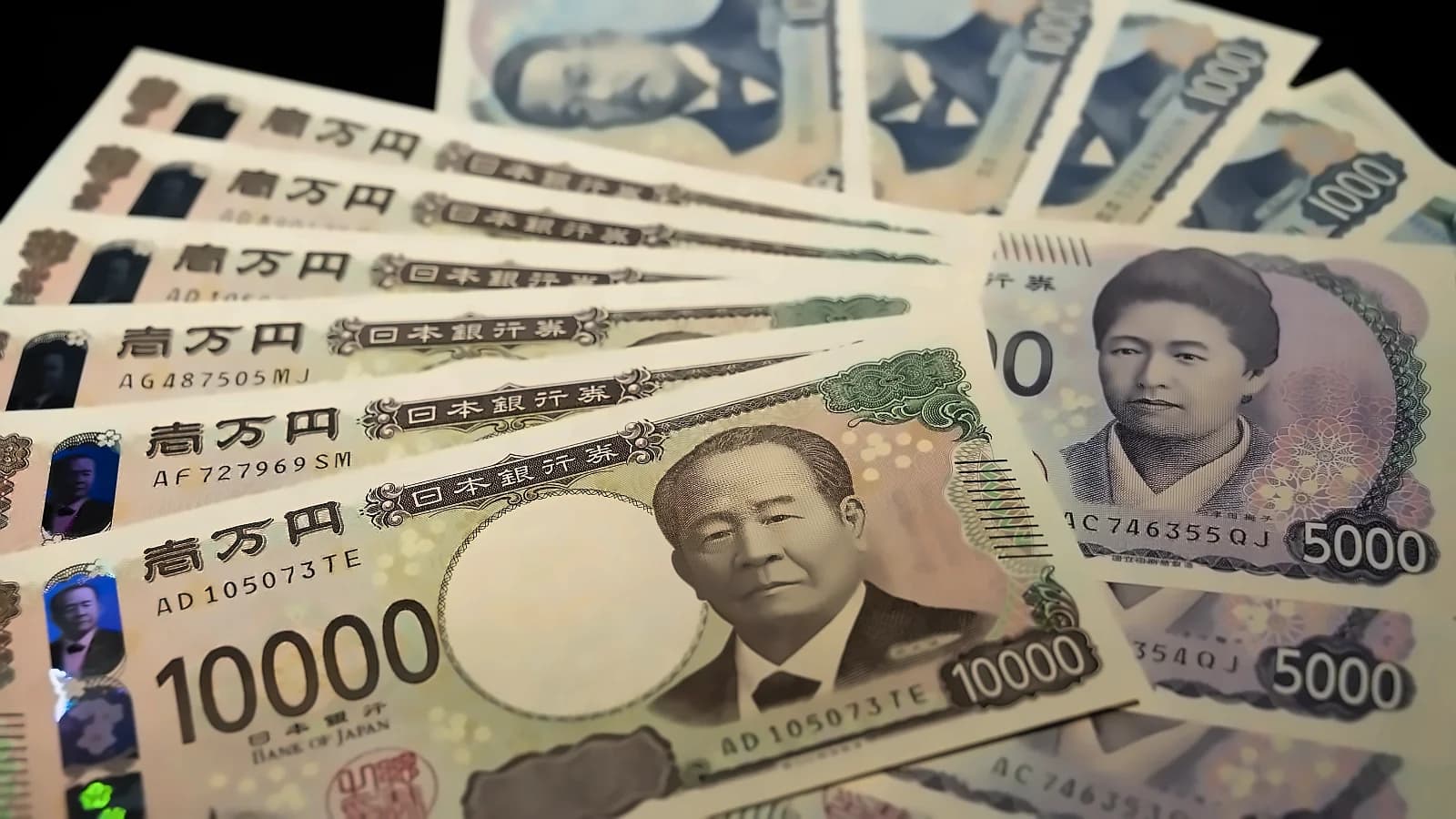
Japan achieved a record ₹5.06 trillion ($31 billion) surplus in its special foreign exchange reserves account for fiscal year 2025, marking the second-highest annual surplus on record, according to the Finance Ministry as reported by Reuters. This strong performance comes despite Japan's growth forecast being slashed to 0.9% for fiscal year 2026, representing a significant downgrade from the 1.3% projection made just six months ago in January. The surplus was primarily driven by yen weakness, which increased the yen value of income generated from foreign assets, particularly U.S. Treasuries. The account, which is used to manage Japan's foreign exchange reserves and finance currency market intervention, had posted a record surplus of ₹5.36 trillion in the previous fiscal year, demonstrating the substantial benefits Japan derives from its substantial overseas asset holdings during periods of elevated U.S. interest rates and yen depreciation.
The revision is driven by two critical assumptions that have deteriorated significantly. As reported by Kyodo News, the government now models crude oil at $92.5 per barrel, well above its earlier estimate of $68. Additionally, currency expectations shifted dramatically, with officials assuming the yen is trading at 161.4 per dollar, compared with 155.2 in the previous forecast. These changes particularly impact Japan, which imports nearly all of its energy and faces inflationary pressure from both higher oil prices and currency weakness. The government noted that Japan remains vulnerable to higher crude oil prices, while a weaker yen also increases import costs, making the country's import-dependent economy particularly sensitive to these external shocks. Resource-poor Japan is especially vulnerable to rises in crude oil prices, while the weaker yen against the dollar contributes to raising import costs, squeezing consumers through higher utility bills and lifting costs for businesses.
The economic pressure is most acutely felt in consumption-driven sectors. According to Kyodo News and Firstpost, private consumption, which drives more than half of Japanese output, is now forecast to grow just 0.9% instead of 1.3%. Business investment faces similar challenges, with capital expenditure expected to rise just 2.3% this year, down from the 2.8% projected in January. However, the government noted that wage growth and personal consumption have been supported by government subsidies for energy costs, providing some cushion against the broader economic slowdown. Additionally, consumer prices are now expected to climb 2.2%, up from the earlier 1.9% estimate, further testing household purchasing power amid the broader economic slowdown. The revised projections reflect the growing pressure on households from rising energy and living costs, even as wages continue to increase.

Despite the current challenges, Prime Minister Sanae Takaichi's administration maintains optimism for future recovery. According to Kyodo News and Firstpost, growth should recover to 1.1% in fiscal 2027, supported by Prime Minister Takaichi's plans to boost investment in crisis management and strategic growth sectors. For the 2027 fiscal year starting next April, the government said GDP will expand 1.1 percent on the back of Takaichi's push for boosting investments in crisis management and strategic growth sectors -- a move that is expected to spur recovery in personal consumption and increase capital investments. The government expects these measures to help strengthen personal consumption and increase capital investment. To promote public-private investments, the Takaichi Cabinet on Thursday approved guidelines for drafting the state budget for the year starting next April, featuring a newly created investment allotment for creating a "strong and prosperous Japan," under which ministries can make budget requests without upper limits.
The fiscal projections reveal a mixed financial picture for Japan. According to Kyodo News and Firstpost, the primary budget deficit for fiscal 2026 is estimated at 1.2 trillion yen ($7.3 billion), wider than the 800 billion yen ($4.9 billion) deficit projected in June, as additional funding was required for a supplementary budget. However, next year appears considerably better on paper, with officials expecting a surplus of 1.4 trillion yen ($8.5 billion) in fiscal 2027 under a scenario of stronger economic growth, compared with last month's estimate of a deficit of 2.1 trillion yen. This projected swing carries genuine political significance, as Japan holds one of the heaviest public debt burdens among developed nations, making credibility with bond markets essential. The improved projections for the primary balance come as financial markets remain concerned that Prime Minister Takaichi's push for aggressive spending to boost growth will further worsen the heavily indebted country's finances. The government also projected that Japan's primary budget balance will return to a surplus of 1.4 trillion yen (about $8.6 billion) in fiscal 2027, even as Tokyo has reduced its emphasis on achieving a primary budget surplus as its main measure of fiscal discipline.